Love this? Save it for later!
Share the inspiration with your friends
My neighbor Mark asked me last Thanksgiving why I couldn’t just use the sourdough discard that was taking up space in my fridge for the stuffing. I started to explain why that wouldn’t work — something about texture and moisture balance and the science of bread drying. Then I stopped. Honestly, I had no good reason. I just assumed stuffing needed stale, dry bread from a bag, the way my mom always made it.
So I tried it. I pulled that jar of discard out, looked at it, and thought, well, this is either going to be a disaster or the best thing I accidentally make all year. Spoiler alert: it was the latter. The discard added this subtle tangy depth that regular bread just doesn’t have. It made the stuffing creamier on the inside while keeping those crispy edges everyone fights over. I mean, I actually caught my brother-in-law sneaking leftovers at midnight. That never happens.
That moment in my kitchen — standing there with a spatula in one hand and a jar of discard in the other — changed how I approach Thanksgiving sides forever. This Best Sourdough Discard Stuffing with Sage and Butter isn’t just another recipe. It’s the one that proves you don’t need fancy ingredients or complicated techniques to make something unforgettable. Maybe you’ve been there too, staring at that jar of discard wondering what to do with it. Trust me, this is the answer.
Why You’ll Love This Recipe
This stuffing has become my go-to for every holiday gathering, and here’s why it stands out from the crowd.
- Quick & Easy: Comes together in under 45 minutes, perfect for busy holiday mornings or last-minute dinner plans.
- Simple Ingredients: No fancy grocery trips needed — sourdough discard, day-old bread, butter, sage, and a few pantry staples are all you need.
- Perfect for Thanksgiving: This dish fits right alongside turkey, mashed potatoes, and cranberry sauce without stealing the show.
- Crowd-Pleaser: Even the pickiest eaters at my table ask for seconds, and it disappears faster than the pumpkin pie.
- Unbelievably Delicious: The combination of tangy sourdough discard, rich butter, and aromatic sage creates a flavor profile that’s both familiar and surprising.
What makes this recipe different from all the other stuffing recipes out there? It’s the discard. That fermented goodness adds a layer of complexity you can’t get from plain bread. The discard also helps bind the stuffing together without making it soggy — a problem I’ve had with every other stuffing recipe I’ve tried. This is the version that makes you close your eyes after the first bite. It’s comfort food reimagined — faster, easier, but with the same soul-soothing satisfaction that makes holidays feel special.
What Ingredients You Will Need
This recipe uses simple, wholesome ingredients to deliver bold flavor and satisfying texture without the fuss. Most of these are pantry staples, so you likely have everything on hand already.
For the Stuffing Base
- 1 loaf day-old sourdough bread, cut into 1-inch cubes (about 8 cups) — I prefer a rustic loaf from a local bakery for the best texture
- 1 cup sourdough discard, at room temperature — this is the star of the show, so use your freshest discard for the best flavor
- 1/2 cup unsalted butter (1 stick), plus more for greasing the dish
- 1 large yellow onion, diced (about 1 1/2 cups)
- 3 celery stalks, diced (about 1 cup)
- 4 cloves garlic, minced
- 2 tablespoons fresh sage, chopped (or 1 tablespoon dried sage)
- 1 tablespoon fresh thyme leaves (or 1 teaspoon dried thyme)
- 1 1/2 cups low-sodium chicken or vegetable broth — I use Swanson’s low-sodium broth to control the salt level
- 2 large eggs, lightly beaten — these help bind everything together
- 1 teaspoon salt, plus more to taste
- 1/2 teaspoon black pepper
For the Topping
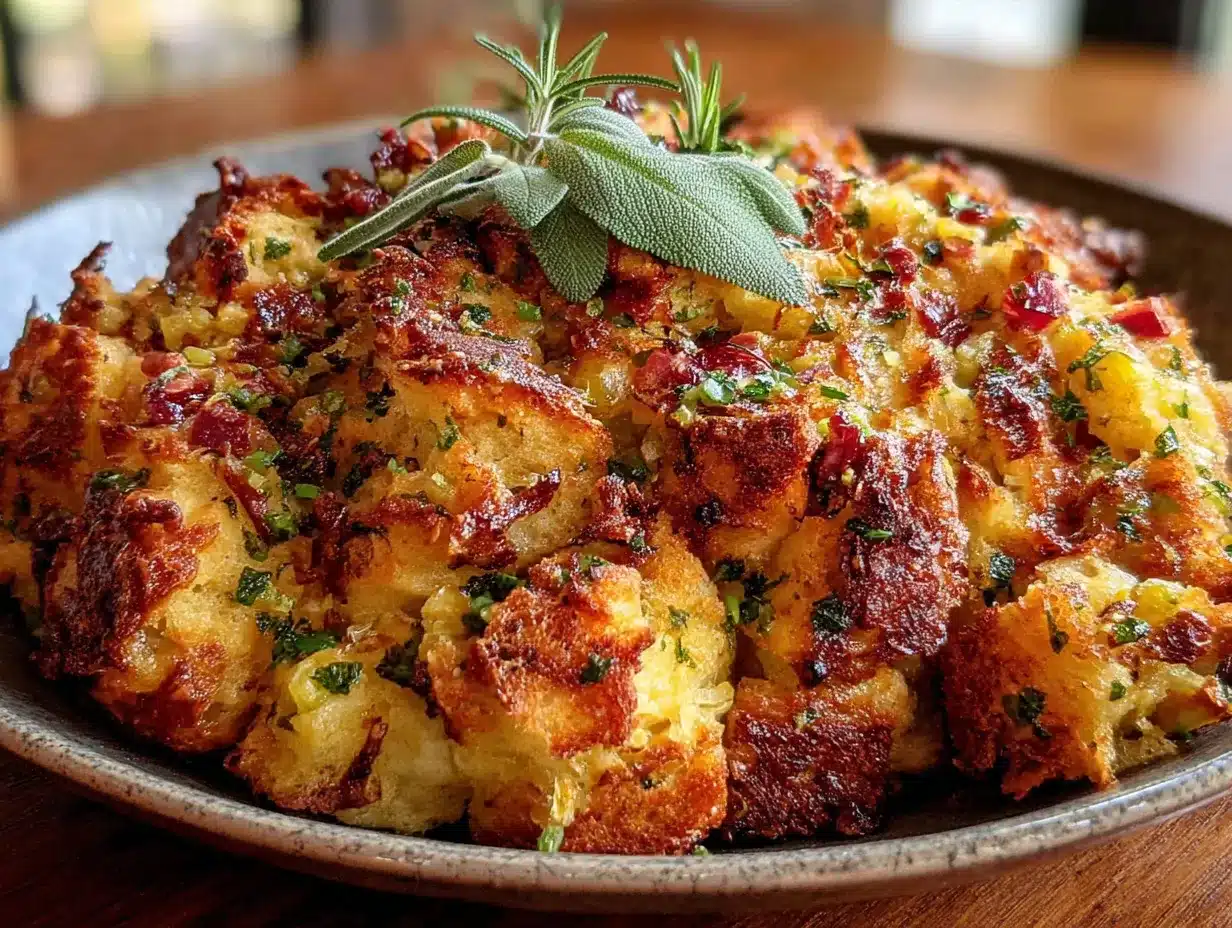
- 2 tablespoons butter, melted
- 1 tablespoon fresh sage, chopped (optional, for garnish)
Ingredient Tips: If you don’t have day-old bread, you can dry fresh bread cubes in a 300°F oven for 10-15 minutes. For a gluten-free version, use gluten-free sourdough bread and discard. I’ve also made this with vegetable broth for a vegetarian option, and it works beautifully. The discard should be at room temperature so it incorporates smoothly into the mixture — cold discard can make the stuffing clumpy.
Equipment Needed
You don’t need any fancy equipment for this recipe, which is part of why I love it so much.
- 9×13-inch baking dish — a glass or ceramic dish works best for even heat distribution
- Large skillet — for sautéing the vegetables; I use a cast-iron skillet for the best flavor
- Large mixing bowl — big enough to toss all the ingredients together
- Chef’s knife and cutting board — for dicing the onion and celery
- Measuring cups and spoons
- Wooden spoon or spatula
- Aluminum foil — for covering the dish during the first part of baking
If you don’t have a 9×13 dish, you can use a similar-sized casserole dish or even a cast-iron skillet. I’ve also made this in a 10-inch cast-iron skillet, and the edges get extra crispy — highly recommended if you have one on hand. For the budget-friendly option, any oven-safe baking dish will work. Just make sure it’s deep enough to hold all the stuffing without spilling over.
Preparation Method
- Preheat your oven to 375°F (190°C). Grease a 9×13-inch baking dish with butter or non-stick spray. This ensures the stuffing doesn’t stick and makes cleanup easier.
- Prepare the bread cubes. If using fresh bread, spread the cubes on a baking sheet and toast in the oven for 10-12 minutes until lightly golden. If using day-old bread, skip this step. Let the bread cool slightly while you prepare the other ingredients.
- Sauté the vegetables. In a large skillet over medium heat, melt 1/2 cup of butter. Add the diced onion and celery, and cook for 5-7 minutes until softened and translucent. The onions should be fragrant and lightly golden around the edges. Add the minced garlic and cook for another minute until fragrant — don’t let it burn, or it will taste bitter.
- Add the herbs. Stir in the chopped sage and thyme, and cook for 1 minute until the herbs release their aroma. This step really brings out the flavor of the fresh herbs. If using dried herbs, add them at this stage as well.
- Combine the wet ingredients. In a large mixing bowl, whisk together the sourdough discard, beaten eggs, and chicken broth until smooth. The mixture should be pale and slightly frothy. Season with salt and pepper.
- Mix everything together. Add the toasted bread cubes and the sautéed vegetable mixture to the bowl with the wet ingredients. Use a wooden spoon or your hands (I prefer my hands — it’s faster and you can feel when everything is evenly coated) to gently toss everything together until the bread is fully coated. Don’t overmix, or the bread will break apart.
- Transfer to the baking dish. Pour the stuffing mixture into the prepared baking dish and spread it into an even layer. Drizzle the melted butter over the top for an extra golden, crispy crust.
- Bake covered. Cover the dish with aluminum foil and bake for 25 minutes. This steams the stuffing and ensures the inside is moist and tender.
- Bake uncovered. Remove the foil and bake for another 15-20 minutes until the top is golden brown and crispy. The edges should be nicely caramelized, and the center should be set but still slightly soft.
- Rest and serve. Let the stuffing rest for 5-10 minutes before serving. This allows the flavors to meld together and makes it easier to scoop. Garnish with fresh chopped sage if desired.
Cooking Tips & Techniques
After making this stuffing more times than I can count, I’ve picked up a few tricks that make a real difference.
Don’t skip toasting the bread. I learned this the hard way my first time. Fresh bread soaks up too much liquid and turns into mush. Toasting it first creates a sturdy structure that holds up to the discard mixture. If you’re short on time, spread the cubes on a sheet pan and toast while you sauté the vegetables — multitasking at its finest.
Watch your liquid ratio. The discard adds moisture, so you don’t need as much broth as you might think. Start with 1 1/2 cups of broth and add more only if the mixture looks dry. The stuffing should be moist but not soupy. If you accidentally add too much liquid, just bake it a few minutes longer uncovered.
Let the discard come to room temperature. Cold discard doesn’t mix well and can create lumps in your stuffing. I usually take mine out of the fridge about 30 minutes before I start cooking. If you forget, you can microwave it in 10-second bursts until it’s no longer cold to the touch.
Season generously. Bread absorbs a lot of salt, so don’t be shy with the seasoning. I always taste the mixture before adding the eggs (since you can’t taste raw eggs) and adjust the salt accordingly. The sage and butter are the backbone of this recipe, so make sure they’re front and center.
Don’t overbake. The stuffing continues to cook after you take it out of the oven, so pull it when the top is golden and the center is just set. Overbaking dries it out, and nobody wants dry stuffing. I’ve made that mistake before, and it’s heartbreaking.
Variations & Adaptations
This recipe is incredibly versatile, and I’ve tried several variations over the years. Here are some of my favorites.
Dietary Variations
- Gluten-Free: Use gluten-free sourdough bread and discard. I’ve tested this with Against the Grain’s gluten-free sourdough, and it works beautifully.
- Vegetarian: Substitute vegetable broth for chicken broth. The flavor is slightly different but still delicious.
- Dairy-Free: Use vegan butter or olive oil instead of butter. I’ve used Miyoko’s vegan butter, and it melts and browns just like the real thing.
Flavor Twists
- Sausage and Apple: Brown 1/2 pound of breakfast sausage and add 1 diced apple along with the onions. The sweetness of the apple pairs perfectly with the tangy discard.
- Mushroom and Leek: Sauté 8 ounces of sliced mushrooms and 2 leeks (white parts only) instead of the onion and celery. This version is earthy and rich.
- Cranberry and Pecan: Fold in 1/2 cup dried cranberries and 1/2 cup toasted pecans before baking. The tartness and crunch add wonderful texture.
I once made a Mediterranean-inspired version with sun-dried tomatoes, olives, and feta cheese, and it was surprisingly good — though my family gave me some funny looks. Feel free to experiment and make this recipe your own. That’s the beauty of cooking with discard — it’s forgiving and adaptable.
Serving & Storage Suggestions
This stuffing is best served warm, straight from the oven, when the top is still crispy and the inside is soft and fragrant. I like to let it rest for about 10 minutes after baking so it holds its shape when scooped. Spoon it onto plates alongside roasted turkey, mashed potatoes, and cranberry sauce for the ultimate Thanksgiving plate.
For a casual meal, this stuffing pairs beautifully with a simple green salad dressed with lemon vinaigrette. The brightness of the salad cuts through the richness of the stuffing. Leftovers are fantastic the next day — I’ve been known to eat cold stuffing straight from the fridge at midnight. Don’t judge.
Storage: Store leftovers in an airtight container in the refrigerator for up to 4 days. The flavors actually deepen overnight as the discard continues to work its magic. To reheat, place the stuffing in a 350°F oven for 10-15 minutes until warmed through. You can also microwave individual portions, but the top won’t be as crispy.
Freezing: This stuffing freezes beautifully. Assemble the stuffing in the baking dish but don’t bake it. Cover tightly with plastic wrap and then aluminum foil, and freeze for up to 3 months. To bake from frozen, add 20-30 minutes to the baking time, removing the foil for the last 15 minutes. I always make a double batch during the holidays and freeze one for later — it’s a lifesaver when unexpected guests show up.
Nutritional Information & Benefits
Here’s the approximate nutritional breakdown per serving (based on 8 servings):
| Nutrient | Amount |
|---|---|
| Calories | 320 |
| Total Fat | 16g |
| Saturated Fat | 9g |
| Cholesterol | 75mg |
| Sodium | 520mg |
| Total Carbohydrates | 36g |
| Dietary Fiber | 2g |
| Sugars | 3g |
| Protein | 8g |
Health Benefits: Sourdough discard is a fermented ingredient, which means it contains beneficial probiotics that support gut health. The fermentation process also breaks down some of the gluten and phytic acid in the flour, making the nutrients more bioavailable. Sage is rich in antioxidants and has anti-inflammatory properties. Butter provides fat-soluble vitamins A, D, E, and K. While this is a comfort food dish, using sourdough discard adds a nutritional edge that regular stuffing doesn’t have. For a lighter option, you can reduce the butter by half and use olive oil instead.
Conclusion
This Best Sourdough Discard Stuffing with Sage and Butter has become a non-negotiable part of my holiday table. It’s the recipe that proved to me that sometimes the best ideas come from questioning everything you thought you knew. Mark’s simple question changed how I cook, and I’m so grateful for that moment of humility in my kitchen.
I hope you give this stuffing a try, whether it’s for Thanksgiving, Christmas, or just a random Tuesday when you’re craving comfort food. Don’t be afraid to make it your own — swap in your favorite herbs, add some sausage, or throw in whatever vegetables are in your fridge. The discard will hold it all together beautifully.
I’d love to hear how it turns out for you! Drop a comment below and let me know your favorite variation, or tag me in your photos on social media. Happy cooking, friends — and remember, sometimes the best recipes come from being wrong.
Frequently Asked Questions
Can I use active sourdough starter instead of discard?
Yes, you can absolutely use active starter in this recipe. The texture will be similar, though the flavor might be slightly less tangy since active starter hasn’t fermented as long. Reduce the broth by 2 tablespoons to account for the extra moisture in active starter.
Can I make this stuffing ahead of time?
Yes! Assemble the stuffing in the baking dish up to 24 hours in advance, cover, and refrigerate. When you’re ready to bake, let it sit at room temperature for 30 minutes, then bake as directed. You may need to add 5-10 minutes to the baking time since it’s starting from cold.
Why is my stuffing soggy?
Soggy stuffing usually means too much liquid or bread that wasn’t dried enough. Next time, toast the bread cubes a little longer and reduce the broth by 1/4 cup. Also, make sure your discard isn’t too watery — if it’s very thin, drain off any excess liquid before using.
Can I double this recipe?
Absolutely! This recipe doubles beautifully. Use a larger baking dish (like a 12×17-inch roasting pan) or divide between two 9×13-inch dishes. You may need to increase the baking time by 10-15 minutes since there’s more volume to heat through.
What can I substitute for fresh sage?
Dried sage works perfectly in this recipe. Use 1 tablespoon of dried sage instead of 2 tablespoons fresh. You can also try other herbs like rosemary, marjoram, or poultry seasoning for a different flavor profile. Just remember that dried herbs are more potent, so adjust accordingly.
Pin This Recipe!
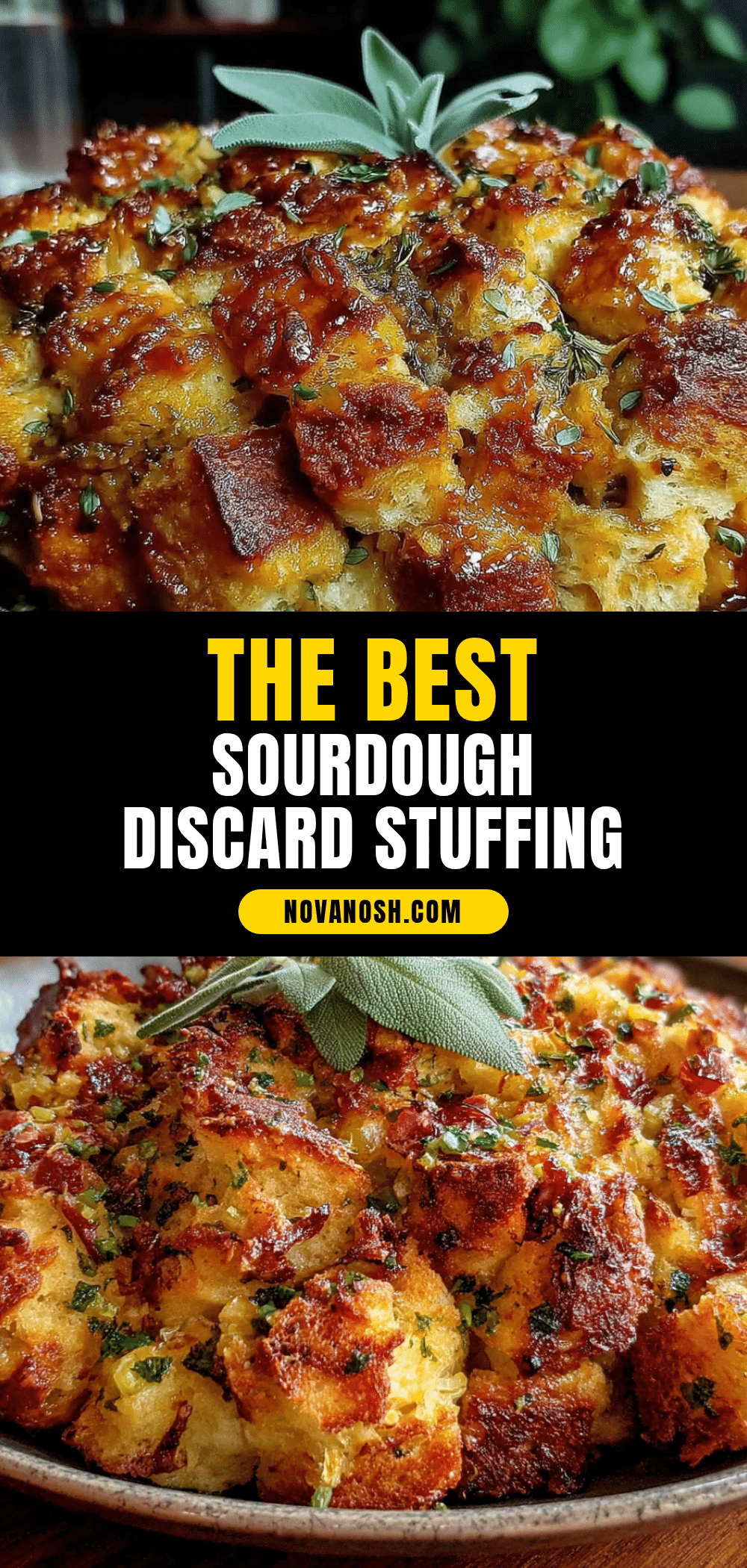
Best & Easy Sourdough Discard Stuffing with Sage and Butter

This sourdough discard stuffing is a game-changer for Thanksgiving sides. The discard adds a subtle tangy depth and creamy interior while keeping crispy edges, all in under 45 minutes.
- Prep Time: 15 minutes
- Cook Time: 40 minutes
- Total Time: 55 minutes
- Yield: 8 servings 1x
- Category: Side Dish
- Cuisine: American
Ingredients
- 1 loaf day-old sourdough bread, cut into 1-inch cubes (about 8 cups)
- 1 cup sourdough discard, at room temperature
- 1/2 cup unsalted butter (1 stick), plus more for greasing the dish
- 1 large yellow onion, diced (about 1 1/2 cups)
- 3 celery stalks, diced (about 1 cup)
- 4 cloves garlic, minced
- 2 tablespoons fresh sage, chopped (or 1 tablespoon dried sage)
- 1 tablespoon fresh thyme leaves (or 1 teaspoon dried thyme)
- 1 1/2 cups low-sodium chicken or vegetable broth
- 2 large eggs, lightly beaten
- 1 teaspoon salt, plus more to taste
- 1/2 teaspoon black pepper
- 2 tablespoons butter, melted (for topping)
- 1 tablespoon fresh sage, chopped (optional, for garnish)
Instructions
- Preheat your oven to 375°F (190°C). Grease a 9×13-inch baking dish with butter or non-stick spray.
- Prepare the bread cubes. If using fresh bread, spread the cubes on a baking sheet and toast in the oven for 10-12 minutes until lightly golden. If using day-old bread, skip this step. Let the bread cool slightly.
- Sauté the vegetables. In a large skillet over medium heat, melt 1/2 cup of butter. Add the diced onion and celery, and cook for 5-7 minutes until softened and translucent. Add the minced garlic and cook for another minute until fragrant.
- Add the herbs. Stir in the chopped sage and thyme, and cook for 1 minute until the herbs release their aroma.
- Combine the wet ingredients. In a large mixing bowl, whisk together the sourdough discard, beaten eggs, and chicken broth until smooth. Season with salt and pepper.
- Mix everything together. Add the toasted bread cubes and the sautéed vegetable mixture to the bowl with the wet ingredients. Gently toss everything together until the bread is fully coated. Don’t overmix.
- Transfer to the baking dish. Pour the stuffing mixture into the prepared baking dish and spread it into an even layer. Drizzle the melted butter over the top.
- Bake covered. Cover the dish with aluminum foil and bake for 25 minutes.
- Bake uncovered. Remove the foil and bake for another 15-20 minutes until the top is golden brown and crispy.
- Rest and serve. Let the stuffing rest for 5-10 minutes before serving. Garnish with fresh chopped sage if desired.
Notes
Don’t skip toasting the bread to avoid sogginess. Let the discard come to room temperature for even mixing. Season generously as bread absorbs salt. Don’t overbake; the stuffing continues to cook after removal from the oven.
Nutrition
- Serving Size: 1 serving (about 1 c
- Calories: 320
- Sugar: 3
- Sodium: 520
- Fat: 16
- Saturated Fat: 9
- Carbohydrates: 36
- Fiber: 2
- Protein: 8
Keywords: sourdough discard stuffing, Thanksgiving stuffing, sourdough stuffing, sage butter stuffing, easy stuffing recipe