Love this? Save it for later!
Share the inspiration with your friends
My brother-in-law asked why I couldn’t just rub the roast with butter instead of oil. I started to explain why that wouldn’t work — then stopped. I mean, I’d been making prime rib for years. I had my method down. Butter burns at a lower temperature, right? Every chef I’d ever watched used oil as the base for their herb crust. But he just shrugged and said, “Butter tastes better though.” And honestly, he had a point I couldn’t argue with.
That Christmas Eve, with snow piling up outside and the kitchen getting steamy, I decided to try it his way. I softened a stick of butter, mixed in a mountain of chopped garlic and fresh rosemary, and slathered it all over that beautiful rib roast like I was frosting a cake. My husband raised an eyebrow from across the kitchen. I pretended I knew what I was doing. Truth be told, I was half-convinced I’d end up with a burnt mess and a very smug brother-in-law.
But something happened when that roast hit the oven. The butter melted slowly, basting the meat as it rendered, carrying all that garlic and herb flavor deep into every crevice. The smell — oh, the smell — filled the whole house. It was rich and savory and made everyone wander into the kitchen asking when dinner would be ready. Maybe you’ve been there, standing over a roast hoping it turns out perfect while everyone watches you like you’re performing a magic trick.
When I pulled that prime rib out of the oven and let it rest, the crust had turned into this gorgeous, golden-brown shell. The butter had done exactly what I didn’t think it would. It created a barrier that sealed in the juices while infusing the meat with incredible flavor. That first slice was so tender it practically fell apart under the knife. I’ve never gone back to oil since. This perfect prime rib roast with garlic herb butter is now the only way I make it — and I have my brother-in-law’s stubborn suggestion to thank for it.
Why You’ll Love This Recipe
Let me tell you why this perfect prime rib roast with garlic herb butter has become my go-to for every special occasion. I’ve tested this method more times than I can count, tweaking temperatures and herb ratios until everything was just right. The result is a roast that looks like it came from a fancy steakhouse but comes together in your own kitchen without all the stress.
- Incredibly Juicy: The garlic herb butter creates a protective crust that locks in all the natural juices. Every slice comes out tender and moist, never dry or overcooked.
- Simple Ingredients: You probably already have garlic, butter, and herbs in your kitchen. No fancy marinades or complicated spice blends needed.
- Perfect for Holidays: This roast is made for Christmas dinners, New Year’s celebrations, or any time you want to impress your guests without spending all day in the kitchen.
- Crowd-Pleaser: I’ve served this to picky eaters, steak snobs, and even vegetarians who took one bite and asked for more. It’s that good.
- Foolproof Method: The low-and-slow technique with a final high-heat sear means you get perfectly even cooking from edge to center every single time.
What makes this recipe different from all the others is the butter technique. Most recipes use oil or dry rubs, but the butter does something special here. It melts slowly during the initial cooking phase, basting the meat continuously and carrying the garlic and herb flavors deep into the roast. Then during the final sear, that same butter caramelizes into a crispy, flavorful crust that’s absolutely irresistible. This isn’t just another prime rib recipe — it’s the one that makes you close your eyes after that first bite and forget about every other roast you’ve ever made.
It’s comfort food at its finest, but somehow elevated. Rich and satisfying, but not complicated. The kind of meal that makes everyone at the table slow down and savor every bite. Perfect for making memories without the stress.
What Ingredients You Will Need
This perfect prime rib roast with garlic herb butter uses simple, high-quality ingredients to create something truly special. The magic happens when these few components work together, so choosing the right ones makes all the difference.
For the Roast
- 1 bone-in prime rib roast (4-5 pounds) — Look for one with good marbling throughout. The fat is what keeps it juicy. I prefer buying from a local butcher when possible, but good grocery store meat counters carry excellent options too.
- 1 tablespoon kosher salt — Use coarse salt here, not table salt. It distributes better and helps form that beautiful crust.
- 1 teaspoon black pepper — Freshly ground is non-negotiable for the best flavor. Pre-ground pepper just doesn’t compare.
For the Garlic Herb Butter
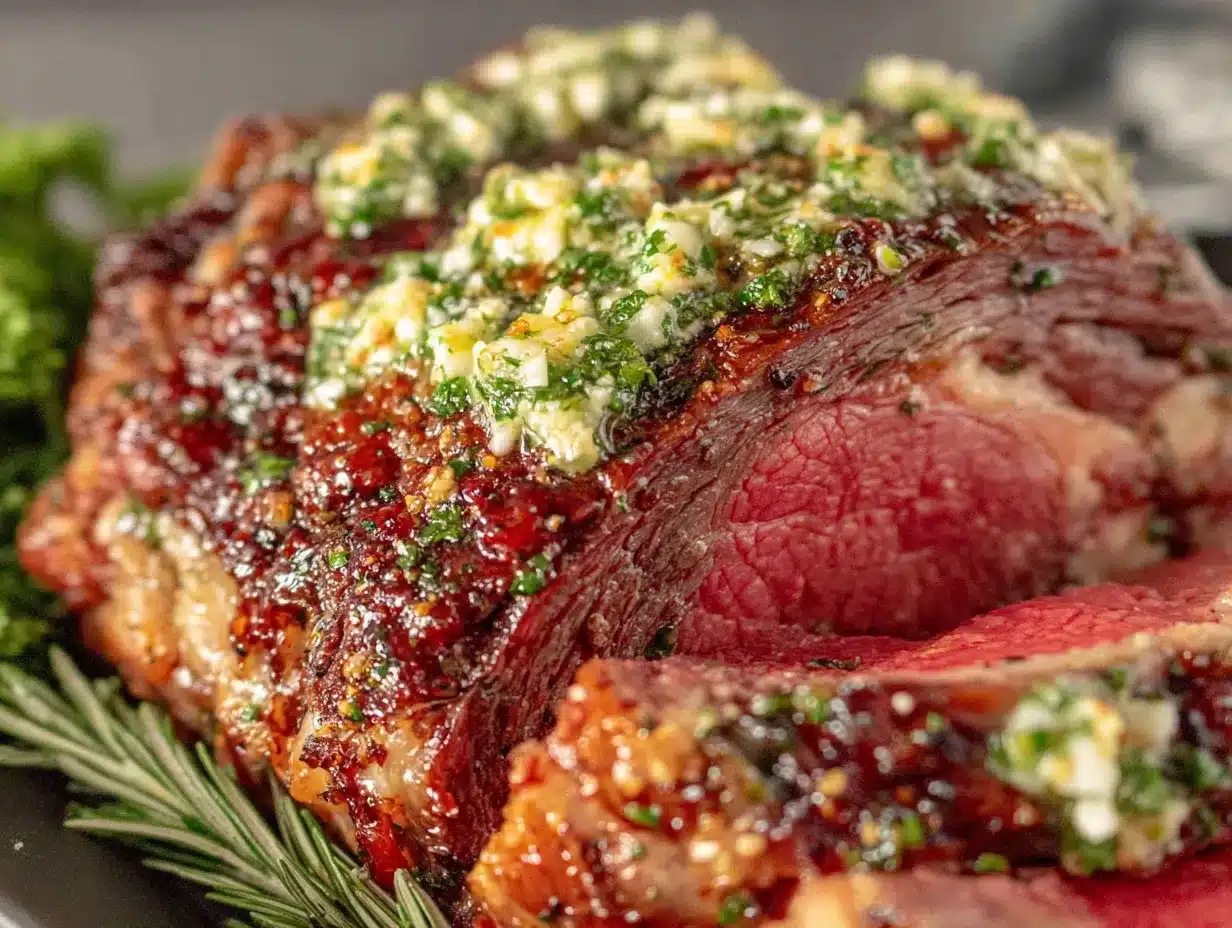
- 1/2 cup unsalted butter, softened — Let it sit out for about 30 minutes before mixing. Cold butter won’t spread evenly over the roast. I recommend using a good quality butter like Kerrygold for richer flavor.
- 6 cloves garlic, minced — Fresh garlic is essential here. The jarred stuff has a different texture and won’t infuse the butter the same way. Take the extra minute to mince it yourself.
- 2 tablespoons fresh rosemary, finely chopped — Dried rosemary can be woody and overpowering. Fresh gives that aromatic, piney flavor that pairs perfectly with beef.
- 2 tablespoons fresh thyme leaves — Strip the leaves from the stems and chop them fine. Thyme adds an earthy undertone that balances the richness of the butter.
- 1 tablespoon fresh parsley, chopped — This adds a touch of freshness and color. Italian flat-leaf parsley works best.
- 1 teaspoon salt — A little extra salt in the butter helps season the crust from the outside in.
- 1/2 teaspoon black pepper
For the Pan
- 1 cup beef broth — This goes in the bottom of the roasting pan to keep the drippings from burning and to create a base for the most incredible au jus.
- 1/2 cup dry red wine (optional) — If you have a bottle open, add this to the pan for extra depth. If not, just use more beef broth.
When selecting your prime rib, look for one that has a nice fat cap on top. That fat renders during cooking and keeps the meat incredibly moist. I’ve found that bone-in roasts have more flavor, but boneless works fine too — just adjust your cooking time slightly. The bones act as a natural roasting rack and add so much flavor to the drippings.
For the herbs, feel free to mix things up based on what you have. Tarragon adds a lovely anise note, and oregano works in a pinch. But the classic rosemary-thyme combination is what makes this perfect prime rib roast with garlic herb butter so iconic. Trust me on this one.
Equipment Needed
You don’t need a professional kitchen to make this perfect prime rib roast with garlic herb butter. Here’s what you’ll need and some tips from my own trial and error.
- Roasting pan with rack — The rack lifts the roast so hot air circulates evenly around it. No rack? Roll up some aluminum foil into coils and place them under the roast. Works like a charm.
- Meat thermometer — This is absolutely essential. I’ve ruined roasts guessing doneness by touch. An instant-read thermometer takes the guesswork out completely. I recommend the Thermapen for accuracy, but any reliable digital thermometer works.
- Chef’s knife — A sharp 8-inch chef’s knife makes mincing garlic and chopping herbs quick and easy. Dull knives are dangerous — they slip more.
- Cutting board — Use a large one that can handle the roast when it comes out of the oven. You’ll need space to let it rest and slice it.
- Mixing bowl — Small bowl for combining the butter and herbs.
- Kitchen twine — If your roast isn’t already tied, you’ll want to secure it so it holds its shape while cooking.
- Aluminum foil — For tenting the roast while it rests. This step is non-negotiable for juicy meat.
- Serving platter — Something large enough to hold the roast and look beautiful on the table.
If you don’t have a roasting pan, a heavy-duty baking sheet with a wire cooling rack set inside works perfectly. I’ve done it that way more times than I can count. Just make sure the pan has sides to catch the drippings. Budget tip: look for roasting pans at thrift stores — they often have high-quality ones for a fraction of the price.
Preparation Method
Making this perfect prime rib roast with garlic herb butter is easier than you think. Follow these steps and you’ll have a showstopping roast that looks like you spent all day in the kitchen.
- Take the roast out of the fridge 2 hours before cooking. This is the most important step. A cold roast cooks unevenly — the outside will be overdone while the center stays raw. Let it sit on the counter, still wrapped, until it comes to room temperature. Trust me, this makes a huge difference.
- Preheat your oven to 250°F (120°C). Low and slow is the secret to perfectly even cooking. Don’t be tempted to crank up the heat. The low temperature allows the meat to cook gently from edge to center without drying out.
- Make the garlic herb butter. In a small bowl, combine the softened butter, minced garlic, chopped rosemary, thyme, parsley, salt, and pepper. Mix until everything is evenly distributed. The mixture should be spreadable but not runny. If your butter is too hard, microwave it for 5-second intervals until soft but not melted.
- Pat the roast dry with paper towels. Moisture is the enemy of a good crust. Dry meat browns better. Take your time with this step and really get it dry on all sides.
- Season the roast generously with salt and pepper. Don’t be shy here. Use about 1 tablespoon of kosher salt and 1 teaspoon of pepper for a 4-5 pound roast. Season all sides, including the ends and between the bones if you can reach.
- Spread the garlic herb butter all over the roast. Use your hands for this — it’s the most effective way. Cover every surface with a thick, even layer of butter. Don’t forget the ends and the underside. The butter should completely coat the meat like a blanket.
- Place the roast bone-side down on a rack in your roasting pan. The bones act as a natural roasting rack, lifting the meat slightly. If your roast is boneless, place it fat-side up on the rack.
- Pour the beef broth and wine (if using) into the bottom of the pan. Don’t pour it over the roast — you’ll wash off all that beautiful butter. The liquid in the pan keeps the drippings from burning and creates steam that helps cook the meat evenly.
- Roast at 250°F for about 25-30 minutes per pound. For a 4-5 pound roast, this works out to about 2 to 2.5 hours total. Start checking the internal temperature after about 1.5 hours. You’re looking for 125°F (52°C) for medium-rare, which is the ideal doneness for prime rib.
- Insert the meat thermometer into the thickest part of the roast, avoiding the bone. The bone conducts heat differently and will give you a false reading. Aim for the center of the meaty section.
- When the internal temperature hits 120°F (49°C), remove the roast from the oven. It will continue cooking as it rests, rising another 5-10 degrees. This is called carryover cooking, and it’s your best friend.
- Increase the oven temperature to 500°F (260°C). While the oven heats up, tent the roast loosely with foil and let it rest on the counter. This rest period is crucial — it allows the juices to redistribute throughout the meat.
- After 15-20 minutes, remove the foil and return the roast to the 500°F oven. Roast for 8-12 minutes, watching carefully. You want the outside to turn deep golden brown and crispy. The butter and herbs will caramelize into an incredible crust.
- Remove from the oven and tent again with fresh foil. Let it rest for another 15 minutes before slicing. I know it’s tempting to cut into it right away, but patience pays off here. Resting allows the juices to settle so they don’t flood your cutting board.
- Slice against the grain into thick pieces. Use a sharp knife and cut between the bones if you have a bone-in roast. Serve immediately with the pan drippings as au jus.
You’ll know the roast is ready when the butter has created a gorgeous golden crust and the meat feels springy to the touch. The kitchen will smell like garlic, herbs, and pure comfort. That’s how you know you’re on the right track.
Cooking Tips & Techniques
After making this perfect prime rib roast with garlic herb butter more times than I can count, I’ve picked up a few tricks that make all the difference. Let me share what I’ve learned the hard way so you don’t have to.
Don’t skip the resting period. I made this mistake exactly once. I was hungry, everyone was hungry, and I thought resting was optional. The juice flooded the cutting board, and the slices were dry and disappointing. Resting isn’t just a suggestion — it’s a requirement for juicy meat. Plan for it.
Use a thermometer, not your instincts. I used to think I could tell doneness by pressing on the meat. I was wrong more often than I’d like to admit. A good digital thermometer takes the guesswork out completely. Insert it into the thickest part away from the bone and trust the numbers, not your gut.
Let the butter soften properly. Cold butter won’t spread evenly, and you’ll end up with clumps of herb butter in some spots and bare meat in others. Take the butter out of the fridge at least 30 minutes before you start. If you forget, cut it into small cubes and let them sit for 10 minutes — they’ll soften much faster.
Season the roast the night before if you have time. Salting the meat 12-24 hours ahead allows the salt to penetrate deeper into the meat, seasoning it from the inside out. Just salt it, wrap it loosely, and leave it in the fridge overnight. Add the butter right before roasting.
Watch the final sear carefully. That 500°F blast at the end can go from perfect to burnt in about 30 seconds. Stay close to the oven and check on it frequently. Every oven runs slightly different, so your timing might vary from mine.
Save the bones. After you’ve sliced the roast, don’t throw away those bones. They’re perfect for making beef stock or soup. I freeze mine in a bag and add them to the pot the next time I’m making broth. Waste not, want not.
Variations & Adaptations
This perfect prime rib roast with garlic herb butter is wonderful as written, but don’t be afraid to make it your own. Here are some variations I’ve tried and loved.
Herb Swap: Not a fan of rosemary? Swap it out completely. I’ve made this with equal amounts of tarragon and chives for a more delicate flavor. Oregano and marjoram work beautifully too. The key is keeping the total herb amount the same so the butter stays balanced.
Spicy Kick: Add 1 teaspoon of red pepper flakes or a minced chipotle pepper in adobo to the butter mixture. The heat cuts through the richness of the beef beautifully. My spice-loving friends request this version every time they come over.
Garlic Lover’s Version: Double the garlic. Roast 12 cloves of garlic in the oven until soft and golden, then mash them into the butter instead of using raw garlic. The roasted garlic adds a sweet, nutty flavor that’s completely different from raw and absolutely incredible.
Dairy-Free Option: Use vegan butter or high-quality olive oil instead of regular butter. The texture will be slightly different, but the flavor is still fantastic. I’ve used a good extra virgin olive oil mixed with the herbs and it created a beautiful crust.
Smoked Prime Rib: If you have a smoker, try this recipe on it instead of the oven. Smoke at 225°F for about 30 minutes per pound, then finish with a high-heat sear on the grill. The smoky flavor combined with the garlic herb butter is absolutely next-level.
I once made a version using lemon zest and dill in the butter because I had guests who weren’t big on rosemary. It was completely different but equally delicious. That’s the beauty of this recipe — it’s forgiving enough to adapt to whatever you have on hand or whatever your guests love.
Serving & Storage Suggestions
This perfect prime rib roast with garlic herb butter deserves to be served in a way that does it justice. Here’s how I handle serving and storing leftovers — if there are any.
Serving Temperature: Serve the roast immediately after the final rest while it’s still warm. The butter should be melted and glossy, the crust crispy, and the interior perfectly pink. Slice it thick — about 1-inch slices — and arrange them on a warm platter. Pour the pan drippings into a small pitcher and serve alongside as au jus.
What to Serve With It: Creamy mashed potatoes are the classic pairing, and for good reason. The rich gravy soaks into them perfectly. Roasted asparagus or green beans add color and freshness. Yorkshire pudding is another traditional favorite that soaks up all those delicious juices. A simple arugula salad with lemon vinaigrette cuts through the richness beautifully.
Wine Pairing: A full-bodied red wine is the way to go. Cabernet Sauvignon, Merlot, or a bold Malbec all work beautifully. The tannins in the wine complement the fat in the beef, making each bite taste even better. If you prefer white, a rich Chardonnay can work too.
Storing Leftovers: Wrap leftover slices tightly in plastic wrap or aluminum foil and store in the refrigerator for up to 4 days. The meat will stay moist and flavorful. I like to slice the leftovers before storing them — it makes reheating much easier.
Reheating: The best way to reheat prime rib is low and slow. Place slices in a baking dish with a splash of beef broth, cover with foil, and warm in a 300°F oven for about 10 minutes. This prevents the meat from drying out. Avoid the microwave if possible — it tends to toughen the meat and make it rubbery.
Freezing: Prime rib freezes beautifully. Wrap individual slices in plastic wrap, then place them in a freezer bag. They’ll keep for up to 3 months. Thaw in the refrigerator overnight before reheating. The flavor actually seems to deepen after freezing — something about the juices settling in.
The flavors of this roast actually develop more over time. Leftovers the next day taste even better than the fresh roast, if you can believe it. The garlic and herbs have had time to fully meld with the beef, creating an even deeper, more complex flavor.
Nutritional Information & Benefits
This perfect prime rib roast with garlic herb butter is definitely a special occasion meal, but it offers more nutritional value than you might expect. Here’s what you’re getting in each serving.
| Nutrient | Amount Per Serving (6 oz) |
|---|---|
| Calories | 450 |
| Protein | 45g |
| Fat | 28g |
| Saturated Fat | 12g |
| Carbohydrates | 2g |
| Fiber | 0g |
| Sugar | 0g |
| Sodium | 600mg |
| Iron | 3mg |
| Vitamin B12 | 2.5mcg |
Beef is an excellent source of high-quality protein, which is essential for muscle repair and growth. It’s also rich in iron, which helps carry oxygen through your blood, and vitamin B12, which supports nerve function and energy production. The garlic in the butter has natural anti-inflammatory properties, and the herbs add antioxidants that support overall health.
This recipe is naturally low in carbohydrates, making it suitable for keto and low-carb diets. It’s also gluten-free as written. The main allergens to note are dairy from the butter. If you’re watching your saturated fat intake, you can trim some of the visible fat from the roast before cooking, but keep in mind that fat is what makes it so tender and flavorful.
I believe that food should be enjoyed in balance. This roast is rich and indulgent, but it’s also packed with nutrients that your body needs. Pair it with plenty of vegetables and a fresh salad, and you’ve got a meal that’s as nourishing as it is delicious.
Conclusion
This perfect prime rib roast with garlic herb butter has become more than just a recipe in my kitchen — it’s a tradition. Every time I make it, I’m reminded of that snowy Christmas Eve when my brother-in-law’s simple suggestion changed the way I cook beef forever. It’s proof that sometimes the best ideas come from the most unexpected places.
What I love most about this recipe is how it brings people together. There’s something about a beautiful roast sitting in the center of the table that makes everyone slow down and appreciate the moment. The laughter, the stories, the way everyone reaches for seconds — that’s what cooking is really about.
I encourage you to make this recipe your own. Adjust the herbs, play with the seasonings, and serve it with whatever sides your family loves. The beauty of this perfect prime rib roast with garlic herb butter is that it’s forgiving enough for beginners and impressive enough for experienced cooks. Whether it’s Christmas, New Year’s, or just a Tuesday that calls for something special, this roast delivers every single time.
I’d love to hear how it turns out for you! Drop a comment below and let me know what variations you tried or how your family reacted. Did you add something unexpected to the butter? Serve it with a unique side dish? Share your stories — I read every single one. And if you loved this recipe, don’t forget to pin it for later and share it with someone who needs a showstopping meal in their life.
Happy cooking, and remember — the best meals are the ones made with love, a little butter, and maybe just a touch of stubbornness.
Frequently Asked Questions
How long does it take to cook a prime rib roast?
At 250°F, plan for about 25-30 minutes per pound for medium-rare. A 4-5 pound roast will take roughly 2 to 2.5 hours, plus the final high-heat sear. Always use a meat thermometer for accuracy rather than relying solely on time.
Should I cook prime rib covered or uncovered?
Cook it uncovered for the entire process. Covering the roast traps steam, which prevents the crust from forming and makes the meat more like pot roast than prime rib. The uncovered method allows the butter to caramelize and create that beautiful golden crust.
What temperature should prime rib be for medium-rare?
Remove the roast from the oven when the internal temperature reaches 120°F (49°C) for medium-rare. The temperature will rise another 5-10 degrees during resting, bringing it to a perfect 125-130°F. For medium, pull it at 130°F, and for medium-well, pull it at 140°F.
Can I use dried herbs instead of fresh?
You can, but fresh herbs really do make a difference here. Dried herbs are more concentrated and can be overpowering. If you must use dried, reduce the amount by half. So use 1 tablespoon dried rosemary instead of 2 tablespoons fresh. The texture won’t be quite the same, but the flavor will still be good.
How do I prevent the butter from burning?
The low initial cooking temperature (250°F) prevents the butter from burning during the main cooking phase. The butter melts slowly and bastes the meat without reaching its smoke point. During the final high-heat sear, the butter has already been absorbed into the crust, so it caramelizes rather than burns. Just watch it carefully during that last step.
Pin This Recipe!
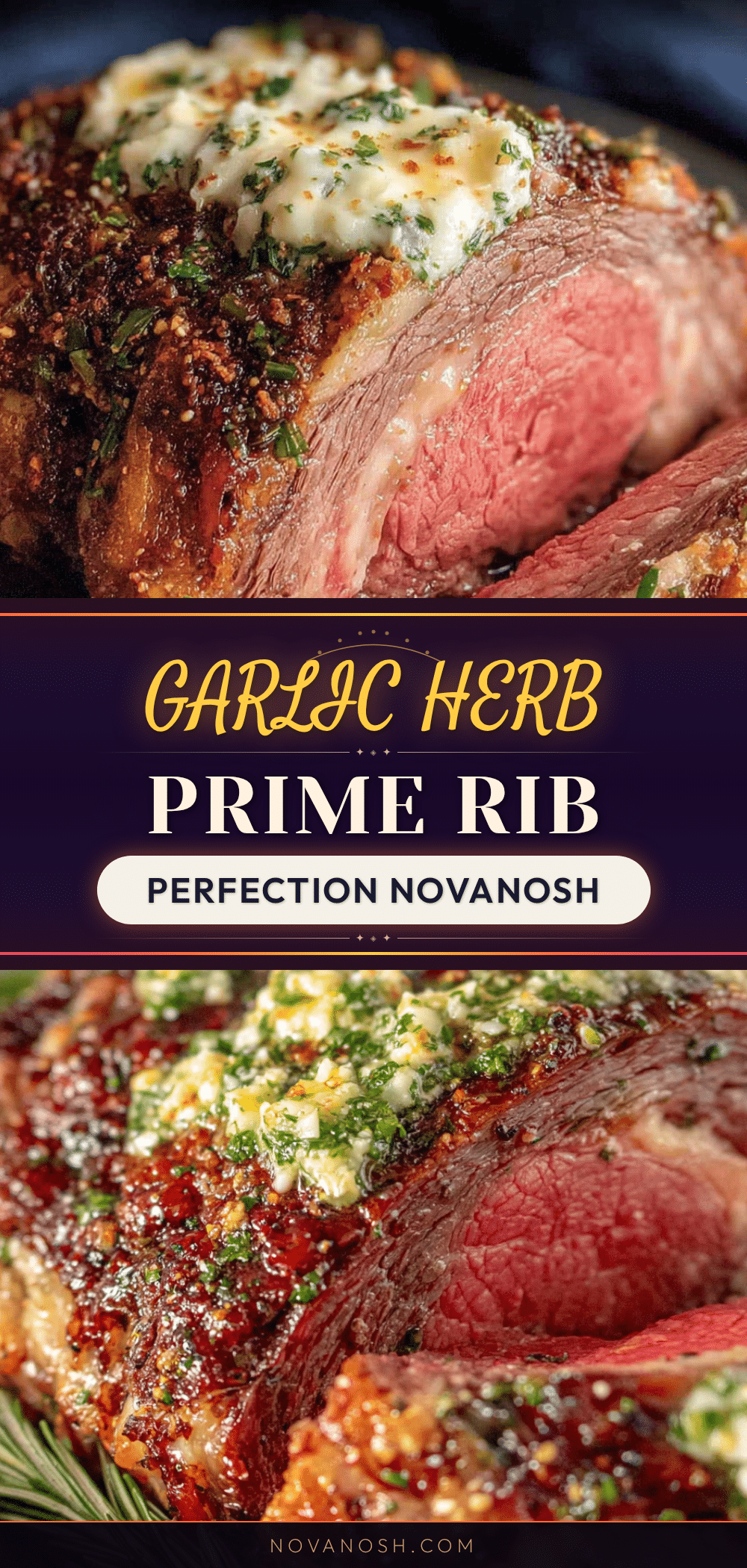
Perfect Prime Rib Roast with Garlic Herb Butter – Easy & Juicy
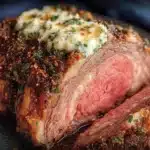
This perfect prime rib roast with garlic herb butter is incredibly juicy, simple to make, and perfect for holidays. The butter creates a protective crust that locks in juices while infusing the meat with incredible flavor.
- Prep Time: 20 minutes
- Cook Time: 2 hours 30 minutes
- Total Time: 2 hours 50 minutes
- Yield: 8 servings 1x
- Category: Main Course
- Cuisine: American
Ingredients
- 1 bone-in prime rib roast (4–5 pounds)
- 1 tablespoon kosher salt
- 1 teaspoon black pepper, freshly ground
- 1/2 cup unsalted butter, softened
- 6 cloves garlic, minced
- 2 tablespoons fresh rosemary, finely chopped
- 2 tablespoons fresh thyme leaves
- 1 tablespoon fresh parsley, chopped
- 1 teaspoon salt
- 1/2 teaspoon black pepper
- 1 cup beef broth
- 1/2 cup dry red wine (optional)
Instructions
- Take the roast out of the fridge 2 hours before cooking to bring to room temperature.
- Preheat your oven to 250°F (120°C).
- Make the garlic herb butter: In a small bowl, combine the softened butter, minced garlic, chopped rosemary, thyme, parsley, salt, and pepper. Mix until evenly distributed.
- Pat the roast dry with paper towels.
- Season the roast generously with 1 tablespoon kosher salt and 1 teaspoon black pepper on all sides.
- Spread the garlic herb butter all over the roast, covering every surface with a thick, even layer.
- Place the roast bone-side down on a rack in your roasting pan.
- Pour the beef broth and wine (if using) into the bottom of the pan, avoiding the roast.
- Roast at 250°F for about 25-30 minutes per pound (about 2 to 2.5 hours for a 4-5 pound roast). Start checking internal temperature after 1.5 hours; target 125°F (52°C) for medium-rare.
- Insert the meat thermometer into the thickest part of the roast, avoiding the bone.
- When the internal temperature hits 120°F (49°C), remove the roast from the oven.
- Increase the oven temperature to 500°F (260°C). Tent the roast loosely with foil and let it rest on the counter for 15-20 minutes.
- Remove the foil and return the roast to the 500°F oven. Roast for 8-12 minutes until deep golden brown and crispy.
- Remove from the oven and tent again with fresh foil. Let it rest for another 15 minutes before slicing.
- Slice against the grain into thick pieces. Serve immediately with pan drippings as au jus.
Notes
Don’t skip the resting periods—they are crucial for juicy meat. Use a meat thermometer for accuracy. Let the butter soften properly for even spreading. Season the roast the night before if possible for deeper flavor. Watch the final sear carefully to avoid burning. Save the bones for making beef stock.
Nutrition
- Serving Size: 6 oz
- Calories: 450
- Sodium: 600
- Fat: 28
- Saturated Fat: 12
- Carbohydrates: 2
- Protein: 45
Keywords: prime rib, garlic herb butter, roast beef, holiday dinner, Christmas dinner, New Year's dinner, beef roast, prime rib roast