Love this? Save it for later!
Share the inspiration with your friends
This was supposed to be a classic, overnight sourdough boule. I had planned everything perfectly—or so I thought. I mixed my starter, measured the flour, and set my timer. But somewhere between feeding my starter and answering a phone call from my sister, I grabbed the wrong measuring cup. Instead of the stiff, high-hydration dough I intended, I ended up with a sticky, slack, almost batter-like mess. It was too wet to shape, too loose to score, and honestly, I was already running late for a weekend hike. I stared at the bowl, ready to toss it and start over.
But then I thought—what if I just poured it into a pan? I mean, focaccia is basically a wet dough, right? So I oiled a baking sheet, scraped the whole sticky situation into it, and let it sit. I figured I’d bake it when I got back, and if it was a disaster, no one would ever know. Let me tell you, the smell when I walked through the door hours later was unbelievable. That golden, craggy top with pools of olive oil and the faint perfume of rosemary—it was nothing like my intended boule. It was better. That happy accident turned into my go-to recipe for Easy No-Knead Sourdough Focaccia with Rosemary, and I haven’t looked back since. Maybe you’ve been there, staring at a dough that seems like a failure, only to discover it’s a hidden gem. This is that recipe.
Why You’ll Love This Recipe
I have tested this recipe at least a dozen times—through humid summers, dry winter months, and with starters of varying vigor. It’s the kind of bread that makes you look like a pro without any of the actual work. Let me break down why this Easy No-Knead Sourdough Focaccia with Rosemary deserves a permanent spot in your kitchen.
- No Kneading Required: Seriously, zero arm workout. You just mix, fold a few times, and let time do the heavy lifting. The stretch and folds are gentle and take about 30 seconds each.
- Simple, Pantry Ingredients: You likely have flour, olive oil, salt, and rosemary on hand. The only “special” ingredient is your sourdough starter, which you already have if you’re into this kind of thing.
- Perfect for Beginners: If you’ve been scared of sourdough, this is your gateway bread. The high hydration makes it forgiving, and the dimpling step is just plain fun.
- Unbelievably Flavorful: The overnight fermentation gives it a tangy, complex flavor that no quick yeast bread can match. The rosemary and olive oil seal the deal.
- Always a Crowd-Pleaser: I’ve brought this to potlucks, served it alongside soup, and even eaten it plain for breakfast. It disappears every single time.
What makes this recipe different from every other focaccia out there? It’s the texture. The combination of a strong sourdough starter and a long, cold proof creates an airy, open crumb with a crust that shatters when you bite into it. It’s not just another bread recipe—it’s the one that makes you close your eyes after that first, salty, herby bite.
What Ingredients You Will Need
This recipe uses simple, wholesome ingredients to deliver that signature sourdough tang and fluffy interior. Most of these are pantry staples, which makes this a great last-minute bake if you plan ahead for the fermentation time.
- Bread Flour: 500 grams (about 4 cups). I prefer King Arthur Bread Flour for its high protein content, which gives the focaccia its chewy structure. You can use all-purpose, but the crumb will be slightly less airy.
- Active Sourdough Starter: 150 grams (about ⅔ cup), bubbly and fed. This is the heart of the flavor. Make sure it’s passed the float test for best results. If your starter is sluggish, the bread will still work, but the rise will be slower.
- Warm Water: 400 grams (about 1 ¾ cups). It should feel like bathwater—not hot, not cold. I use filtered water to avoid any chlorine issues that can mess with fermentation.
- Extra-Virgin Olive Oil: 60 grams (about ¼ cup) for the dough, plus more for the pan and topping. Use a good quality oil here—it’s a main flavor. I love California Olive Ranch for its peppery finish.
- Fine Sea Salt: 10 grams (about 1 ½ teaspoons). Don’t skip this. Salt controls fermentation and adds flavor. I use Redmond Real Salt for its mineral complexity.
- Fresh Rosemary: 2 tablespoons, finely chopped. Dried rosemary works in a pinch, but fresh is so much more aromatic. I grow a small bush on my windowsill just for this bread.
- Flaky Sea Salt: For topping, like Maldon. That final crunch is non-negotiable.
Substitution Guidance: If you need a gluten-free option, this recipe isn’t ideal due to the stretch and folds. Try a gluten-free flour blend designed for bread, but expect a denser result. For a dairy-free version, you’re already good—this recipe has no dairy. If you don’t have fresh rosemary, use 1 tablespoon of dried, but crush it between your fingers to release the oils before adding.
Equipment Needed
You don’t need a fancy bakery setup for this Easy No-Knead Sourdough Focaccia with Rosemary. I’ve made it in a tiny apartment kitchen and a friend’s rustic cabin with equal success.
- Large Mixing Bowl: At least 4-quart capacity. Glass or ceramic is ideal because it retains heat better than metal.
- Digital Kitchen Scale: This is a game-changer for consistent results. I use an OXO scale, and it’s never let me down. Measuring by volume is too risky with sourdough.
- 9×13-inch Baking Pan: A metal pan gives the crispiest bottom crust. A glass dish works but may need a few extra minutes in the oven. Avoid non-stick pans if possible—they don’t brown as well.
- Bench Scraper: For folding the dough and cleaning up sticky messes. A plastic dough scraper is cheap and incredibly useful.
- Plastic Wrap or a Shower Cap: For covering the dough during proofing. A reusable shower cap is my secret weapon—it fits perfectly over the bowl and doesn’t waste plastic.
- Cooling Rack: Essential for keeping the bottom crust crispy. If you let it cool in the pan, the steam will make it soggy.
Budget Tip: If you don’t have a scale, you can use measuring cups, but be aware that flour packing varies wildly. Spoon the flour into the cup and level it off for the most accurate volume measurement.
Preparation Method
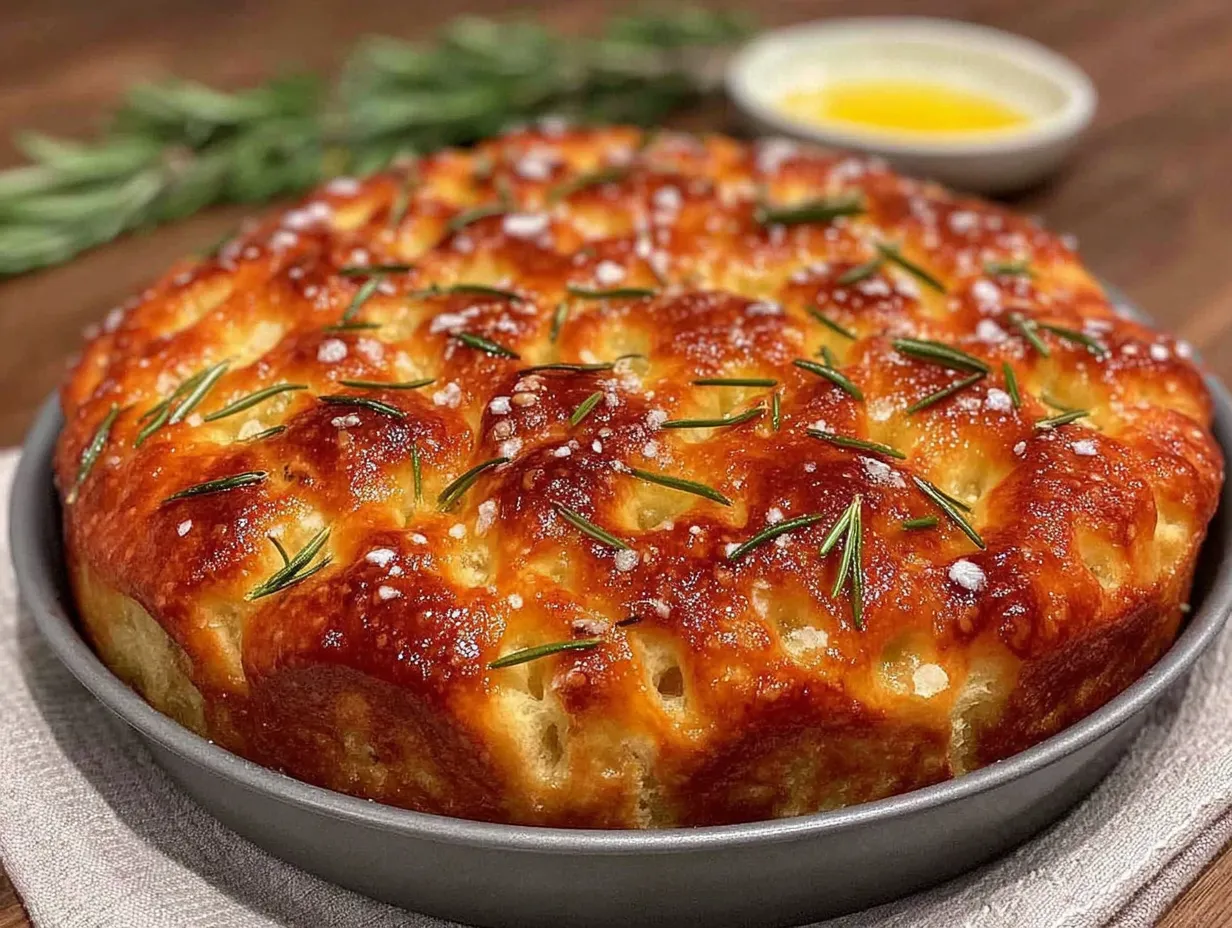
This method looks long, but it’s mostly waiting. The active work is maybe 15 minutes total. Here’s how to nail this Easy No-Knead Sourdough Focaccia with Rosemary.
- Mix the Dough (Day 1, Evening): In your large bowl, combine 500 grams bread flour and 10 grams fine sea salt. Whisk them together. Add 150 grams of your active, bubbly sourdough starter and 400 grams of warm water. Mix with a spatula until no dry flour remains. It will look shaggy and wet—that’s perfect. Cover with plastic wrap and let it rest for 30 minutes. This is called the autolyse, and it helps the gluten develop naturally.
- Perform Stretch and Folds: After the rest, wet your hands (sticky dough is easier to handle with wet hands). Grab one side of the dough, stretch it up, and fold it over the center. Rotate the bowl 90 degrees and repeat. Do this 4 times total, working your way around the bowl. Cover and let rest for 30 minutes. Repeat this stretch and fold process 3 more times, for a total of 4 sets. By the last set, you’ll feel the dough tightening up and becoming smoother. After the final fold, cover the bowl and let it sit at room temperature for about 4-6 hours, or until it has visibly puffed up and has bubbles on the surface.
- Cold Ferment (Overnight): This is where the magic happens. Cover the bowl tightly and place it in the refrigerator for 12 to 18 hours. Overnight is perfect. The cold slows down the fermentation, building that deep, tangy flavor. Don’t skip this if you can help it—it’s what makes the focaccia taste like it came from a bakery.
- Prepare the Pan (Day 2, Morning): The next day, take your 9×13-inch pan and pour in about 2 tablespoons of olive oil. Use your fingers to spread it all over the bottom and sides. Turn the cold dough out onto a lightly floured surface. It will be very soft. Gently coax it into a rough rectangle, then transfer it to the oiled pan. Don’t try to stretch it to the edges yet—just plop it in the center.
- Second Proof (The Relaxation): Cover the pan with plastic wrap and let the dough come to room temperature and relax. This takes about 2 to 3 hours. After 1 hour, you can gently coax the dough toward the edges of the pan. It will resist at first, but be patient. By the end of the proof, it should fill the pan completely and look jiggly and full of air bubbles. The surface should be domed and pillowy.
- Dimple and Top: Preheat your oven to 425°F (220°C) with a rack in the middle. Drizzle another 2 tablespoons of olive oil over the dough. Now for the fun part—use your fingertips to press deep dimples all over the surface. Don’t be shy. You want to create those classic focaccia craters. Sprinkle the chopped fresh rosemary and a generous pinch of flaky sea salt over the top.
- Bake: Place the pan on the middle rack and bake for 25 to 30 minutes. The top should be deep golden brown, and the bottom should be crisp. If you have a thermometer, the internal temperature should read about 200°F (93°C). Let it cool in the pan for 5 minutes, then transfer to a cooling rack. The smell will drive you crazy, but let it cool for at least 20 minutes before cutting. This sets the structure.
Pro Tip: If you want an even crispier bottom, bake the focaccia directly on a preheated baking stone or steel. Just slide the pan onto the hot surface.
Cooking Tips & Techniques
I’ve made every mistake in the book with this bread, so you don’t have to. Here are the lessons I learned the hard way.
- Don’t Skip the Stretch and Folds: I once tried to just mix and walk away. The result was a flat, dense focaccia that was more like a cracker. Those folds build the gluten network that traps the gas bubbles. It’s non-negotiable for that airy crumb.
- Watch Your Water Temperature: If your kitchen is cold (like mine in January), use slightly warmer water—around 80°F (27°C). If it’s a hot summer day, use cool tap water. The goal is to keep the dough around 75°F (24°C) during bulk fermentation. Too hot, and it will over-ferment and turn sour and flat.
- The Fingerprint Test: After the second proof, gently poke the dough with a flour-dusted finger. If the indentation springs back slowly, it’s ready. If it springs back immediately, it needs more time. If it doesn’t spring back at all, you’ve over-proofed it, but don’t worry—bake it anyway. It will still taste good, just a bit denser.
- Use Enough Oil: I used to be stingy with the olive oil, thinking it would make the bread greasy. Wrong. The oil is what creates that crispy, almost fried bottom crust and keeps the dough from sticking. Be generous.
- Fresh vs. Dried Rosemary: Fresh rosemary is softer and melds into the bread. Dried rosemary can be a bit pokey. If using dried, crush it between your fingers before sprinkling to release the flavor and soften the needles.
Variations & Adaptations
This Easy No-Knead Sourdough Focaccia with Rosemary is a fantastic base for experimentation. Here are a few ways I’ve played with it.
- Roasted Garlic & Thyme: Roast a whole head of garlic until soft and buttery. Squeeze the cloves into the dough during the stretch and fold stage. Replace the rosemary with fresh thyme. It’s savory, sweet, and utterly addictive.
- Everything Bagel Focaccia: After dimpling, sprinkle the top with everything bagel seasoning (sesame seeds, poppy seeds, dried garlic, dried onion, and salt). The crunch is incredible, and it makes the best sandwich bread.
- Sun-Dried Tomato & Feta: Fold ½ cup of chopped, oil-packed sun-dried tomatoes into the dough during the stretch and folds. After dimpling, press small cubes of feta cheese into the surface. The salty feta and tangy tomatoes are a match made in heaven.
- Gluten-Free Adaptation: I’ve tested this with a 1:1 gluten-free flour blend. The dough is much stickier and won’t be as airy, but it’s still delicious. Reduce the water to 350 grams and expect a denser, more cake-like texture.
- Spicy Version: Add ½ teaspoon of red pepper flakes to the dough along with the salt. Drizzle the finished focaccia with a little chili oil before serving. It’s fantastic with a bowl of tomato soup.
Serving & Storage Suggestions
This focaccia is best served warm, but it’s still fantastic at room temperature. Here’s how I like to enjoy it.
- Serving Temperature: Serve it warm from the oven for that shatteringly crisp crust. If you’re making it ahead, reheat slices in a 350°F (175°C) oven for 5 minutes. The microwave will make it rubbery—don’t do it.
- Perfect Pairings: It’s the ultimate side for a hearty minestrone soup or a simple green salad with balsamic vinaigrette. I also love it alongside a board of prosciutto, aged cheddar, and marinated olives. It’s also incredible as a sandwich bread for roasted vegetables or grilled chicken.
- Storage: Store leftover focaccia in an airtight container at room temperature for up to 2 days. Do not refrigerate it—the fridge will dry it out and make it stale. For longer storage, slice it and freeze it in a zip-top bag for up to 3 months. Toast slices directly from frozen.
- Reheating: The best way to revive day-old focaccia is to pop it in a toaster oven or under the broiler for a minute or two. It brings back the crunch.
- Flavor Development: Honestly, the flavor gets even better on day two. The rosemary and olive oil meld together, and the tanginess of the sourdough becomes more pronounced. If you can resist eating it all in one sitting, you’re a stronger person than me.
Nutritional Information & Benefits
While this is a treat, it does have some redeeming qualities. Here’s the breakdown.
Per Serving (1/8 of the recipe): Approximately 280 calories, 8g fat (1g saturated), 45g carbohydrates, 2g fiber, 7g protein, 380mg sodium.
- Health Benefits: Sourdough fermentation reduces phytic acid, making the minerals in the flour more bioavailable. It also has a lower glycemic index compared to regular bread, meaning it won’t spike your blood sugar as much. The olive oil provides heart-healthy monounsaturated fats.
- Dietary Considerations: This recipe is naturally vegan and dairy-free. It is not gluten-free (see variations for a modified version). It contains wheat and gluten.
- Allergens: Contains wheat. May contain traces of other allergens depending on your starter’s environment.
- My Perspective: I believe in balance. This focaccia is a celebration food—it’s meant to be shared and enjoyed without guilt. The long fermentation means it’s easier on your digestion than a quick bread, so you can feel good about that second piece.
Conclusion
This Easy No-Knead Sourdough Focaccia with Rosemary started as a mistake, but it’s become the bread I’m most proud of. It’s proof that you don’t need fancy techniques or hours of kneading to create something truly special. The deep, tangy flavor from the overnight fermentation, the crisp, golden crust, and the fragrant rosemary all come together in a way that feels both rustic and refined.
I encourage you to make this your own. Add your favorite toppings, play with different herbs, or keep it simple with just salt and oil. The recipe is a guide, not a rulebook. I’d love to hear how it turns out for you—did you try a wild variation? Did your family devour it before it cooled? Drop a comment below and share your focaccia story. And if you loved it, please share this post with a friend who needs a little bread therapy in their life. Happy baking, friend!
Frequently Asked Questions
Can I use active dry yeast instead of sourdough starter?
Technically, yes, but it won’t be the same bread. This recipe is designed specifically for the tang and texture that sourdough provides. If you want a yeast version, look for a classic no-knead focaccia recipe. The fermentation times will be much shorter.
My dough isn’t bubbling during the bulk fermentation. What went wrong?
This usually means your starter wasn’t active enough. Make sure you fed it 4-6 hours before using it, and it should be at least doubled in volume and full of bubbles. If your kitchen is cold, the fermentation will also be slower. Move the bowl to a warmer spot, like near the oven (turned off) or on top of the fridge.
Can I skip the overnight cold ferment?
You can, but you’ll lose a lot of flavor. The cold ferment is what develops that signature sourdough tang. If you’re short on time, let it bulk ferment at room temperature for an extra 4 hours instead, but the flavor will be milder. The texture will still be good.
Why is my focaccia dense and not airy?
This is almost always due to under-fermentation or over-handling. Make sure you’re giving the dough enough time to rise during both the bulk and second proof. Also, be gentle when transferring it to the pan—you don’t want to deflate all those precious gas bubbles.
How do I get a really crispy bottom crust?
Use a metal pan and don’t skimp on the olive oil. Baking on a lower oven rack can also help. For an extra-crispy result, place a baking steel or stone on the bottom rack and preheat it for 30 minutes before sliding the pan onto it. The direct heat will create a beautiful, crunchy base.
Pin This Recipe!
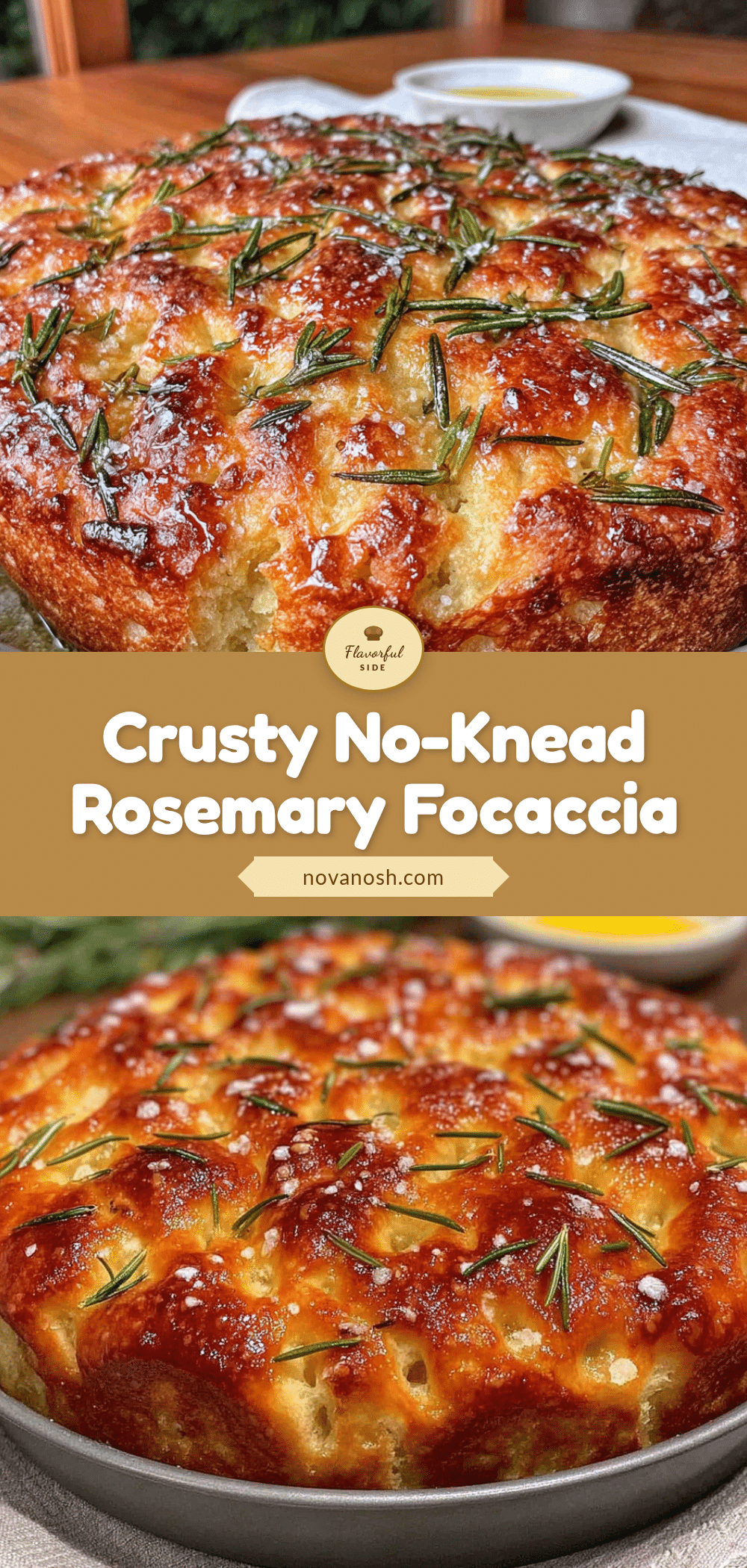
Easy No-Knead Sourdough Focaccia with Rosemary
This easy no-knead sourdough focaccia with rosemary is a forgiving, flavorful bread that requires minimal effort. With a tangy, airy crumb and a crispy, golden crust, it’s perfect for beginners and a guaranteed crowd-pleaser.
- Prep Time: 15 minutes
- Cook Time: 30 minutes
- Total Time: 12 hours 45 minutes (includes overnight fermentation)
- Yield: 8 servings 1x
- Category: Bread
- Cuisine: Italian
Ingredients
- 500 grams bread flour (about 4 cups)
- 150 grams active sourdough starter (about ⅔ cup), bubbly and fed
- 400 grams warm water (about 1 ¾ cups)
- 60 grams extra-virgin olive oil (about ¼ cup), plus more for pan and topping
- 10 grams fine sea salt (about 1 ½ teaspoons)
- 2 tablespoons fresh rosemary, finely chopped
- Flaky sea salt for topping (e.g., Maldon)
Instructions
- Mix the Dough (Day 1, Evening): In a large bowl, combine 500 grams bread flour and 10 grams fine sea salt. Whisk together. Add 150 grams active sourdough starter and 400 grams warm water. Mix with a spatula until no dry flour remains. Cover with plastic wrap and let rest for 30 minutes (autolyse).
- Perform Stretch and Folds: After the rest, wet your hands. Grab one side of the dough, stretch it up, and fold it over the center. Rotate the bowl 90 degrees and repeat. Do this 4 times total. Cover and let rest for 30 minutes. Repeat the stretch and fold process 3 more times (4 sets total). After the final fold, cover and let sit at room temperature for 4-6 hours, until puffed and bubbly.
- Cold Ferment (Overnight): Cover the bowl tightly and refrigerate for 12 to 18 hours.
- Prepare the Pan (Day 2, Morning): Pour about 2 tablespoons olive oil into a 9×13-inch pan and spread it all over. Turn the cold dough out onto a lightly floured surface. Gently coax into a rough rectangle, then transfer to the oiled pan. Don’t stretch to edges yet.
- Second Proof: Cover the pan with plastic wrap and let the dough come to room temperature and relax for 2 to 3 hours. After 1 hour, gently coax the dough toward the edges. By the end, it should fill the pan and look jiggly and pillowy.
- Dimple and Top: Preheat oven to 425°F (220°C). Drizzle another 2 tablespoons olive oil over the dough. Use fingertips to press deep dimples all over the surface. Sprinkle chopped fresh rosemary and a generous pinch of flaky sea salt on top.
- Bake: Place pan on middle rack and bake for 25 to 30 minutes, until deep golden brown and internal temperature reaches about 200°F (93°C). Let cool in pan for 5 minutes, then transfer to a cooling rack. Cool for at least 20 minutes before cutting.
Notes
For a crispier bottom, bake on a preheated baking stone or steel. Use fresh rosemary for best aroma; if using dried, crush it first. Don’t skip the stretch and folds—they build gluten for an airy crumb. The overnight cold ferment develops deep flavor.
Nutrition
- Serving Size: 1/8 of recipe
- Calories: 280
- Sodium: 380
- Fat: 8
- Saturated Fat: 1
- Carbohydrates: 45
- Fiber: 2
- Protein: 7
Keywords: sourdough focaccia, no-knead bread, rosemary focaccia, easy sourdough, homemade bread