Love this? Save it for later!
Share the inspiration with your friends
There used to be a tiny patisserie tucked behind a bookstore in Portland called Petal & Crumb that made a rose petal cake I still dream about. When they closed their doors three years ago—just a handwritten sign one Tuesday morning saying “Thank you for the sweetness”—I actually stood there staring at the empty window for a full minute. After seventeen tries—I burned two batches of buttercream, cried over one collapsed layer, and seriously considered giving up on baking altogether—I finally got it.
Honestly, the first few attempts were rough. My kitchen smelled like a fancy soap shop instead of a bakery, and the buttercream kept splitting into this greasy, sad mess. But I kept coming back to it because that cake wasn’t just dessert—it was the cake I ordered for my birthday two years in a row. It was the cake my friend Sarah brought to my door when I had the flu, wrapped in parchment and tied with kitchen twine. Maybe you’ve been there—that one recipe that becomes tangled up with memories so good you can’t let it go.
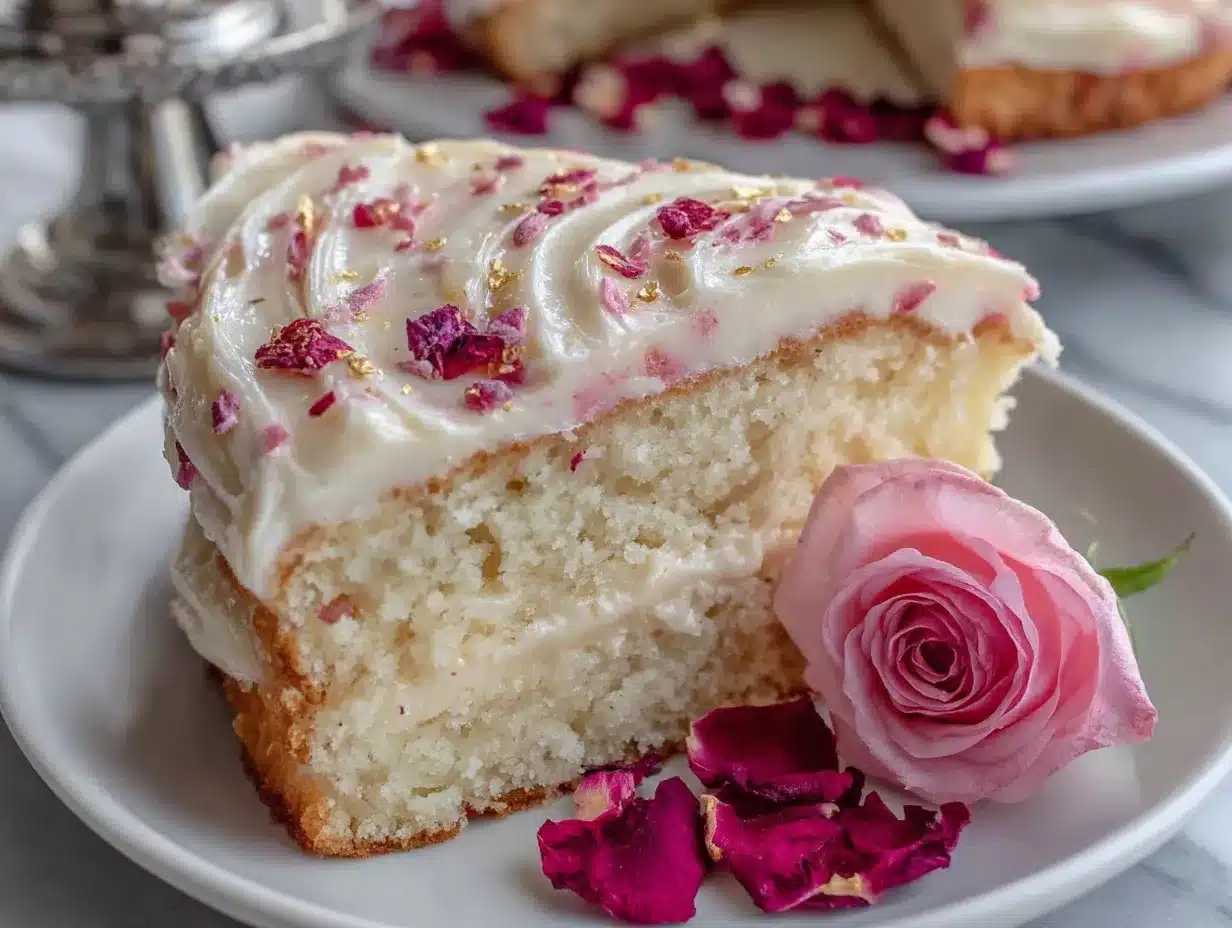
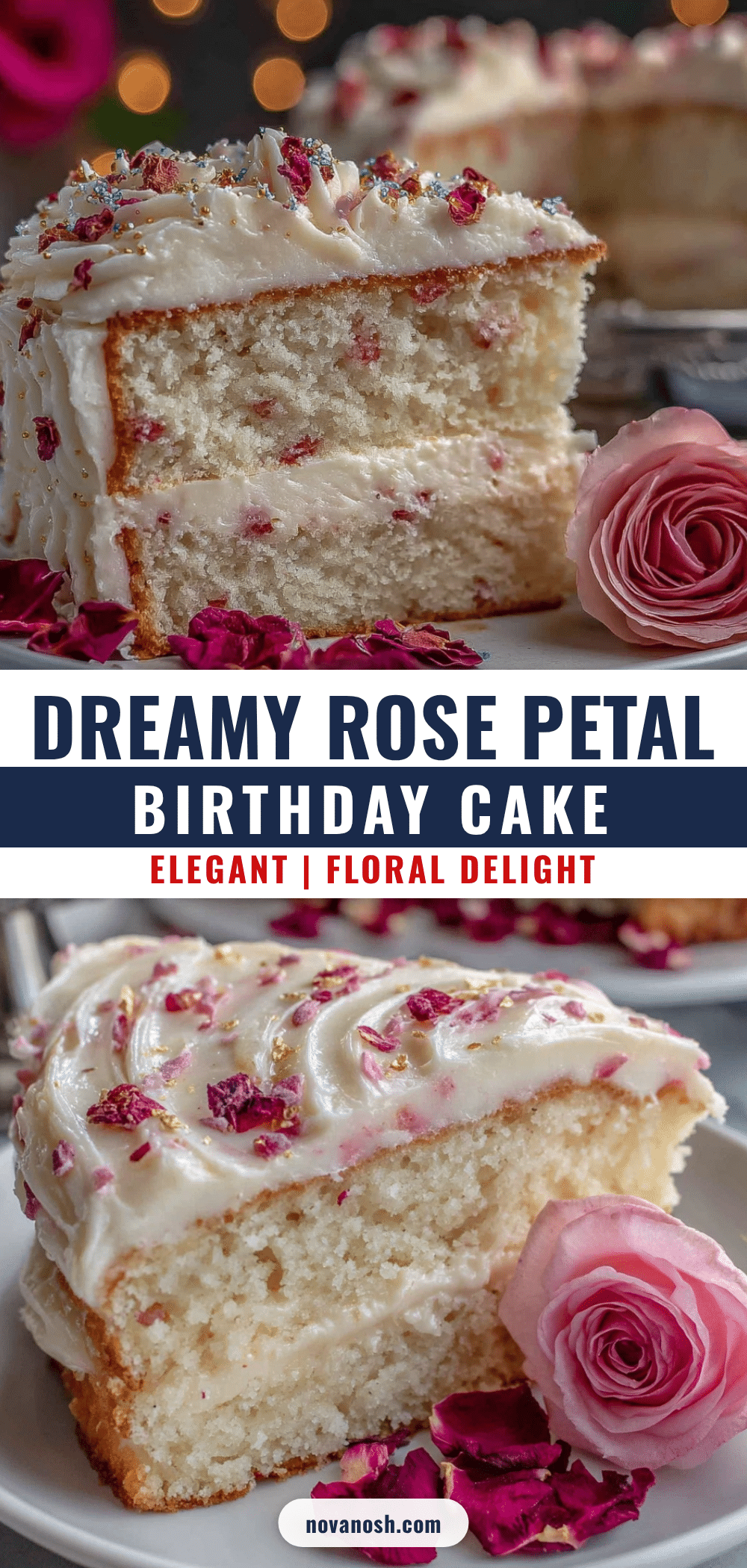
This Dreamy Rose Petal Birthday Cake with Rosewater Buttercream is my love letter to that little shop. It’s floral without being perfumy, sweet without being cloying, and the crumb is so tender it practically melts on your tongue. The rosewater buttercream? Let me tell you—it’s the kind of frosting that makes you close your eyes after the first bite. I keep making it because every slice tastes like a celebration, and honestly, we could all use more of those.
Why You’ll Love This Recipe
This isn’t just another pretty cake—it’s the one that’ll have your guests asking for the recipe before they finish their first slice. After testing this recipe for over a year and bringing it to every birthday dinner I could, I can tell you it’s earned its spot in my permanent rotation.
- Stunningly Beautiful : The natural rose petals create this gorgeous, romantic look that makes any occasion feel special. No fancy decorating skills required—the petals do all the work for you.
- Perfectly Balanced Floral Flavor : Rosewater can be tricky—too much and it tastes like perfume, too little and you wonder why you bothered. This recipe hits that sweet spot where the floral notes enhance the vanilla rather than overpowering it.
- Simple Ingredients : Nothing weird here. You can find rosewater at most grocery stores or online, and dried rose petals are surprisingly easy to source. Everything else is standard baking pantry stuff.
- Foolproof Buttercream : I’ve tested this buttercream six different ways to make sure it doesn’t split, curdle, or turn into a soupy mess on warm days. It’s stable enough for piping but still light and dreamy.
- Birthday-Worthy Without the Stress : This cake looks like you spent hours at a fancy bakery, but it comes together in about two hours start to finish. Perfect for when you want to impress without losing your whole afternoon.
- Crowd-Pleaser : Even people who swear they don’t like floral desserts love this cake. The rose flavor is elegant and subtle—it’s the kind of sophisticated sweetness that converts skeptics.
What makes this different from every other rose cake out there is the technique. I blend dried rose petals right into the sugar before creaming the butter, which infuses the entire cake with that delicate floral essence without any artificial extracts. The buttercream uses a touch of rosewater and a pinch of salt to balance the sweetness—it’s a small detail, but it makes all the difference between a good cake and a memorable one.
This is the cake that makes people close their eyes when they take a bite. It’s comfort and elegance wrapped up in one beautiful package—and you get to be the one who made it.
What Ingredients You Will Need
This recipe uses simple, wholesome ingredients that come together to create something truly special. Most of these are pantry staples, with a couple of special additions that make this cake unforgettable.
For the Cake Layers
- 3 cups all-purpose flour (spooned and leveled—don’t scoop directly from the bag)
- 2 ½ teaspoons baking powder
- ½ teaspoon baking soda
- 1 teaspoon salt (I use fine sea salt; it dissolves more evenly)
- 1 cup unsalted butter, softened to room temperature (I prefer Kerrygold for the richness)
- 2 cups granulated sugar
- ¼ cup dried edible rose petals, finely ground (pulse them in a spice grinder or crush with a mortar and pestle)
- 4 large eggs, room temperature
- 1 cup buttermilk, room temperature (or make your own by adding 1 tablespoon lemon juice to 1 cup whole milk, let sit 5 minutes)
- 2 teaspoons vanilla extract
- 1 tablespoon rosewater (look for pure rosewater, not rose syrup—I like Cortas brand)
- Pink gel food coloring (optional, but gives a lovely blush tint)
For the Rosewater Buttercream
- 1 ½ cups unsalted butter, softened (really soft—like, almost squishy soft)
- 4 cups powdered sugar, sifted (sifting prevents lumps, trust me on this)
- 3 tablespoons heavy cream (or full-fat coconut milk for dairy-free)
- 2 teaspoons rosewater
- 1 teaspoon vanilla extract
- Pinch of salt (this is non-negotiable—it balances the sweetness and makes the rose flavor pop)
- Pink or rose gel food coloring (optional)
For Decoration
- ¼ cup dried edible rose petals (whole or roughly crushed)
- Fresh rose petals (optional, if you want to get fancy—make sure they’re pesticide-free)
- Gold or pink sprinkles (optional, for a birthday vibe)
A few ingredient notes worth mentioning: Not all rosewater is created equal. Some brands are more concentrated than others, so start with the smaller amount and taste as you go. I’ve had good luck with Cortas and Sadaf brands—they’re consistent and widely available. For the dried rose petals, look for food-grade petals from a spice shop or online. The ones from tea blends work great too, just make sure they haven’t been treated with anything weird.
If you can’t find dried rose petals, you can skip grinding them into the sugar and just use an extra teaspoon of rosewater in the batter. The cake won’t have quite the same depth of flavor, but it’ll still be lovely.
Equipment Needed
You don’t need a fancy bakery setup to make this cake, but having the right tools makes the process so much smoother. Here’s what you’ll need:
- Three 8-inch round cake pans (I love my Fat Daddio’s anodized aluminum pans—they heat evenly and release cakes beautifully)
- Stand mixer or hand mixer (either works; you just need something to cream butter and whip frosting)
- Parchment paper (for lining the pans—this is your insurance against stuck cake layers)
- Cooling racks (wire racks let air circulate so your cakes cool evenly without getting soggy bottoms)
- Offset spatula (this makes frosting so much easier than a regular butter knife)
- Cake turntable (not strictly necessary, but it makes decorating infinitely easier and more fun)
- Spice grinder or mortar and pestle (for grinding the dried rose petals into the sugar)
- Sifter or fine-mesh strainer (for sifting powdered sugar and flour)
- Measuring cups and spoons (the metal ones are more accurate than plastic)
- Kitchen scale (optional but recommended—baking by weight is more consistent)
Don’t have a cake turntable? No worries. You can place your cake plate on an upside-down bowl and spin it manually—it’s a little janky but it works in a pinch. And if you don’t have three cake pans, you can bake the layers one at a time. Just let the pans cool completely between batches and wash them in cool water before greasing again.
Preparation Method
Let’s make this dreamy rose petal cake. Take your time with each step—baking is a meditation, not a race.
- Preheat and Prep : Preheat your oven to 350°F (175°C). Grease three 8-inch round cake pans with butter or baking spray, line the bottoms with parchment paper circles, then grease the parchment too. This double-coating guarantees your cakes will release without a fight.
- Make Rose Sugar : Place the 2 cups of granulated sugar and ¼ cup of dried edible rose petals in a spice grinder or food processor. Pulse until the petals are finely ground into the sugar—about 30 seconds. The sugar will look slightly pink and smell heavenly. Set aside. (I once skipped this step and just added petals to the dry ingredients—the cake was bland and the petals stayed in weird chunks. Don’t be like me.)
- Whisk Dry Ingredients : In a medium bowl, whisk together the 3 cups all-purpose flour, 2 ½ teaspoons baking powder, ½ teaspoon baking soda, and 1 teaspoon salt. Set aside.
- Cream Butter and Rose Sugar : In the bowl of a stand mixer fitted with the paddle attachment (or using a hand mixer), beat the 1 cup softened unsalted butter and the rose sugar together on medium speed until light, fluffy, and pale—about 3 to 4 minutes. Scrape down the sides and bottom of the bowl halfway through. The mixture should look almost like whipped frosting at this point.
- Add Eggs One at a Time : Add the 4 room-temperature eggs, one at a time, beating well after each addition (about 30 seconds each). The batter might look a little curdled after the second or third egg—that’s totally normal, don’t panic. Add the 2 teaspoons vanilla extract and 1 tablespoon rosewater, and beat just until combined.
- Alternate Dry and Wet Ingredients : With the mixer on low speed, add the flour mixture in three additions, alternating with the 1 cup buttermilk in two additions. Start and end with the flour mixture. Mix just until the flour disappears—overmixing will make your cake tough. If you’re using pink food coloring, add it with the last bit of flour and mix until you reach your desired shade.
- Divide and Bake : Divide the batter evenly among the three prepared pans (about 1 ⅓ cups per pan, or use a kitchen scale for accuracy). Bake for 22 to 28 minutes, rotating the pans halfway through. The cakes are done when a toothpick inserted in the center comes out clean or with a few moist crumbs. The tops should spring back when lightly pressed.
- Cool Completely : Let the cakes cool in the pans on wire racks for 10 minutes. Then run a thin knife around the edges, invert onto the racks, peel off the parchment, and let cool completely. This is crucial—warm cake + buttercream = melty disaster. I usually bake the cakes the day before and chill them overnight.
- Make the Buttercream : While the cakes cool, make the frosting. In a clean stand mixer bowl with the paddle attachment, beat the 1 ½ cups softened butter on medium speed for 2 to 3 minutes until smooth, pale, and creamy. It should look almost white and feel like soft clouds.
- Add Sugar Gradually : With the mixer on low speed, add the 4 cups sifted powdered sugar, about ½ cup at a time. After each addition, increase the speed to medium and beat for 20 seconds. This gradual addition prevents a sugar cloud explosion in your kitchen—learned that one the hard way.
- Add Liquid and Flavor : Once all the sugar is incorporated, add the 3 tablespoons heavy cream, 2 teaspoons rosewater, 1 teaspoon vanilla extract, and a pinch of salt. Beat on medium-high speed for 3 to 4 minutes until the buttercream is light, fluffy, and spreadable. If it’s too thick, add another tablespoon of cream. If it’s too thin, add a little more powdered sugar. Add food coloring now if using.
- Assemble the Cake : Place one cake layer on your serving plate or cake board. Spread about ¾ cup of buttercream evenly on top. Repeat with the second layer and another ¾ cup of buttercream. Top with the third layer, flat side up.
- Crumb Coat : Spread a thin layer of buttercream over the entire cake—this is called a crumb coat and it traps all those loose crumbs so your final layer is smooth. Don’t worry about making it pretty. Refrigerate for 20 minutes until the crumb coat is firm to the touch.
- Final Frosting : Apply the remaining buttercream to the chilled cake. Use your offset spatula to create smooth sides or rustic swirls—whatever feels right. Press the dried rose petals onto the bottom edge or scatter them on top. Add fresh petals or sprinkles if you’re feeling fancy.
- Chill Before Serving : Refrigerate the finished cake for at least 30 minutes before slicing. This helps the buttercream set and makes for cleaner slices. Remove from the fridge about 15 minutes before serving to let it soften slightly.
Cooking Tips & Techniques
After seventeen attempts at this cake, I’ve collected some hard-won wisdom. Here are the tips that made the biggest difference:
Room temperature ingredients are not optional. Cold eggs and cold buttercream will make your batter curdle and your buttercream split. Leave your eggs, butter, and buttermilk out on the counter for at least an hour before you start. If you forget (I forget constantly), place the eggs in a bowl of warm water for 5 minutes and microwave the buttermilk for 15 seconds.
Don’t overmix the batter. I know it’s tempting to keep beating until everything looks perfectly smooth, but overmixing develops gluten and makes your cake tough and dense. Mix just until the flour disappears, then stop. A few small lumps are fine—they’ll bake out.
Weigh your flour if you can. Scooping flour directly from the bag can give you up to 25% more flour than the recipe calls for, which leads to dry, crumbly cakes. If you don’t have a scale, spoon the flour into your measuring cup and level it off with a knife.
Chill your cakes before frosting. This was the game-changer for me. I used to try frosting warm cakes and ended up with buttercream sliding off the sides like a sad avalanche. Chill your cake layers for at least an hour (or freeze them for 30 minutes) before you start assembling. The cold cake firms up and holds the buttercream beautifully.
Trust the process with rosewater. When you first add rosewater to the buttercream, it might smell a little strong. Don’t panic. The flavor mellows as the buttercream sits, and by the time the cake is assembled and chilled, it’ll be perfectly balanced. If you’re nervous, start with 1 teaspoon and taste before adding more.
Use a bench scraper for smooth sides. If you want that perfectly smooth, bakery-style finish, hold a bench scraper against the side of the cake while you spin the turntable. It takes a few tries to get the hang of it, but the results are so satisfying.
Variations & Adaptations
This rose petal cake is beautiful as written, but it’s also wonderfully adaptable. Here are some variations I’ve tried and loved:
Dairy-Free Version : Substitute the butter in both the cake and buttercream with a high-quality vegan butter (I like Miyoko’s or Country Crock Plant Butter). Use full-fat coconut milk or oat milk mixed with 1 teaspoon lemon juice instead of buttermilk, and use canned coconut cream instead of heavy cream. The texture is slightly denser but still incredibly tender.
Gluten-Free Adaptation : Replace the all-purpose flour with 2 ½ cups gluten-free 1-to-1 baking flour (I recommend Bob’s Red Mill or King Arthur Measure for Measure). Add ½ teaspoon xanthan gum if your blend doesn’t already include it. The cake will be a bit more delicate, so handle it gently when stacking the layers.
Lemon Rose Version : Add the zest of 2 lemons to the rose sugar when grinding the petals. Replace 2 tablespoons of the buttermilk with fresh lemon juice. The lemon brightens the rose flavor beautifully—it’s like a garden in cake form.
Single Layer Cake : Divide the batter between two 9-inch round pans instead of three 8-inch pans, and bake for 25 to 30 minutes. Frost as a single layer with a thick blanket of buttercream on top. Less fussy, just as delicious.
Cupcake Version : This batter makes about 24 cupcakes. Fill lined muffin tins about ⅔ full and bake at 350°F for 18 to 22 minutes. Top with a swirl of rosewater buttercream and a sprinkle of dried petals. Perfect for birthday parties or tea parties.
Rose and Raspberry : Add a thin layer of seedless raspberry jam between each cake layer before frosting. The tartness of the raspberries cuts through the sweetness and makes the rose flavor sing. I did this for a friend’s bridal shower and people lost their minds.
Serving & Storage Suggestions
This cake is best served at room temperature, so pull it out of the fridge about 20 to 30 minutes before you plan to cut it. The buttercream softens slightly and the cake layers become extra tender and flavorful.
For the prettiest slices, use a long, sharp knife and wipe it clean between each cut. Dip the knife in hot water and dry it off before slicing—the warm blade glides through the buttercream without dragging. I learned this trick from a pastry chef friend and it made such a difference in how my cakes look on the plate.
This cake pairs beautifully with a cup of Earl Grey tea, a floral gin cocktail, or a simple glass of sparkling water with a splash of elderflower syrup. If you’re serving it for a birthday, a scoop of vanilla bean ice cream on the side is never a bad idea.
Storage : Store leftover cake in an airtight container in the refrigerator for up to 5 days. The rose flavor actually deepens and becomes more nuanced after a day or two—I honestly prefer this cake on day two. Let slices come to room temperature before eating for the best texture.
Freezing : You can freeze the unfrosted cake layers, tightly wrapped in plastic wrap and then foil, for up to 3 months. Thaw at room temperature before frosting. The frosted cake can also be frozen (unadorned with fresh petals) for up to 2 months. Thaw in the refrigerator overnight, then add fresh petals before serving.
The flavors meld and mellow over time, so don’t stress about making this cake a day ahead. In fact, I recommend it. The buttercream sets up beautifully and the cake becomes even more moist and flavorful.
Nutritional Information & Benefits
Let’s be real—this is a celebration cake, not a health food. But that doesn’t mean it’s completely devoid of redeeming qualities. Here’s what you’re working with per slice (based on 12 generous servings):
- Calories : Approximately 520-580 per slice
- Fat : 32g
- Carbohydrates : 62g
- Protein : 5g
- Sugar : 45g
On the brighter side, rose petals contain antioxidants and have been used in traditional medicine for their calming properties. Rosewater is known for its anti-inflammatory benefits and can actually help soothe digestion. So while this cake won’t replace your multivitamin, at least you’re getting a little something extra with each bite.
For those with dietary concerns, this recipe contains dairy, gluten, and eggs. The dairy-free and gluten-free variations above work beautifully if you need to accommodate allergies. The rose petals themselves are naturally free of common allergens, which is nice.
My personal take? This cake is about joy, not nutrition. It’s the centerpiece of a celebration, the thing that makes people smile when you carry it to the table. One slice of happiness is absolutely worth it.
Conclusion
This Dreamy Rose Petal Birthday Cake with Rosewater Buttercream is more than just a recipe—it’s a way to bring a little elegance and a lot of love to any celebration. The floral notes, the tender crumb, that silky buttercream—every element works together to create something truly special.
I hope you make this cake for someone you love. Or for yourself, honestly. You deserve a cake that makes you feel celebrated. Customize it however you like—add raspberries, swap the frosting, pile on extra petals. Make it yours. That’s the beauty of baking, isn’t it? The recipe is just a starting point, and you bring the magic.
If you make this cake, I’d love to hear about it. Drop a comment below and tell me how it turned out, what variations you tried, or who you made it for. Share your photos on Pinterest and tag me—I want to see your beautiful creations. And if you have questions, ask away. I’ve made this cake seventeen times, so I’ve probably made every mistake you could make. Let me save you some trouble.
Now go make something dreamy. You’ve got this.
Frequently Asked Questions
Can I make this cake without a stand mixer?
Absolutely. A hand mixer works perfectly for both the cake batter and the buttercream. You’ll just need to beat the butter and sugar for a bit longer—about 5 to 6 minutes instead of 3 to 4. If you’re feeling strong, you can even cream the butter and sugar by hand with a wooden spoon, but I won’t lie, your arm will get a workout.
Where can I find edible rose petals?
Most well-stocked grocery stores carry dried edible rose petals in the spice aisle or international foods section. You can also find them at Middle Eastern markets, specialty tea shops, or online retailers like Amazon and Etsy. Just make sure the package says “food grade” or “edible”—roses from a florist are often treated with pesticides and aren’t safe to eat.
Why did my buttercream turn out grainy?
Grainy buttercream usually means the powdered sugar wasn’t sifted, or the butter wasn’t soft enough when you started. Sifting eliminates those tiny sugar clumps, and properly softened butter (almost squishy, but not melted) incorporates the sugar smoothly. If your buttercream is already grainy, try warming the bowl slightly over a pan of warm water and beating it again—sometimes that helps dissolve the sugar crystals.
Can I use rose extract instead of rosewater?
You can, but be very careful. Rose extract is much more concentrated than rosewater, so you’ll only need about ¼ to ½ teaspoon. Start with ⅛ teaspoon and taste as you go. Too much rose extract can make your cake taste like soap or perfume, and there’s no fixing that once it’s in there. Rosewater is gentler and more forgiving, which is why I recommend it.
How far in advance can I make this cake?
You’ve got options here. The cake layers can be baked up to 2 days ahead, wrapped tightly in plastic wrap, and stored at room temperature. The buttercream can be made up to 5 days ahead and refrigerated in an airtight container—just let it come to room temperature and re-whip it before using. The fully assembled cake is best within 2 days, but it’ll still be delicious for up to 5 days if stored properly in the fridge. Honestly, the flavor improves after a day, so making it the day before your celebration is my favorite approach.
Pin This Recipe!
Dreamy Rose Petal Birthday Cake with Rosewater Buttercream
A floral, tender crumb cake infused with rose petals and rosewater, topped with a silky rosewater buttercream. Perfect for celebrations, this cake is elegant, balanced, and surprisingly simple to make.
- Prep Time: 30 minutes
- Cook Time: 25 minutes
- Total Time: 2 hours (including cooling and assembly)
- Yield: 12 servings 1x
- Category: Dessert
- Cuisine: American
Ingredients
- 3 cups all-purpose flour (spooned and leveled)
- 2 ½ teaspoons baking powder
- ½ teaspoon baking soda
- 1 teaspoon fine sea salt
- 1 cup unsalted butter, softened
- 2 cups granulated sugar
- ¼ cup dried edible rose petals, finely ground
- 4 large eggs, room temperature
- 1 cup buttermilk, room temperature
- 2 teaspoons vanilla extract
- 1 tablespoon rosewater
- Pink gel food coloring (optional)
- 1 ½ cups unsalted butter, softened (for buttercream)
- 4 cups powdered sugar, sifted
- 3 tablespoons heavy cream
- 2 teaspoons rosewater (for buttercream)
- 1 teaspoon vanilla extract (for buttercream)
- Pinch of salt
- Pink or rose gel food coloring (optional, for buttercream)
- ¼ cup dried edible rose petals (for decoration)
- Fresh rose petals (optional, for decoration)
- Gold or pink sprinkles (optional, for decoration)
Instructions
- Preheat oven to 350°F (175°C). Grease three 8-inch round cake pans, line bottoms with parchment, and grease parchment.
- Make rose sugar: In a spice grinder or food processor, pulse 2 cups granulated sugar with ¼ cup dried rose petals until finely ground (about 30 seconds).
- Whisk dry ingredients: In a medium bowl, whisk together 3 cups flour, 2 ½ tsp baking powder, ½ tsp baking soda, and 1 tsp salt.
- Cream butter and rose sugar: In a stand mixer with paddle attachment, beat 1 cup softened butter and rose sugar on medium speed until light and fluffy (3-4 minutes). Scrape bowl halfway.
- Add eggs one at a time, beating well after each. Add 2 tsp vanilla and 1 tbsp rosewater; beat until combined.
- With mixer on low, add flour mixture in three additions, alternating with buttermilk in two additions, starting and ending with flour. Mix just until combined. Add food coloring if desired.
- Divide batter evenly among pans (about 1 ⅓ cups each). Bake 22-28 minutes, rotating halfway, until toothpick comes out clean. Cool in pans 10 minutes, then invert onto wire racks to cool completely.
- Make buttercream: In clean mixer bowl, beat 1 ½ cups softened butter on medium speed until smooth and pale (2-3 minutes).
- Gradually add 4 cups sifted powdered sugar, ½ cup at a time, beating on medium after each addition.
- Add 3 tbsp heavy cream, 2 tsp rosewater, 1 tsp vanilla, and a pinch of salt. Beat on medium-high 3-4 minutes until light and fluffy. Add food coloring if desired.
- Assemble cake: Place one layer on serving plate. Spread about ¾ cup buttercream evenly. Repeat with second layer and another ¾ cup buttercream. Top with third layer, flat side up.
- Apply a thin crumb coat over entire cake. Refrigerate 20 minutes until firm.
- Frost with remaining buttercream. Press dried rose petals onto bottom edge or scatter on top. Add fresh petals or sprinkles if desired.
- Refrigerate at least 30 minutes before slicing. Remove from fridge 15 minutes before serving.
Notes
Room temperature ingredients are crucial. Chill cake layers before frosting for best results. Rosewater flavor mellows as the cake sits; day-old cake is even better. For dairy-free, use vegan butter and coconut milk. For gluten-free, use 1-to-1 gluten-free flour blend.
Nutrition
- Serving Size: 1 slice (1/12 of cak
- Calories: 550
- Sugar: 45
- Sodium: 320
- Fat: 32
- Saturated Fat: 19
- Carbohydrates: 62
- Fiber: 1
- Protein: 5
Keywords: rose cake, rosewater buttercream, birthday cake, floral cake, rose petal cake, celebration cake