Love this? Save it for later!
Share the inspiration with your friends
“You really need to try this hummus platter,” my neighbor said last weekend as she dropped by unexpectedly. I was juggling a pile of grocery bags, half-distracted and skeptical. Mediterranean hummus? I thought that was just chickpeas and tahini thrown together. But she came bearing a vibrant tray shimmering with color—glossy olive oil drizzled over smooth hummus, crunchy bell peppers, juicy cucumbers, and warm pita wedges. Honestly, I figured it was just another healthy snack, but one bite changed my mind.
The blend of creamy, tangy hummus with the bright, crisp veggies was like a mini vacation on my tongue. That afternoon, I found myself making this Mediterranean hummus platter again and again, tweaking the seasoning and piling on more fresh herbs each time. It became my go-to when I needed a quick, satisfying bite that felt both nourishing and indulgent. The best part? It’s as easy as tossing together fresh ingredients from your fridge—no fuss, just fresh flavors. Plus, it’s a recipe that fits perfectly whether I’m hosting a casual get-together or just craving a simple snack.
What stuck with me is how this platter isn’t just hummus with veggies; it’s a little celebration of Mediterranean simplicity and freshness. Each crunchy bite contrasts with the smooth hummus, and the warm pita rounds it out perfectly. There’s a quiet satisfaction in knowing this dish brings color, crunch, and comfort to the table without any stress. And honestly, it’s one of those recipes that makes you feel like you’re doing something good for yourself without trying too hard.
So, if you’re looking for a fresh, healthy, and easy-to-assemble platter that impresses with minimal effort, this fresh Mediterranean hummus platter with crisp veggies and pita might just become your next favorite. Let’s talk about what makes it work so well and how you can bring that same fresh goodness to your kitchen.
Why You’ll Love This Fresh Mediterranean Hummus Platter Recipe
This fresh Mediterranean hummus platter has been my snack obsession for weeks now, and I’m not even close to tired of it. What makes this recipe stand out isn’t just the vibrant look or the tasty flavors—it’s how effortlessly it fits into any part of your day. I’ve tested this recipe multiple times, adjusting the balance of lemon and garlic, and it always comes together beautifully.
- Quick & Easy: You can have this platter ready in under 20 minutes, perfect for busy weeknights or when guests pop in unexpectedly.
- Simple Ingredients: All items are pantry and fridge staples—think canned chickpeas, tahini, fresh veggies, and pita bread.
- Perfect for Any Occasion: Whether it’s a laid-back brunch or a lively potluck, this platter fits right in with its fresh, crowd-pleasing vibe.
- Crowd-Pleaser: Kids and adults alike love dipping crisp veggies and warm pita into the creamy hummus, making it a safe bet.
- Unbelievably Delicious: The creamy, zesty hummus paired with crunchy veggies and soft pita creates a texture and flavor combo that’s honestly hard to beat.
This isn’t just another hummus recipe. What makes it special is the balance of fresh herbs—parsley, a hint of cumin, and a good drizzle of high-quality olive oil that brings everything together. I also recommend using a food processor to blend the hummus until silky smooth, which really changes the texture from the usual chunky dips you might find elsewhere.
For me, this platter is comfort food reimagined—healthy, quick, and with that satisfying Mediterranean soul. It’s just as good for impressing guests with minimal effort as it is for indulging in a guilt-free snack during a lazy afternoon. Plus, pairing it with dishes like the crispy bacon-wrapped cream cheese mini peppers adds a fun contrast if you want to mix things up.
What Ingredients You Will Need
This fresh Mediterranean hummus platter brings together simple, wholesome ingredients to deliver bold flavors and satisfying textures without any fuss. Most of these are pantry staples or easy-to-find fresh produce. Feel free to swap or adjust based on what you have on hand!
- For the Hummus:
- 1 can (15 oz / 425 g) chickpeas, drained and rinsed (I like the firm, small-curl ones for best texture)
- 3 tablespoons tahini (a good brand like Soom or Joyva gives a rich flavor)
- 2 tablespoons freshly squeezed lemon juice (about 1 lemon)
- 2 cloves garlic, minced (more if you love garlic punch)
- 1/4 cup extra virgin olive oil, plus more for drizzling
- 1/2 teaspoon ground cumin
- Salt to taste (start with 1/2 teaspoon)
- 2–3 tablespoons cold water (to thin the hummus as needed)
- Crisp Veggies:
- 1 large cucumber, sliced into sticks
- 1 red bell pepper, sliced
- 1 yellow bell pepper, sliced
- 1 cup cherry tomatoes, halved
- 1 small carrot, peeled and cut into sticks
- Pita:
- 4 pita rounds, warmed and cut into triangles (look for soft, fresh pita for best dipping)
- Optional Garnishes:
- Fresh parsley or cilantro leaves (adds a bright herbaceous note)
- Smoked paprika (sprinkled on top for a subtle smoky kick)
- Toasted pine nuts or sesame seeds (for crunch)
If you want to try a gluten-free version, almond flour pita or gluten-free crackers work well as alternatives. For vegans, this platter is naturally plant-based, but you can also swap olive oil with avocado oil for a different flavor profile. In summer, I love swapping the bell peppers for grilled zucchini slices, which pairs nicely with the hummus and adds a smoky dimension.
Equipment Needed
- Food Processor or High-Speed Blender: Essential for blending the hummus until creamy and smooth. I’ve tried a regular blender before, but it usually needs more liquid and doesn’t get as silky.
- Sharp Knife and Cutting Board: For slicing veggies and pita bread cleanly.
- Mixing Bowls: To toss the veggies or mix ingredients if needed.
- Serving Platter or Board: To arrange the hummus, veggies, and pita attractively. A wooden board adds rustic charm.
For those on a budget, a basic food processor from brands like Hamilton Beach can do the job without breaking the bank. I recommend washing your tools immediately after use to prevent tahini stickiness. If you don’t have a food processor, a sturdy blender with a tamper will work, just add water gradually to get the right hummus texture.
Preparation Method
- Prepare the Hummus: In your food processor, combine the drained chickpeas, tahini, lemon juice, minced garlic, cumin, and salt. Pulse a few times to start breaking down the chickpeas.
- Add Olive Oil and Water: With the processor running, slowly drizzle in the olive oil. Add cold water one tablespoon at a time until the hummus becomes smooth and creamy. This usually takes about 3–4 minutes of processing. Look for a texture like thick yogurt but spreadable.
- Taste and Adjust: Pause to taste the hummus. Add more lemon juice, garlic, or salt if you want a brighter or more pungent flavor. Sometimes a pinch of smoked paprika here can add a subtle depth.
- Slice the Veggies: While the hummus is blending, wash and cut all your veggies into bite-sized sticks or halves. The goal is easy dipping, so keep them uniform.
- Warm the Pita: Wrap pita rounds in foil and warm them in a 350°F (175°C) oven for 5–7 minutes, or heat briefly in a dry skillet. Cut into triangles once warm.
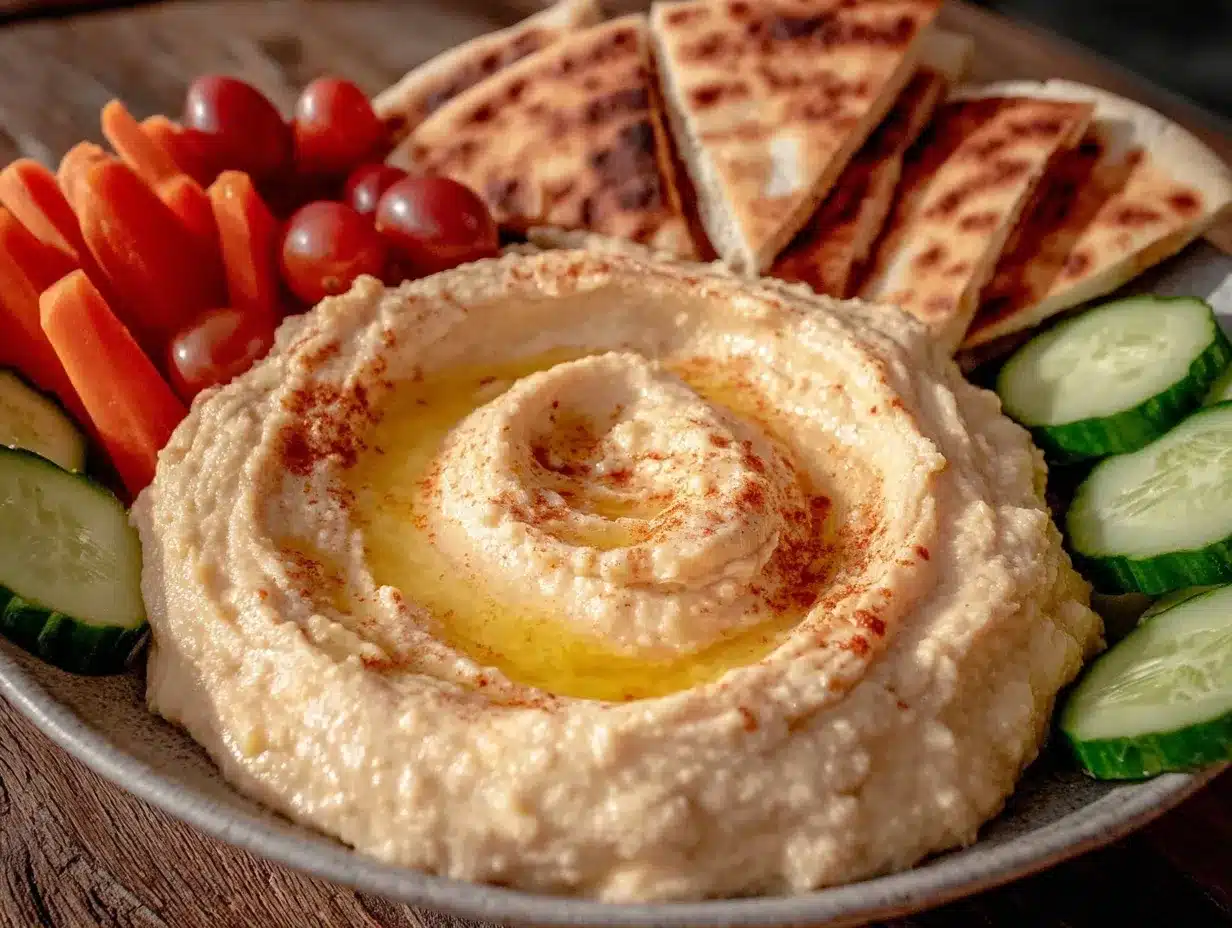
- Assemble the Platter: Spoon the hummus into a shallow bowl or spread it directly on a serving plate, creating a small well in the center. Drizzle extra olive oil over the hummus and sprinkle with paprika, pine nuts, or fresh herbs.
- Arrange the Veggies and Pita: Surround the hummus with colorful piles of cucumber, bell peppers, cherry tomatoes, carrots, and pita triangles. Aim for a vibrant, inviting display.
- Final Touches: Scatter fresh parsley or cilantro leaves over the platter for a bright finish. Serve immediately or cover with plastic wrap until ready.
This whole prep takes about 15–20 minutes, and cleanup is a breeze if you rinse the processor bowl right away. If your hummus ends up too thick, a little more water or lemon juice will loosen it without losing flavor. If it’s too thin, add more chickpeas or tahini next time.
Cooking Tips & Techniques
Getting that perfectly creamy hummus is actually a bit of an art form. Here are some things I’ve learned after a few less-than-smooth attempts:
- Use cold water to thin the hummus: It helps keep the texture silky without diluting the flavor.
- Don’t skimp on the tahini: It’s the secret to that rich, nutty undertone. I always go for fresh tahini because old, oily jars can taste bitter.
- Peeling chickpeas is optional but worth trying: If you’re up for it, peeling the skins off chickpeas before blending results in an ultra-smooth hummus. It’s tedious, but I tried it once and never looked back.
- Fresh lemon juice beats bottled: The brightness of fresh lemon really lifts the dip.
- Multitask by prepping veggies while hummus blends: Keeps things moving quickly.
- Don’t over-pulse: Stop occasionally to scrape down the sides of the bowl; this ensures even blending.
One time I skipped warming the pita and it felt like something was missing—the warm, soft bread is a real game-changer that makes dipping feel cozy and satisfying. Also, if you want a smoky flavor, try adding a pinch of smoked paprika on top or swap a roasted red pepper into the hummus blend.
Variations & Adaptations
This platter is a great base for experimentation, depending on your mood or dietary needs:
- Spicy Twist: Add a pinch of cayenne or a dollop of harissa to the hummus for a bit of heat. It pairs wonderfully with the cooling cucumber and creamy dip.
- Roasted Veggie Option: Swap some raw veggies for roasted eggplant or zucchini, similar to the style on the grilled zucchini and yellow squash skewers recipe. It adds a smoky, tender contrast.
- Protein Boost: Add a sprinkle of toasted chickpeas or crumbled feta cheese on the platter for extra texture and flavor.
- Allergen-Friendly: For nut allergies, double-check tahini quality or swap it for sunflower seed butter to keep that creamy texture.
- Low-Carb Version: Replace pita with sliced jicama or radishes for dipping to keep it light and fresh.
I once tried mixing in some roasted garlic instead of raw, which gave a milder, sweeter taste—really nice for serving with the grilled T-bone steak for a backyard dinner. The versatility of this platter means you can keep it fresh and interesting every time.
Serving & Storage Suggestions
Serve this fresh Mediterranean hummus platter at room temperature for the best flavor. The warm pita and crisp veggies look inviting when arranged on a large wooden board or colorful platter. A drizzle of extra virgin olive oil on top right before serving adds that glossy, appetizing finish.
Complement the platter with light dishes like a crisp green salad or a chilled cucumber and tomato salad. For drinks, a chilled white wine or sparkling water with lemon pairs nicely.
If you have leftovers, store the hummus in an airtight container in the fridge for up to 4 days. Keep the veggies and pita separate to maintain their crispness and freshness. Reheat pita triangles in a warm oven or toaster for a few minutes before serving again. Over time, the hummus flavors can deepen, so it often tastes even better the next day.
Nutritional Information & Benefits
This fresh Mediterranean hummus platter is a wholesome, nutrient-packed snack or light meal. A typical serving (about 1/4 cup hummus with veggies and pita) provides roughly:
| Calories | 250–300 kcal |
|---|---|
| Protein | 8–10 grams |
| Fat | 12–15 grams (mostly healthy fats from olive oil and tahini) |
| Carbohydrates | 25–30 grams |
| Fiber | 6–8 grams |
Chickpeas are a great source of plant-based protein and fiber, aiding digestion and keeping you full longer. Olive oil and tahini contribute heart-healthy fats and antioxidants. Plus, the fresh veggies add vitamins and minerals without extra calories. This platter is naturally gluten-free if you swap the pita, and dairy-free as is, making it suitable for many dietary needs.
Conclusion
This fresh Mediterranean hummus platter with crisp veggies and pita is the kind of recipe that feels like a little gift each time you make it. It’s easy, colorful, and packed with textures and flavors that satisfy without weighing you down. I love how it fits into so many moments—whether I’m relaxing solo with a book or sharing with friends during a casual hangout.
Feel free to tweak the veggies, spices, or even the dipping options to suit your taste. And once you try it, you might find yourself coming back to it again and again, just like I did. If you’ve enjoyed dishes like the fresh cold caprese pasta salad, this platter will feel right at home on your table.
Give it a go, and don’t hesitate to share your own twists or questions—I’d love to hear how you make it yours!
Frequently Asked Questions
Can I make the hummus ahead of time?
Absolutely! The hummus tastes even better after resting for a few hours or overnight in the fridge. Just bring it to room temperature before serving and give it a quick stir.
What can I use if I don’t have tahini?
You can substitute tahini with smooth almond butter or sunflower seed butter for a similar creamy texture, though the flavor will be slightly different.
How do I keep the veggies from getting soggy?
Store pre-cut veggies in an airtight container lined with a paper towel in the fridge to absorb moisture and keep them crisp.
Can I freeze homemade hummus?
Hummus can be frozen, but the texture may become grainy after thawing. If you do freeze it, stir well after thawing and add a little olive oil or water to smooth it out.
What other breads can I serve with this platter?
Besides pita, naan, lavash, or even crunchy baguette slices work well as dippers. For gluten-free options, rice crackers or veggie sticks like jicama are great alternatives.
Pin This Recipe!
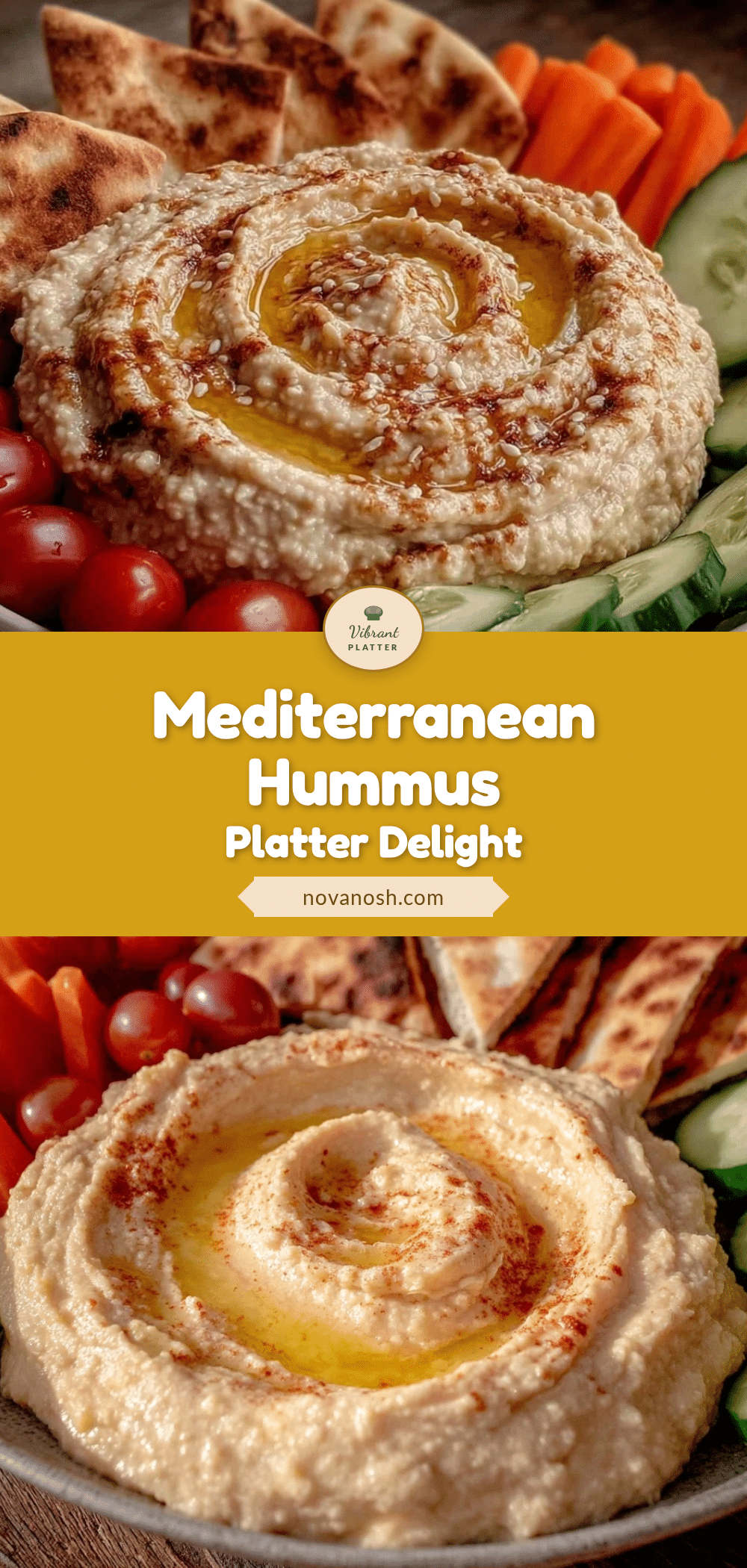
Fresh Mediterranean Hummus Platter Recipe Easy Healthy Veggies and Pita
A vibrant and easy-to-assemble Mediterranean hummus platter featuring creamy hummus, crisp fresh veggies, and warm pita bread. Perfect for quick snacks, casual gatherings, or healthy indulgence.
- Prep Time: 10 minutes
- Cook Time: 7 minutes
- Total Time: 17 minutes
- Yield: 4 servings 1x
- Category: Snack / Appetizer
- Cuisine: Mediterranean
Ingredients
- 1 can (15 oz / 425 g) chickpeas, drained and rinsed
- 3 tablespoons tahini
- 2 tablespoons freshly squeezed lemon juice (about 1 lemon)
- 2 cloves garlic, minced
- 1/4 cup extra virgin olive oil, plus more for drizzling
- 1/2 teaspoon ground cumin
- Salt to taste (start with 1/2 teaspoon)
- 2–3 tablespoons cold water (to thin the hummus as needed)
- 1 large cucumber, sliced into sticks
- 1 red bell pepper, sliced
- 1 yellow bell pepper, sliced
- 1 cup cherry tomatoes, halved
- 1 small carrot, peeled and cut into sticks
- 4 pita rounds, warmed and cut into triangles
- Optional garnishes: fresh parsley or cilantro leaves, smoked paprika, toasted pine nuts or sesame seeds
Instructions
- In a food processor, combine drained chickpeas, tahini, lemon juice, minced garlic, cumin, and salt. Pulse a few times to start breaking down the chickpeas.
- With the processor running, slowly drizzle in the olive oil. Add cold water one tablespoon at a time until the hummus becomes smooth and creamy, about 3–4 minutes of processing.
- Pause to taste the hummus and adjust lemon juice, garlic, or salt as desired. Optionally add a pinch of smoked paprika.
- Wash and cut all veggies into bite-sized sticks or halves for easy dipping.
- Wrap pita rounds in foil and warm in a 350°F (175°C) oven for 5–7 minutes or heat briefly in a dry skillet. Cut into triangles once warm.
- Spoon hummus into a shallow bowl or spread on a serving plate, creating a small well in the center. Drizzle extra olive oil and sprinkle with paprika, pine nuts, or fresh herbs.
- Arrange veggies and pita triangles around the hummus for a colorful, inviting display.
- Scatter fresh parsley or cilantro leaves over the platter and serve immediately or cover until ready.
Notes
Use cold water to thin hummus for a silky texture without diluting flavor. Peeling chickpeas before blending yields ultra-smooth hummus but is optional. Warm pita is essential for best dipping experience. Fresh lemon juice is preferred over bottled. Store pre-cut veggies in an airtight container with paper towel to keep crisp. Hummus can be made ahead and tastes better after resting. For gluten-free, substitute pita with almond flour pita or gluten-free crackers.
Nutrition
- Serving Size: About 1/4 cup hummus
- Calories: 275
- Sugar: 5
- Sodium: 300
- Fat: 13.5
- Saturated Fat: 2
- Carbohydrates: 27.5
- Fiber: 7
- Protein: 9
Keywords: hummus, Mediterranean, healthy snack, veggies, pita, easy recipe, plant-based, gluten-free option, tahini, quick appetizer