Love this? Save it for later!
Share the inspiration with your friends
My husband swore he hated soup. For years. The man would look at a bowl of anything brothy like I’d handed him a plate of dirt. “Soup’s not a meal,” he’d say, pushing it away. “It’s just… wet stuff.” I tried everything—chunky soups, creamy soups, soups with so much protein they were practically stews. Nothing worked. Then came a Tuesday in late October when the air had that sharp, leaf-smell and I had a butternut squash sitting on the counter looking at me. I roasted it with some apples I’d grabbed at the farmer’s market, purely on a whim, blended it all together, and found him standing at the stove twenty minutes later with a spoon in his hand. He wasn’t even pretending to wait for dinner.
I didn’t say a word. I just watched him take another spoonful, then another, and honestly? That quiet little victory felt better than any recipe award. There’s something about the combination of sweet roasted squash and tart apples that just works in a way that’s hard to explain until you taste it. The roasting does this thing where the natural sugars caramelize and get all deep and nutty, and when you blend it with a little warmth from ginger and a hint of sage? Let me tell you—it’s the kind of soup that makes you understand why people get excited about fall cooking. Maybe you’ve been there, trying to convince someone that a certain dish is worth their time. Or maybe you’re the one who needs convincing. Either way, this one has a way of changing minds without even trying.
I keep making it because it’s the recipe that proved me right without me having to say a word. And honestly? That’s the best kind of recipe to have in your back pocket.
Why You’ll Love This Recipe
This isn’t just another butternut squash soup recipe. I’ve tested this one at least a dozen times, tweaking the roast time, adjusting the apple-to-squash ratio, and fighting with my blender until I got the texture just right. Here’s why this version stands out from the rest:
- Simple Ingredients: No fancy grocery trips needed. You probably have most of this in your kitchen right now—onion, garlic, broth, and a few spices. The squash and apples are the stars, and they’re easy to find at any grocery store or farmer’s market.
- Quick & Easy: While the roasting takes about 40 minutes, the active prep time is under 15 minutes. This is a set-it-and-forget-it kind of recipe that fills your house with the most incredible smell while it works its magic.
- Perfect for Meal Prep: This soup actually gets better after a day in the fridge. Make a big batch on Sunday and you’ve got lunches or quick dinners ready to go all week long.
- Crowd-Pleaser: Even my soup-hating husband asks for this one. It’s creamy without being heavy, sweet without being sugary, and filling without being a gut bomb. Kids love it, adults love it, and it’s fancy enough to serve at a dinner party but easy enough for a random Tuesday.
- Unbelievably Delicious: The roasting brings out this deep, caramelized flavor that you just can’t get from boiling. The apples add a brightness that cuts through the richness of the squash, and the touch of ginger and sage ties it all together in a way that feels like a warm hug in a bowl.
This is the kind of soup that makes you close your eyes after the first bite. It’s comfort food reimagined—healthier, faster, but with the same soul-soothing satisfaction. Perfect for impressing guests without stress, or turning a simple meal into something memorable.
What Ingredients You Will Need
This recipe uses simple, wholesome ingredients to deliver bold flavor and satisfying texture without the fuss. Most of these are pantry staples or easy to find at any grocery store. I’ve tested this with different brands and variations, so I’ll share what works best.
- 1 medium butternut squash (about 3 pounds / 1.4 kg), peeled, seeded, and cubed into 1-inch pieces. Look for one that feels heavy for its size with smooth, unblemished skin. I prefer buying pre-cut cubes from the store when I’m short on time, but whole squash is cheaper and roasts just as well.
- 2 medium apples, peeled, cored, and chopped (I recommend Honeycrisp or Fuji for sweetness, or Granny Smith if you want more tartness). The apples add natural sweetness and a subtle tang that balances the squash perfectly.
- 1 medium yellow onion, chopped (about 1 cup). Yellow onion gives the best savory base without being too strong. Sweet onion works too if that’s what you have.
- 3 cloves garlic, minced. Fresh garlic is non-negotiable here—the jarred stuff just doesn’t have the same punch.
- 2 tablespoons olive oil, divided. Use a good quality extra virgin for roasting and a lighter one for sautéing if you have both. Regular olive oil works fine for everything.
- 1 teaspoon salt, plus more to taste. I use fine sea salt for even seasoning.
- ½ teaspoon black pepper, freshly ground if possible.
- ½ teaspoon ground cinnamon. This adds warmth without being overpowering. I prefer McCormick or Simply Organic brands for consistent flavor.
- ½ teaspoon ground ginger. Dried ginger works perfectly here—fresh ginger can be overpowering in a blended soup.
- ¼ teaspoon ground nutmeg, freshly grated if you have it. The difference between pre-ground and fresh nutmeg is honestly night and day.
- ¼ teaspoon cayenne pepper (optional, for a tiny kick). Leave this out if you’re serving kids or prefer a completely mild soup.
- 4 cups vegetable broth (about 1 liter). Use low-sodium so you can control the salt level. Chicken broth works too if you’re not keeping it vegetarian.
- ½ cup canned coconut milk (full-fat for creaminess, or light for fewer calories). Heavy cream works as a substitute if you’re not dairy-free.
- 2 tablespoons maple syrup (optional, for extra sweetness). Only add this if your apples aren’t very sweet or you prefer a sweeter soup.
- Fresh sage leaves, for garnish (about 6-8 leaves). Optional but highly recommended—frying them in a little butter takes this soup to another level.
Substitution Guidance: Use sweet potato instead of butternut squash for a similar texture with a slightly different flavor. Swap coconut milk with heavy cream or plain Greek yogurt for a dairy version. For a nut-free option, skip the coconut milk and use an extra ½ cup of broth instead—the soup will still be creamy from the blended squash.
Equipment Needed
You don’t need a fancy kitchen to make this soup. Here’s what you’ll actually use:
- Baking sheet (half-sheet size, about 13×18 inches). A rimmed baking sheet is best to catch any juices from the squash. I’ve used cheap non-stick ones and expensive stainless steel—honestly, they all work the same as long as you line them with parchment paper for easy cleanup.
- Large pot or Dutch oven (5-6 quart capacity). A Dutch oven is ideal because it holds heat evenly, but any large soup pot works. Le Creuset is lovely but my $30 enameled pot from a discount store has lasted me five years without issues.
- Immersion blender (or regular blender). An immersion blender lets you blend right in the pot, which means less cleanup. If you’re using a regular blender, blend in batches and don’t fill it more than halfway with hot liquid—trust me on this one. I learned that lesson the hard way with soup on my ceiling.
- Chef’s knife and cutting board. A sharp knife makes peeling and cubing squash so much easier. If your knife is dull, this recipe will feel like a workout.
- Vegetable peeler. A Y-shaped peeler works best for butternut squash’s curves.
- Measuring cups and spoons. For accuracy, especially with the spices.
- Wooden spoon or silicone spatula for stirring.
Budget-Friendly Tip: If you don’t have an immersion blender, let the soup cool slightly before transferring to a regular blender. Just make sure to remove the center cap from the blender lid and cover it with a kitchen towel to let steam escape. Your blender will thank you.
Preparation Method

Let’s get cooking. This recipe comes together in about an hour, with most of that time being hands-off roasting. Here’s the step-by-step:
- Preheat your oven to 400°F (200°C). Line a large baking sheet with parchment paper for easy cleanup. Trust me, roasted squash can be stubborn to scrub off.
- Prepare the squash and apples. Peel the butternut squash using a vegetable peeler, then cut it in half lengthwise and scoop out the seeds with a spoon. Cut the squash into 1-inch cubes—try to keep them similar in size so they roast evenly. Peel and core the apples, then chop them into roughly the same size pieces as the squash. Don’t stress about perfection here; rustic chunks work great.
- Toss with oil and spices. In a large bowl, combine the cubed squash, chopped apples, and chopped onion. Drizzle with 1½ tablespoons of olive oil, then sprinkle with the salt, pepper, cinnamon, ginger, nutmeg, and cayenne (if using). Toss everything together until well coated. I use my hands for this—it’s quicker and ensures everything gets evenly seasoned.
- Roast until tender and caramelized. Spread the squash mixture in a single layer on the prepared baking sheet. Roast for 35-40 minutes, stirring halfway through, until the squash is fork-tender and the edges are golden brown and caramelized. The apples should be soft and slightly shriveled. This roasting step is where the magic happens—the natural sugars concentrate and develop that deep, nutty flavor you just can’t get from boiling.
- Sauté the garlic. While the squash roasts, heat the remaining ½ tablespoon of olive oil in a large pot or Dutch oven over medium heat. Add the minced garlic and sauté for about 30 seconds until fragrant, stirring constantly so it doesn’t burn. Burnt garlic will make your soup bitter, so keep an eye on it.
- Add the roasted mixture and broth. Once the squash and apples are done roasting, carefully transfer them to the pot with the garlic. Pour in the vegetable broth and stir to combine. Bring the mixture to a gentle boil, then reduce the heat to low and let it simmer for 10 minutes. This allows all the flavors to meld together.
- Blend until smooth. Remove the pot from heat. Using an immersion blender, blend the soup directly in the pot until completely smooth and creamy. If using a regular blender, let the soup cool for 5-10 minutes first, then blend in batches, filling the blender no more than halfway. Always remove the center cap from the lid and cover with a towel to let steam escape. Blend each batch until silky smooth, then return to the pot.
- Stir in the coconut milk. Add the coconut milk and maple syrup (if using) to the blended soup. Stir well to combine. Taste and adjust seasoning—you might want more salt, a pinch more cinnamon, or an extra drizzle of maple syrup depending on your preference. The soup should be creamy, slightly sweet, with a warm background of spices.
- Warm through and serve. Return the pot to low heat and warm the soup gently for 2-3 minutes, stirring occasionally. Don’t let it boil after adding the coconut milk, or it might separate. Ladle into bowls and garnish with fried sage leaves, a swirl of coconut milk, or a sprinkle of pumpkin seeds if desired.
Your Soup Should Look Like This: After blending, the soup should be a rich, velvety orange-gold color. It should coat the back of a spoon without being too thick. If it seems too thick, add more broth or water a few tablespoons at a time until it reaches your desired consistency. If it’s too thin, let it simmer uncovered for a few minutes to reduce.
Cooking Tips & Techniques
After making this soup more times than I can count, here are the things I wish someone had told me from the start:
Don’t skip the roasting step. I know it’s tempting to just boil everything together and call it a day, but roasting is what gives this soup its deep, complex flavor. The caramelization that happens in the oven creates layers of sweetness you just can’t get any other way. I once tried to save time by simmering the squash directly in broth, and the soup came out flat and one-dimensional. Never again.
Cut your squash and apples the same size. This seems like a small detail, but it makes a huge difference in even cooking. If some pieces are tiny and others are huge, you’ll end up with burnt edges and raw centers. Aim for 1-inch cubes, and don’t be afraid to trim down any pieces that are significantly larger.
Watch your blending technique. Here’s a mistake I made more than once: blending hot soup in a regular blender without venting it. The steam builds up pressure and can blow the lid off, sending hot soup everywhere. Always remove the center cap from the lid and cover with a towel. And if you’re using an immersion blender, keep it fully submerged while running to avoid splattering.
Season in layers. Add salt and spices at the roasting stage, then taste and adjust after blending. The flavors concentrate during roasting, so what tastes perfect before might need a little more salt afterward. I always keep a small bowl of salt and a pepper grinder near the stove for final adjustments.
Make it ahead for better flavor. This soup actually improves after sitting in the fridge for a day. The flavors meld and deepen overnight, so don’t hesitate to make it a day ahead. Just reheat gently on the stove, adding a splash of broth or water if it’s thickened too much.
Don’t boil after adding coconut milk. High heat can cause the coconut milk to separate and curdle, giving your soup a grainy texture. Always reheat on low to medium-low, stirring frequently.
Variations & Adaptations
One of the best things about this soup is how adaptable it is. Here are some variations I’ve tried and loved:
Vegan & Dairy-Free Version: This recipe is already vegan if you use vegetable broth and coconut milk! For an extra creamy version, add a soaked and blended cashew cream instead of coconut milk. Soak ¼ cup raw cashews in hot water for 15 minutes, drain, and blend with ¼ cup water until smooth, then stir in at the end.
Spicy Thai-Inspired Version: Swap the cinnamon and nutmeg for 1 tablespoon of Thai red curry paste. Add a 1-inch piece of fresh ginger (grated) along with the garlic. Finish with a squeeze of lime juice and a drizzle of chili oil. This version is bright, spicy, and completely different from the original—but equally delicious.
Apple Variations: The type of apple you use changes the soup’s personality. Granny Smith apples give a tangy, bright flavor that cuts through the squash’s sweetness. Honeycrisp or Fuji apples make the soup sweeter and more dessert-like. I’ve even used a mix of both when I couldn’t decide—it worked beautifully.
Roasted Garlic Addition: For a deeper, mellower garlic flavor, roast a whole head of garlic alongside the squash. Cut the top off a garlic head, drizzle with olive oil, wrap in foil, and roast for 40 minutes. Squeeze the soft cloves into the pot before blending. This adds a sweet, nutty garlic flavor that’s nothing like raw garlic.
Protein Boost: Stir in 1 cup of cooked white beans (cannellini or great northern) before blending for added protein and creaminess without changing the flavor. Or top each bowl with crispy chickpeas for texture.
Slow Cooker Method: Toss the cubed squash, apples, onion, and garlic with oil and spices, then add to a slow cooker with the broth. Cook on low for 6-8 hours or high for 3-4 hours, then blend and stir in the coconut milk. The flavor won’t be quite as deep as roasted, but it’s a great hands-off option for busy days.
Serving & Storage Suggestions
This soup is wonderful on its own, but a few thoughtful additions can turn it into a memorable meal.
Serving Temperature: Serve hot, but not boiling. Let it rest for 2-3 minutes after ladling into bowls so the flavors settle. A warm bowl (rinse it with hot water before serving) helps keep the soup at the perfect temperature longer.
Garnish Ideas: A swirl of coconut milk or heavy cream adds visual appeal. Fried sage leaves (just sauté them in butter for 30 seconds until crispy) are my favorite topping—they add a savory, herbaceous crunch. Toasted pumpkin seeds, a sprinkle of cinnamon, or a drizzle of maple syrup also work beautifully. For a savory contrast, crumble some crispy bacon or pancetta on top.
What to Serve With It: This soup pairs beautifully with crusty bread for dipping—a good sourdough or a warm baguette is perfect. A simple green salad with a tangy vinaigrette balances the soup’s richness. For a heartier meal, serve it alongside a grilled cheese sandwich (try it with sharp cheddar and apple slices!).
Storage Instructions: Store leftover soup in an airtight container in the refrigerator for up to 5 days. The flavors actually deepen and improve after a day or two. To freeze, let the soup cool completely, then transfer to freezer-safe containers or zip-top bags. Leave about an inch of headspace for expansion. Freeze for up to 3 months. Thaw overnight in the refrigerator before reheating.
Reheating Tips: Reheat gently on the stovetop over medium-low heat, stirring occasionally. Add a splash of broth, water, or milk if the soup has thickened during storage. You can also reheat individual portions in the microwave—heat in 30-second bursts, stirring between each, until hot. Don’t let it boil, or the coconut milk may separate.
Flavor Development: This soup is one of those rare dishes that genuinely tastes better the next day. The spices mellow and meld, the sweetness becomes more rounded, and the texture thickens slightly. I often make it a day ahead specifically for this reason.
Nutritional Information & Benefits
This soup isn’t just delicious—it’s packed with nutrients that make you feel good about eating it.
Estimated Nutritional Values (per serving, about 1½ cups):
- Calories: 220
- Total Fat: 10g
- Saturated Fat: 6g
- Carbohydrates: 32g
- Fiber: 6g
- Sugar: 14g (naturally occurring)
- Protein: 4g
- Sodium: 680mg (varies with broth)
- Vitamin A: 350% of Daily Value
- Vitamin C: 40% of Daily Value
- Potassium: 800mg
Health Benefits: Butternut squash is loaded with vitamin A (in the form of beta-carotene), which supports eye health and immune function. Apples provide fiber and vitamin C, while the ginger and turmeric (in the spice blend) have anti-inflammatory properties. The coconut milk adds healthy fats that help your body absorb the fat-soluble vitamins from the squash. This soup is naturally gluten-free, dairy-free, and vegan, making it suitable for a wide range of dietary needs.
Dietary Considerations: This recipe is naturally gluten-free, dairy-free, and vegan. It’s also relatively low in calories for a creamy soup, thanks to the coconut milk being used sparingly. If you’re watching your sodium, use low-sodium broth and adjust salt to taste at the end.
Potential Allergens: This recipe contains coconut (if using coconut milk). It’s free of the top eight allergens otherwise. For a nut-free version, use oat milk or extra broth instead of coconut milk.
I personally love that this soup feels indulgent but is actually packed with vegetables and fiber. It’s the kind of meal that satisfies your comfort food cravings while nourishing your body at the same time.
Conclusion
This roasted butternut squash and apple soup is more than just a recipe—it’s the one that changed my husband’s mind about soup entirely, and it’s been a staple in our kitchen ever since. The combination of caramelized squash, sweet-tart apples, and warm spices creates something that feels both familiar and special, like a cozy sweater you’ve had for years that still makes you happy every time you put it on.
What I love most about this recipe is how forgiving it is. You can swap ingredients, adjust spices, or change the toppings, and it still turns out delicious. It’s the kind of recipe that encourages experimentation—try it with different apples, add a pinch of curry powder, or top it with whatever herbs you have on hand. Make it your own.
I’d love to hear how this soup turns out for you! Did you try a variation? Did your family love it? Drop a comment below and let me know—your feedback helps other readers too. And if you share a photo on Pinterest or Instagram, tag me so I can see your beautiful creation. Happy cooking, friends. Here’s to warm bowls and cozy evenings.
Frequently Asked Questions
Can I use frozen butternut squash instead of fresh?
Yes, you can use frozen butternut squash cubes to save time. However, you won’t get the same caramelized flavor from roasting since frozen squash releases a lot of water. If using frozen, thaw and pat it dry before roasting, and consider roasting at a higher temperature (425°F / 220°C) to encourage browning. The soup will still be delicious, just slightly less complex in flavor.
How can I make this soup thicker or thinner?
For a thicker soup, reduce the broth to 3 cups instead of 4, or let the soup simmer uncovered for 10-15 minutes after blending to allow some liquid to evaporate. For a thinner soup, add more broth, water, or even apple cider until it reaches your desired consistency. Remember that the soup will thicken slightly as it cools and even more after refrigeration.
Can I make this soup without coconut milk?
Absolutely. The coconut milk adds creaminess, but it’s not essential. You can substitute with heavy cream, half-and-half, or a dairy-free alternative like oat milk or unsweetened almond milk. For a lighter version, simply omit the coconut milk and add an extra ½ cup of broth instead. The blended squash itself provides plenty of body and creaminess.
How do I peel and cut butternut squash safely?
Start by cutting off both ends of the squash to create flat surfaces. Stand it upright on a cutting board and use a sharp vegetable peeler to remove the skin from top to bottom. Cut the squash in half lengthwise, then scoop out the seeds with a spoon. Place each half cut-side down and slice into half-moons, then cut those into cubes. If the squash is very hard, microwave it whole for 2-3 minutes to soften it slightly before peeling. Always use a sharp knife and a stable cutting board—dull knives are more dangerous than sharp ones.
Can I use an Instant Pot or pressure cooker for this recipe?
Yes! To make this in an Instant Pot, skip the roasting step. Sauté the garlic using the sauté function, then add the cubed squash, apples, onion, spices, and broth. Pressure cook on high for 10 minutes, then do a quick release. Blend with an immersion blender directly in the pot, then stir in the coconut milk. The soup won’t have the same roasted depth of flavor, but it’s ready in under 30 minutes total. For the best of both worlds, roast the squash and apples first, then transfer to the Instant Pot with the broth and cook for just 5 minutes before blending.
Pin This Recipe!
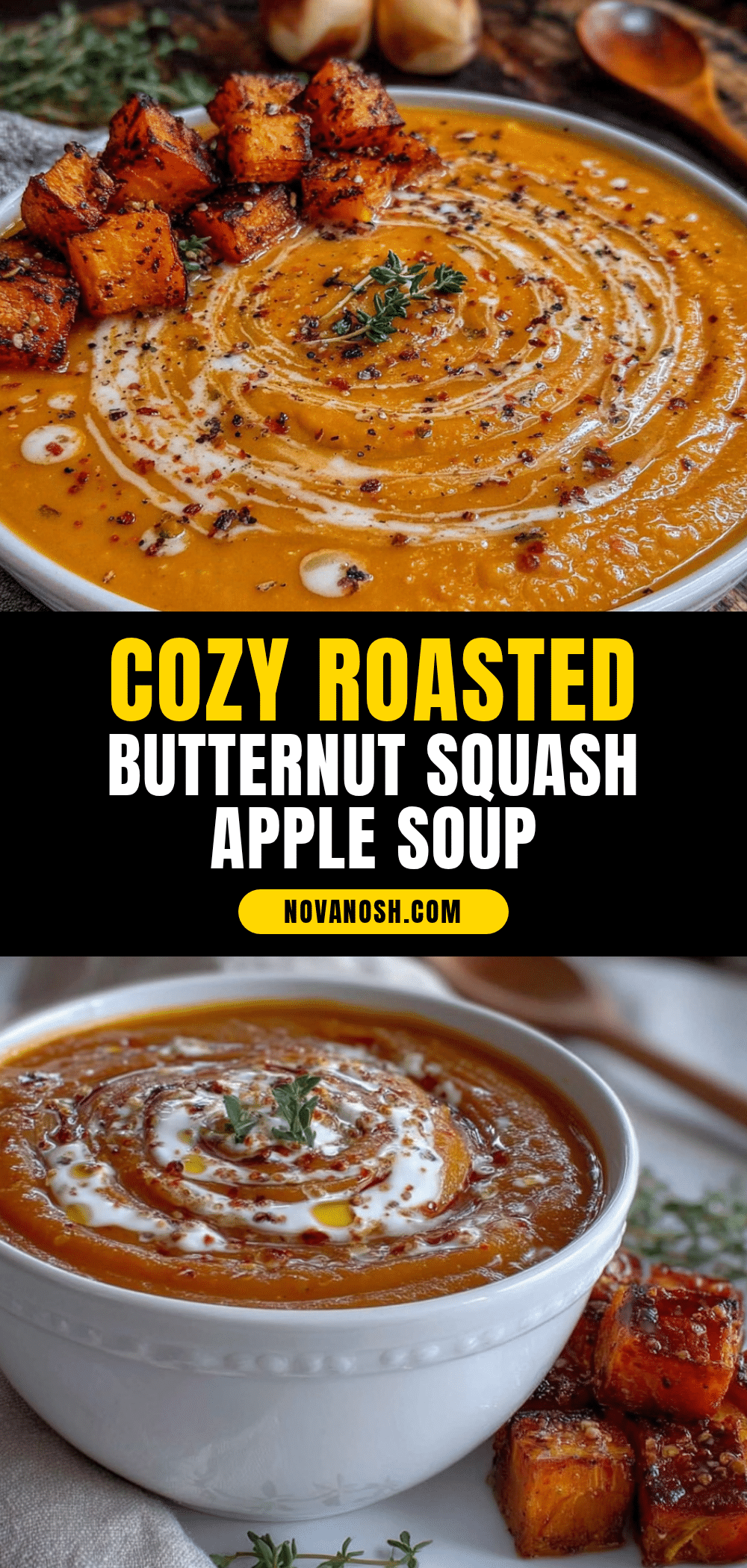
Easy Cozy Roasted Butternut Squash and Apple Soup Recipe

This roasted butternut squash and apple soup is creamy, comforting, and packed with caramelized flavor. It’s the recipe that changed my husband’s mind about soup—and it might just change yours too.
- Prep Time: 15 minutes
- Cook Time: 40 minutes
- Total Time: 55 minutes
- Yield: 4 servings 1x
- Category: Soup
- Cuisine: American
Ingredients
- 1 medium butternut squash (about 3 pounds / 1.4 kg), peeled, seeded, and cubed into 1-inch pieces
- 2 medium apples (Honeycrisp, Fuji, or Granny Smith), peeled, cored, and chopped
- 1 medium yellow onion, chopped (about 1 cup)
- 3 cloves garlic, minced
- 2 tablespoons olive oil, divided
- 1 teaspoon salt, plus more to taste
- ½ teaspoon black pepper, freshly ground
- ½ teaspoon ground cinnamon
- ½ teaspoon ground ginger
- ¼ teaspoon ground nutmeg
- ¼ teaspoon cayenne pepper (optional)
- 4 cups vegetable broth (low-sodium)
- ½ cup canned coconut milk (full-fat)
- 2 tablespoons maple syrup (optional)
- Fresh sage leaves for garnish (optional)
Instructions
- Preheat your oven to 400°F (200°C). Line a large baking sheet with parchment paper.
- Peel the butternut squash, cut in half lengthwise, scoop out seeds, and cut into 1-inch cubes. Peel, core, and chop the apples into similar-sized pieces.
- In a large bowl, combine cubed squash, chopped apples, and chopped onion. Drizzle with 1½ tablespoons olive oil, then sprinkle with salt, pepper, cinnamon, ginger, nutmeg, and cayenne (if using). Toss to coat evenly.
- Spread the mixture in a single layer on the prepared baking sheet. Roast for 35-40 minutes, stirring halfway, until squash is fork-tender and edges are golden brown and caramelized.
- While the squash roasts, heat the remaining ½ tablespoon olive oil in a large pot or Dutch oven over medium heat. Add minced garlic and sauté for about 30 seconds until fragrant.
- Once roasted, carefully transfer the squash and apple mixture to the pot with the garlic. Pour in the vegetable broth and stir. Bring to a gentle boil, then reduce heat to low and simmer for 10 minutes.
- Remove pot from heat. Using an immersion blender, blend the soup directly in the pot until completely smooth and creamy. (If using a regular blender, let soup cool 5-10 minutes, then blend in batches, filling no more than halfway, with center cap removed and covered with a towel.)
- Stir in the coconut milk and maple syrup (if using). Taste and adjust seasoning as needed.
- Return pot to low heat and warm gently for 2-3 minutes, stirring occasionally. Do not let it boil. Ladle into bowls and garnish with fried sage leaves, a swirl of coconut milk, or pumpkin seeds if desired.
Notes
Don’t skip the roasting step—it gives the soup deep, caramelized flavor. Cut squash and apples the same size for even cooking. Season in layers: add salt and spices at roasting, then adjust after blending. This soup tastes even better the next day. Do not boil after adding coconut milk to prevent separation.
Nutrition
- Serving Size: 1½ cups
- Calories: 220
- Sugar: 14
- Sodium: 680
- Fat: 10
- Saturated Fat: 6
- Carbohydrates: 32
- Fiber: 6
- Protein: 4
Keywords: butternut squash soup, apple soup, roasted squash soup, fall soup, creamy soup, vegan soup, gluten-free soup, easy soup recipe