Love this? Save it for later!
Share the inspiration with your friends
My neighbor, a retired butcher named Frank, watched me fumbling with a package of ground beef at my car door one Tuesday afternoon. I was trying to balance groceries, my phone, and a leaky bag of lettuce all at once. He didn’t say anything at first. Then he just walked over, took the bag of meat from my hands, and said, “You’re overthinking dinner tonight. Come on, I’ll show you something my wife taught me forty years ago.”
That’s how I ended up in Frank’s kitchen, which smelled like black pepper and old wood, watching him mix what looked like the most unassuming pile of ground beef I’d ever seen. Honestly, I was skeptical. Meatloaf always felt like a “Tuesday night” meal—something you make when you’ve given up on impressing anyone. But Frank had this quiet confidence about him, the kind that comes from knowing exactly what works. He didn’t measure anything. He just tossed in cracker crumbs, an egg, a splash of milk, and a handful of diced onion. Then he did something I’d never seen before: he spread a thick layer of brown sugar and ketchup over the top before it went into the oven.
“That’s the secret,” he said, wiping his hands on his apron. “The sugar caramelizes and makes a crust that people fight over.”
I laughed, but I shouldn’t have. That first bite—honestly, it changed how I thought about meatloaf forever. The glaze wasn’t just sweet; it had this sticky, almost tangy depth that clung to every slice. The meat itself was tender, not dry or crumbly like the versions I’d suffered through at potlucks. Frank’s wife had learned it from her mother, who had adapted it from a church cookbook in the 1950s. It was never written down. It was just passed along, like a secret handshake between cooks who trusted each other.
I’ve made this classic meatloaf dozens of times since that afternoon, tweaking it just enough to call it my own. I added a pinch of smoked paprika, swapped in panko for the crackers, and learned that letting the glaze set for five minutes after baking makes all the difference. Maybe you’ve been there—standing in the kitchen, wondering if a simple dish can really steal the show at a dinner party. Let me tell you, this one does. It’s the kind of recipe that makes people close their eyes after the first bite, then ask for seconds before they’ve finished their first slice.
Why You’ll Love This Recipe
This isn’t just another meatloaf recipe. After testing this version for over a dozen dinner parties, family gatherings, and one particularly memorable potluck where it disappeared in under fifteen minutes, I can tell you this: it’s the one people ask for by name. Here’s why it stands out from every other loaf you’ve tried.
- Simple Ingredients, Big Impact : You don’t need to hunt down fancy ingredients at a specialty store. Everything here—ground beef, ketchup, brown sugar, eggs, breadcrumbs—is probably already in your pantry. That’s the beauty of it. No stress, no last-minute runs to the store.
- Perfect for Hosting : This is the dish you make when you want to impress guests without spending all day in the kitchen. You can prep it completely in the morning, pop it in the fridge, and bake it right before everyone arrives. The smell alone will make your guests think you’ve been slaving away for hours.
- Crowd-Pleasing Guaranteed : I’ve served this to picky eaters, health-conscious friends, and my uncle who “doesn’t really like meatloaf.” Every single one of them went back for seconds. The glaze is the secret weapon—it’s sweet, tangy, and caramelizes into a crust that even kids love.
- Unbelievably Moist : The trick is in the panade—a mixture of milk and breadcrumbs that keeps the meat tender. No dry, crumbly slices here. Every bite is juicy and flavorful, thanks to the perfect balance of fat and moisture.
- Stress-Free Entertaining : When you’re hosting, the last thing you need is a complicated recipe that requires constant attention. This meatloaf is forgiving. You can scale it up for a crowd, make it ahead, and even freeze leftovers (if there are any).
This recipe isn’t just good—it’s the kind that makes you close your eyes after the first bite. It’s comfort food reimagined for the modern host: impressive enough for a dinner party, but simple enough for a Tuesday night. Perfect for impressing guests without stress, or turning a simple meal into something memorable.
What Ingredients You Will Need
This recipe uses simple, wholesome ingredients to deliver bold flavor and satisfying texture without the fuss. Most of these are pantry staples, which means you can whip this up on a whim without a special trip to the grocery store. Here’s what you’ll need and why each ingredient matters.
For the Meatloaf
- Ground beef (2 lbs / 900g) : I recommend using 80/20 ground beef—the 20% fat content is crucial for a moist, flavorful loaf. Leaner cuts (like 90/10) tend to dry out during baking. If you prefer a leaner option, you can substitute half the beef with ground pork or turkey, but be prepared for a slightly drier texture.
- Breadcrumbs (1 cup / 120g) : Panko breadcrumbs work best here because they create a lighter, fluffier texture. Regular breadcrumbs will work too, but they can make the loaf denser. I’ve tried using crushed saltines in a pinch, and honestly, they work fine—just crush them finely so they blend in evenly.
- Milk (1/2 cup / 120ml) : Whole milk is ideal for creating the panade (a mixture of milk and breadcrumbs that keeps the meat tender). You can substitute with 2% or even unsweetened almond milk, but the texture will be slightly less rich.
- Eggs (2 large) : These act as a binder, holding the meatloaf together so it doesn’t crumble when you slice it. Room-temperature eggs incorporate more evenly, so take them out of the fridge about 15 minutes before you start.
- Yellow onion (1 medium, finely diced) : Onion adds moisture and sweetness. I prefer yellow onion for its balanced flavor, but white or sweet onions work too. Sautéing the onion briefly before adding it to the meat mixture is optional, but it mellows the raw bite and makes the flavor more subtle.
- Garlic (3 cloves, minced) : Fresh garlic is non-negotiable here. The jarred stuff just doesn’t have the same punch. If you’re in a rush, you can use 1 teaspoon of garlic powder, but fresh really does make a difference.
- Worcestershire sauce (2 tablespoons) : This adds a savory, umami depth that balances the sweetness of the glaze. I recommend Lea & Perrins—it’s the gold standard for a reason.
- Ketchup (1/4 cup / 60ml) : Ketchup adds both moisture and a subtle tang to the meat mixture. Don’t skip it—it’s not just for the glaze.
- Dried thyme (1 teaspoon) : Thyme adds an earthy, slightly floral note that pairs beautifully with beef. You can substitute with dried oregano or rosemary if that’s what you have on hand.
- Smoked paprika (1 teaspoon) : This is my personal addition—it adds a subtle smokiness that elevates the entire dish. Regular paprika works, but smoked really takes it to another level.
- Salt (1 teaspoon) and black pepper (1/2 teaspoon) : Season generously. The breadcrumbs and eggs absorb salt, so don’t be shy.
For the Brown Sugar Glaze
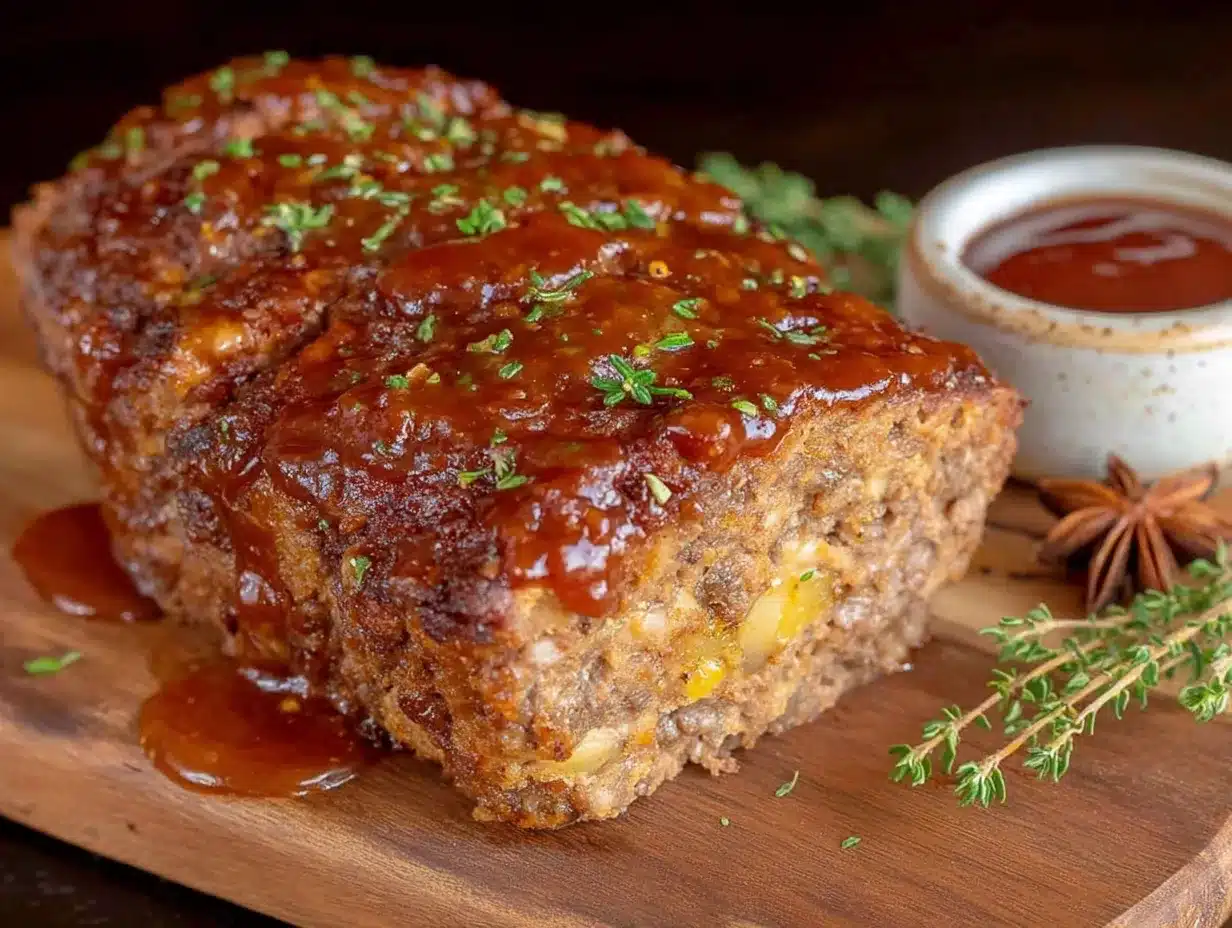
- Ketchup (1/2 cup / 120ml) : The base of the glaze. It provides tanginess and helps the sugar caramelize.
- Brown sugar (1/3 cup / 70g, packed) : Light or dark brown sugar both work. Dark brown sugar will give a deeper, more molasses-like flavor. Pack it firmly into the measuring cup for accuracy.
- Apple cider vinegar (1 tablespoon) : This cuts through the sweetness and adds a bright, tangy note. White vinegar works in a pinch, but apple cider vinegar has a fruitier flavor.
- Dijon mustard (1 teaspoon) : Mustard adds complexity and a slight kick. Yellow mustard works too, but Dijon is smoother and less sharp.
Ingredient Selection Tip : For the best texture, look for ground beef that’s bright red with a good amount of visible fat marbling. Avoid pre-packaged meatloaf mixes that include breadcrumbs or seasoning—you want full control over what goes in. If you’re buying from a butcher, ask for a coarse grind; it holds together better than fine-ground meat.
Equipment Needed
You don’t need a fancy kitchen to make this meatloaf shine. Here’s what you’ll need, plus a few tips from my own trials.
- Large mixing bowl : You need enough room to mix everything without making a mess on your counter. A glass or stainless steel bowl works best—plastic bowls can absorb odors.
- 9×5-inch loaf pan (or baking sheet) : A standard loaf pan gives you that classic shape. But here’s a tip I learned from Frank: line the pan with parchment paper, leaving a few inches overhang on each side. This makes lifting the meatloaf out a breeze. If you want a crispier exterior (which I prefer), shape the meatloaf by hand on a parchment-lined baking sheet instead. The fat drips away, and the edges get beautifully browned.
- Measuring cups and spoons : Accuracy matters, especially for the glaze. Use dry measuring cups for the brown sugar and liquid measuring cups for the milk and ketchup.
- Chef’s knife and cutting board : A sharp knife makes dicing the onion and mincing the garlic much easier. Dull knives crush the onion, releasing too much moisture.
- Small saucepan : For making the glaze. You can also whisk it together in a bowl, but heating it briefly on the stove helps the sugar dissolve more evenly.
- Whisk or fork : For mixing the glaze ingredients until smooth.
- Meat thermometer : This is the most important tool for success. An instant-read thermometer takes the guesswork out of doneness. I’ve had too many dry meatloaves to trust my eyes alone.
- Basting brush : For applying the glaze. A silicone brush is easiest to clean.
- Cooling rack : Letting the meatloaf rest on a rack for 10 minutes after baking allows the juices to redistribute. If you don’t have a rack, just let it rest in the pan.
Budget-Friendly Tip : If you don’t have a meat thermometer, you can test doneness by inserting a skewer into the center—if the juices run clear and the skewer feels hot when you pull it out, it’s done. But honestly, the thermometer is worth the $10 investment.
Preparation Method
Let’s walk through this step by step. I’ve included time estimates and sensory cues so you know exactly what to look for at each stage.
Step 1: Prep the Panade (5 minutes)
In your large mixing bowl, combine the breadcrumbs and milk. Stir them together with a fork until the breadcrumbs are fully saturated. Let this sit for 5 minutes. You’re looking for a thick, paste-like consistency—almost like wet oatmeal. This is your panade, and it’s the secret to a tender, never-dry meatloaf.
Step 2: Sauté the Aromatics (5 minutes)
Heat a small skillet over medium heat and add a drizzle of olive oil. Add the diced onion and cook for 3-4 minutes, stirring occasionally, until it becomes translucent and slightly golden at the edges. Add the minced garlic and cook for another 30 seconds until fragrant. Set aside to cool for a couple of minutes. Pro tip : Don’t skip this step. Raw onion can make the meatloaf taste harsh, and nobody wants a crunch of raw garlic in their slice.
Step 3: Mix the Meatloaf (5 minutes)
To the panade, add the eggs, Worcestershire sauce, ketchup, sautéed onion and garlic, dried thyme, smoked paprika, salt, and pepper. Whisk everything together until smooth. Then add the ground beef. Here’s the most important part: use your hands to gently mix everything together. Don’t overmix! Squeeze and fold the mixture just until the ingredients are evenly distributed—about 30 seconds of gentle handling. Overworking the meat will make it tough and dense. You’re looking for a uniform color and texture, with no visible streaks of breadcrumb mixture.
Step 4: Shape the Loaf (2 minutes)
If using a loaf pan, line it with parchment paper. Transfer the meat mixture to the pan and press it gently into an even shape. Don’t pack it down too hard—you want some air pockets for tenderness. If using a baking sheet, shape the meat into a loaf shape about 8 inches long and 4 inches wide. Smooth the top and sides with your hands or a spatula.
Step 5: Make the Glaze (5 minutes)
In a small saucepan, combine the ketchup, brown sugar, apple cider vinegar, and Dijon mustard. Whisk over medium heat until the sugar dissolves and the mixture comes to a gentle simmer. Let it bubble for 2-3 minutes until it thickens slightly. You’re looking for a glossy, syrupy consistency—it should coat the back of a spoon. Remove from heat and set aside.
Step 6: Apply the Glaze (2 minutes)
Using a basting brush, spread about half the glaze evenly over the top and sides of the meatloaf. Reserve the remaining glaze for later. Don’t be shy—the glaze is what makes this dish unforgettable.
Step 7: Bake (55-65 minutes)
Preheat your oven to 350°F (175°C). Place the meatloaf on the middle rack and bake for 45 minutes. Then remove it from the oven and brush on the remaining glaze. Return it to the oven and bake for another 10-20 minutes. The internal temperature should reach 160°F (71°C) when measured in the center. The top should be caramelized and slightly sticky to the touch. If the glaze starts to darken too quickly, tent the loaf loosely with foil for the last 15 minutes.
Step 8: Rest and Serve (10 minutes)
Remove the meatloaf from the oven and let it rest in the pan for 10 minutes. This is non-negotiable—resting allows the juices to redistribute, so every slice is moist. Transfer to a cutting board, slice into 1-inch thick pieces, and serve with the reserved glaze on the side.
Sensory Cue : When it’s done, the meatloaf should feel firm but spring back slightly when you press the center with your finger. The glaze should be sticky and dark, almost like a caramelized crust. The smell? It’s the kind that makes everyone wander into the kitchen asking, “What’s for dinner?”
Cooking Tips & Techniques
After making this recipe more times than I can count, I’ve collected a few hard-earned lessons. Here’s what I wish someone had told me the first time.
Don’t Skip the Panade : I learned this the hard way. My first few meatloaves were dry and crumbly because I thought I could skip the milk-and-breadcrumb mixture. The panade acts like a sponge, trapping moisture inside the meat as it cooks. Without it, the proteins tighten up and squeeze out all the juices. Trust me on this one.
Use a Meat Thermometer : I can’t stress this enough. The difference between a perfectly cooked meatloaf at 160°F and an overcooked one at 170°F is night and day. I once pulled a meatloaf out too early because it looked done on the outside, only to find it raw in the center. Another time, I left it in too long because I was distracted by a phone call, and it came out like a brick. The thermometer takes the guesswork out completely.
Let It Rest : I know it’s tempting to slice into it right away—especially when guests are waiting—but patience pays off. If you cut it too soon, the juices will run out onto the cutting board, leaving you with dry slices. Ten minutes is all it takes. Use that time to set the table or toss a salad.
Scale for a Crowd : Hosting a party? Double the recipe and shape it into two loaves. They’ll bake in the same amount of time if you space them out on the baking sheet. Just make sure your oven has enough airflow—don’t cram them together or they’ll steam instead of brown.
Make It Ahead : This is a lifesaver for entertaining. You can assemble the meatloaf completely (including the glaze) up to 24 hours in advance. Just cover it tightly with plastic wrap and refrigerate. When you’re ready to bake, add about 10 minutes to the cooking time since it’s starting from cold.
Common Mistake : Overmixing. I did this once when I was in a hurry and used a stand mixer with the paddle attachment. The meatloaf came out tough and almost rubbery. Always mix by hand, and stop as soon as everything is combined. The less you handle it, the more tender it will be.
Variations & Adaptations
One of the best things about this recipe is how adaptable it is. Here are some variations I’ve tried and loved.
Gluten-Free Version
Swap the breadcrumbs with gluten-free panko or crushed pork rinds. I’ve tested both, and the pork rinds actually add an unexpected richness. Just make sure they’re finely crushed so they blend in evenly. Use tamari instead of Worcestershire sauce (or check that your Worcestershire is gluten-free).
Turkey Meatloaf
For a lighter option, substitute ground turkey (93/7) for the beef. The texture will be slightly less rich, so I recommend adding an extra tablespoon of olive oil and an extra egg to compensate for the lower fat content. The cooking time stays about the same, but keep an eye on the internal temperature—turkey should reach 165°F.
Spicy Kick
Add 1-2 tablespoons of sriracha or your favorite hot sauce to the meat mixture, and stir a pinch of cayenne pepper into the glaze. I once made this for a game-day party, and it disappeared faster than the wings. The sweetness of the brown sugar balances the heat beautifully.
Cheese-Stuffed Meatloaf
This one’s a showstopper for dinner parties. After shaping the meatloaf, make a well down the center and stuff it with shredded cheddar, mozzarella, or even crumbled blue cheese. Seal the meat around the cheese, then glaze and bake as directed. The melted cheese oozes out when you slice it—honestly, it’s ridiculous in the best way.
Smoked Version
If you have a smoker, this recipe takes on a whole new dimension. Smoke the meatloaf at 225°F for about 2.5 hours, using hickory or applewood. Apply the glaze during the last 30 minutes. The smoky flavor paired with the sweet glaze is absolutely incredible. I tried this last summer for a barbecue, and my neighbor Frank (yes, the one who started all this) said it was the best meatloaf he’d ever had.
Serving & Storage Suggestions
This meatloaf is versatile enough for a casual family dinner or an elegant dinner party. Here’s how to make it shine.
Serving Suggestions
Serve the meatloaf sliced into thick, 1-inch pieces, with extra glaze drizzled on top. I like to garnish with fresh parsley for a pop of color. For a dinner party, arrange the slices on a platter with roasted vegetables and mashed potatoes on the side. The classic pairing is creamy mashed potatoes—the gravy-like glaze soaks into them beautifully. For a lighter option, serve with a simple arugula salad dressed with lemon vinaigrette. The peppery greens cut through the richness of the meat.
What to Serve Alongside : Roasted green beans, glazed carrots, sautéed spinach, or a simple coleslaw all work wonderfully. If you’re hosting, consider a side of buttery dinner rolls to soak up any extra glaze on the plate.
Beverage Pairings
A medium-bodied red wine like Merlot or Zinfandel complements the sweetness of the glaze. For beer drinkers, a brown ale or amber lager is perfect. Non-alcoholic options include sparkling water with a splash of cranberry juice or a sweet iced tea.
Storage Instructions
Leftover meatloaf keeps beautifully. Store it in an airtight container in the refrigerator for up to 4 days. The flavors actually deepen overnight as the glaze soaks into the meat. I’ve been known to eat cold meatloaf sandwiches the next day—just a slice between two pieces of sourdough with a little extra ketchup. It’s a guilty pleasure.
Freezing Instructions
You can freeze the baked meatloaf for up to 3 months. Let it cool completely, then wrap it tightly in plastic wrap, followed by a layer of aluminum foil. To reheat, thaw in the refrigerator overnight, then warm slices in a 350°F oven for 10-15 minutes, or microwave individual portions for 1-2 minutes. The glaze may lose some of its stickiness after freezing, so I recommend brushing on a little fresh glaze before reheating.
Reheating Tips
For the best texture, reheat slices in a skillet over medium heat with a splash of beef broth or water. Cover the skillet with a lid to trap steam, and heat for 3-4 minutes per side. This method keeps the meat moist and revives the glaze. Avoid the microwave if you can—it tends to dry out the edges.
Nutritional Information & Benefits
Here’s the estimated nutritional breakdown per serving (based on 8 servings, using 80/20 ground beef):
| Nutrient | Amount per Serving |
|---|---|
| Calories | 385 |
| Protein | 28g |
| Fat | 22g |
| Carbohydrates | 18g |
| Fiber | 1g |
| Sugar | 12g |
| Sodium | 680mg |
This recipe is a good source of high-quality protein, iron, and B vitamins from the beef. The onions and garlic provide antioxidants and anti-inflammatory compounds. While it’s not a low-calorie dish, it’s a satisfying, nutrient-dense meal that fits well into a balanced diet. For a lower-carb option, serve it with cauliflower mash instead of potatoes. For a lower-sodium version, use reduced-sodium ketchup and skip the added salt in the meat mixture.
Dietary Considerations : This recipe contains gluten (from breadcrumbs), dairy (from milk), and eggs. For gluten-free, use gluten-free breadcrumbs. For dairy-free, substitute the milk with unsweetened almond milk or oat milk. The eggs are harder to replace, but you can try a flax egg (1 tablespoon ground flaxseed mixed with 3 tablespoons water, let sit for 5 minutes) for each egg—though the texture will be slightly denser.
Conclusion
This classic meatloaf with brown sugar glaze is more than just a recipe—it’s the kind of dish that brings people together. Whether you’re hosting a dinner party, feeding your family on a busy weeknight, or just craving something comforting and deeply satisfying, this meatloaf delivers every single time. The glaze caramelizes into a sticky, sweet-tangy crust that makes every slice feel special. The meat stays tender and juicy, thanks to the simple panade technique that takes just minutes to prepare.
What I love most about this recipe is how forgiving it is. You can tweak the spices, swap the meat, or double it for a crowd, and it still turns out beautifully. It’s the kind of recipe that makes you look like a hero in the kitchen without breaking a sweat. And honestly, isn’t that what we all want?
I’d love to hear how yours turns out. Did you try any of the variations? Did your guests fight over the last slice? Drop a comment below and let me know—I read every single one. And if you made it for a special occasion, tag me in your photos on social media. Nothing makes my day like seeing this recipe come to life in someone else’s kitchen.
Now go on—preheat that oven and make something unforgettable. You’ve got this.
Frequently Asked Questions
Can I make this meatloaf without a loaf pan?
Absolutely! In fact, I prefer shaping the meatloaf by hand on a parchment-lined baking sheet. The exposed edges get beautifully caramelized, and the fat drips away, resulting in a slightly firmer, crispier exterior. Just shape it into a uniform loaf about 8 inches long and 4 inches wide, and bake as directed.
Why is my meatloaf falling apart?
This usually happens for one of two reasons: not enough binder (eggs and breadcrumbs) or not letting it rest after baking. Make sure you’re using the full amount of eggs and breadcrumbs listed in the recipe. Also, let the meatloaf rest for at least 10 minutes before slicing—this allows the proteins to set and the juices to redistribute, holding everything together.
Can I use ground turkey instead of beef?
Yes, you can. Use 93/7 ground turkey for the best results. Since turkey is leaner, add an extra tablespoon of olive oil and an extra egg to keep it moist. The cooking time stays about the same, but the internal temperature should reach 165°F instead of 160°F. The flavor will be milder, so consider adding a bit more Worcestershire sauce and smoked paprika.
How do I prevent the glaze from burning?
The brown sugar in the glaze can burn if it’s exposed to high heat for too long. To prevent this, apply the first layer of glaze halfway through baking (after about 45 minutes) and the final layer in the last 10-15 minutes. If you notice the glaze darkening too quickly, tent the meatloaf loosely with aluminum foil for the remainder of the baking time.
Can I freeze the meatloaf before baking?
Yes, this is a great make-ahead option. Assemble the meatloaf completely (including the glaze) in a loaf pan or on a baking sheet. Wrap it tightly in plastic wrap, then in aluminum foil, and freeze for up to 3 months. When you’re ready to bake, thaw it in the refrigerator overnight, then bake as directed, adding about 10-15 minutes to the cooking time since it’s starting from cold.
Pin This Recipe!
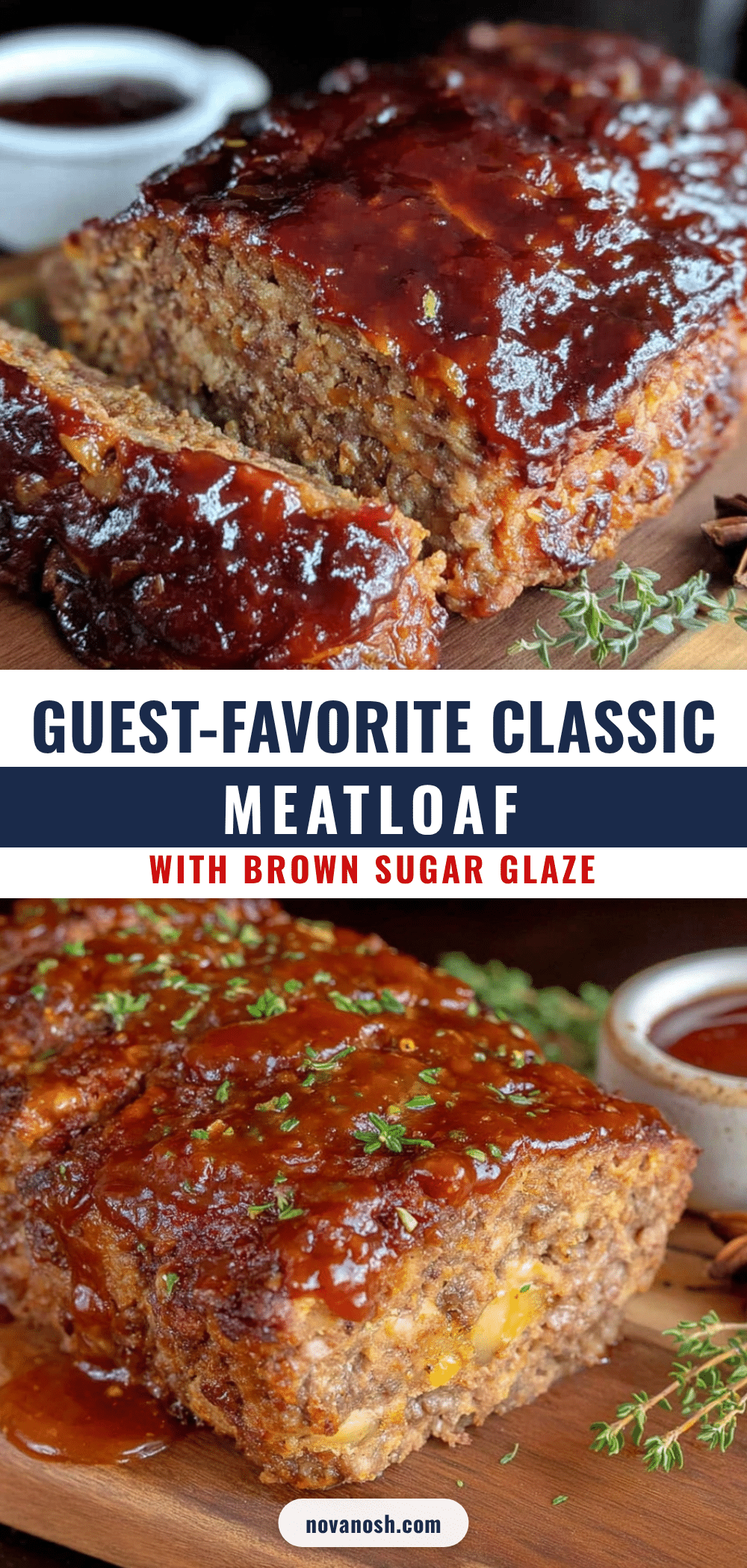
Best Classic Meatloaf with Brown Sugar Glaze Recipe
This classic meatloaf features a tender, juicy interior thanks to a simple panade technique, topped with a sweet and tangy brown sugar glaze that caramelizes into an irresistible crust. Perfect for weeknight dinners or impressing guests.
- Prep Time: 15 minutes
- Cook Time: 55-65 minutes
- Total Time: 1 hour 20 minutes
- Yield: 8 servings 1x
- Category: Main Course
- Cuisine: American
Ingredients
- 2 lbs (900g) ground beef (80/20)
- 1 cup (120g) panko breadcrumbs
- 1/2 cup (120ml) whole milk
- 2 large eggs
- 1 medium yellow onion, finely diced
- 3 cloves garlic, minced
- 2 tablespoons Worcestershire sauce
- 1/4 cup (60ml) ketchup
- 1 teaspoon dried thyme
- 1 teaspoon smoked paprika
- 1 teaspoon salt
- 1/2 teaspoon black pepper
- 1/2 cup (120ml) ketchup (for glaze)
- 1/3 cup (70g) packed brown sugar
- 1 tablespoon apple cider vinegar
- 1 teaspoon Dijon mustard
Instructions
- Preheat oven to 350°F (175°C). Line a 9×5-inch loaf pan with parchment paper or prepare a baking sheet.
- In a large bowl, combine breadcrumbs and milk. Stir and let sit for 5 minutes until a thick paste forms (panade).
- Heat a small skillet over medium heat with a drizzle of olive oil. Sauté diced onion for 3-4 minutes until translucent. Add minced garlic and cook 30 seconds more. Set aside to cool.
- To the panade, add eggs, Worcestershire sauce, 1/4 cup ketchup, sautéed onion and garlic, thyme, smoked paprika, salt, and pepper. Whisk until smooth.
- Add ground beef to the bowl. Using your hands, gently mix until just combined—do not overmix.
- Transfer meat mixture to the prepared pan or shape into a loaf on a baking sheet. Press gently into an even shape.
- In a small saucepan, combine 1/2 cup ketchup, brown sugar, apple cider vinegar, and Dijon mustard. Whisk over medium heat until sugar dissolves and mixture thickens slightly (2-3 minutes).
- Brush half the glaze over the meatloaf. Reserve the rest.
- Bake for 45 minutes. Remove from oven, brush on remaining glaze, and bake for another 10-20 minutes until internal temperature reaches 160°F (71°C).
- Let meatloaf rest in the pan for 10 minutes. Transfer to a cutting board, slice into 1-inch thick pieces, and serve with reserved glaze on the side.
Notes
For a crispier exterior, shape the meatloaf on a parchment-lined baking sheet instead of using a loaf pan. Letting the meatloaf rest for 10 minutes after baking is essential for moist slices. The glaze can be made ahead and stored in the refrigerator.
Nutrition
- Serving Size: 1 slice (1/8 of loaf
- Calories: 385
- Sugar: 12
- Sodium: 680
- Fat: 22
- Saturated Fat: 8
- Carbohydrates: 18
- Fiber: 1
- Protein: 28
Keywords: meatloaf, brown sugar glaze, classic meatloaf, comfort food, ground beef, dinner party, easy recipe