Love this? Save it for later!
Share the inspiration with your friends
I wasn’t supposed to be there that Saturday. My car was in the shop, and my neighbor Karen offered me a ride home from the grocery store. “Come in for a minute,” she said, waving me toward her kitchen. “I need to grab my phone.”
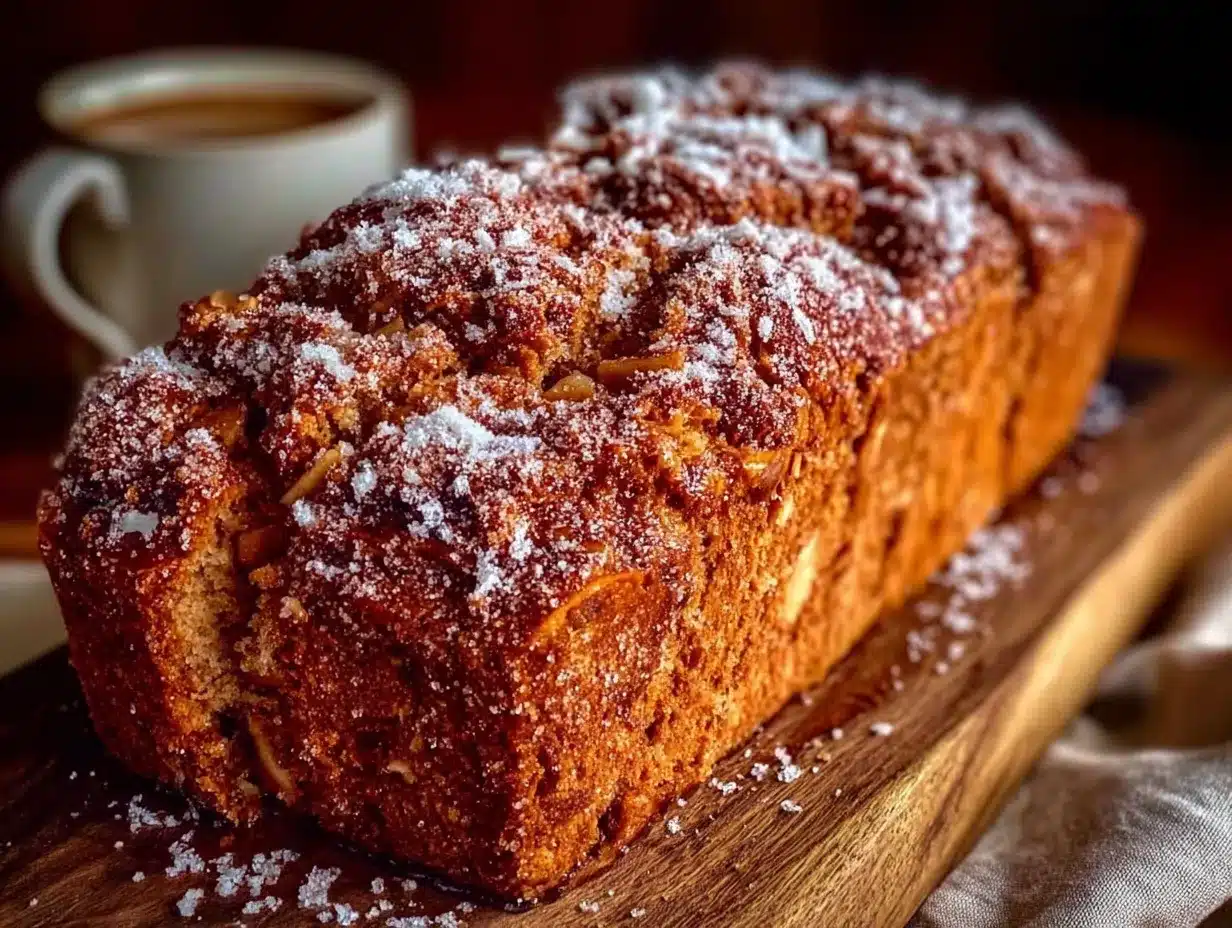
But the minute I stepped through her back door, something stopped me cold. It was the smell—warm apples, cinnamon, butter, and something almost yeasty, like the air inside a donut shop. Karen was pulling a loaf pan out of the oven, and she looked almost surprised to see me standing there. “Oh, this? It’s just bread,” she said, shrugging like she’d boiled an egg. She tapped the pan on the counter and a loaf slid out, golden and crusted in cinnamon sugar, with little cracks running along the top. “I had some apple cider left over from the farmers’ market.”
That was it. No big announcement. No “wait till you taste this.” Just a loaf of something that smelled like autumn had decided to live in her kitchen. I stood there with my grocery bags digging into my wrists, honestly a little offended that she wasn’t making a bigger deal about it. I mean, have you ever had one of those moments where you realize someone just casually made something extraordinary? That was this bread.
She sliced it while it was still warm, and the cinnamon sugar crust cracked under the knife. The inside was tender and soft, almost like a cake, but with that unmistakable apple cider tang that hits the back of your tongue. I ate two slices standing at her counter, and she just laughed and handed me the rest of the loaf to take home. “I’ll make another one,” she said.
That bread stayed with me. Not just the taste, but the way she made it feel like nothing special. Like anyone could do it. And honestly, that’s the best kind of recipe—the one that looks impressive but secretly takes almost no effort. This cozy apple cider donut bread with cinnamon sugar crust is exactly that. It tastes like you spent all day in the kitchen, but really, you just let the oven do the work.
Why You’ll Love This Recipe
Let me tell you why this apple cider donut bread is going to become your new fall obsession. I’ve tested this recipe about seven times now—Karen’s original was good, but I tweaked the ratios to get that perfect crumb structure. Here is why it works:
- One Bowl, No Mixer: You don’t need a stand mixer or even a hand mixer for this. Just a whisk and a spatula. Less cleanup, more time enjoying that cinnamon sugar crust.
- Real Apple Cider Flavor: We’re using actual apple cider, reduced down to concentrate the flavor. No extracts, no artificial nonsense. The cider gives it that authentic, tangy-sweet taste that reminds you of a crisp October afternoon.
- That Donut Texture: The secret is in the butter-to-flour ratio and a little buttermilk. The inside is soft and tender like a cake donut, not dense like regular quick bread. It literally melts on your tongue.
- Cinnamon Sugar Crust That Stays Put: You know how some crusts fall off or get soggy? Not this one. We brush the warm bread with melted butter and coat it generously. The sugar sticks, forms a slight crunch, and stays there even the next day.
- Perfect for Fall Mornings: This is the kind of bread you make on a Sunday and eat all week. Slice it for breakfast, pack it for a snack, or serve it warm with coffee when friends drop by. It makes your whole house smell like a bakery.
- Family-Approved: I brought this to a neighborhood potluck and three people asked for the recipe before I even sat down. Kids love it because it tastes like a donut. Adults love it because it feels nostalgic without being overly sweet.
This isn’t just another pumpkin bread or banana bread alternative. It is its own thing—cozy, spiced, and just different enough to feel special. The first time you pull it out of the oven and see that golden, crackly crust, you will understand why I kept making it over and over until it was perfect.
What Ingredients You Will Need
This recipe uses simple, everyday ingredients, but a few key choices make all the difference. Here is what you need and why each one matters.
For the Bread
- Apple Cider (1 ½ cups / 360 ml): Use fresh, unfiltered apple cider if you can find it. We are reducing it on the stove to concentrate the flavor, so don’t skip this step. It is what gives the bread that deep, authentic apple taste.
- Unsalted Butter (½ cup / 113 g), melted and slightly cooled: Butter adds richness and tenderness. I prefer unsalted so I control the salt level. Let it cool a bit so it doesn’t cook the eggs when you mix them in.
- Granulated Sugar (¾ cup / 150 g): Just regular white sugar. It sweetens the bread without adding any molasses flavor. The sugar also helps create that tender crumb.
- Light Brown Sugar (¼ cup / 50 g), packed: Brown sugar adds a hint of molasses and extra moisture. It gives the bread a slightly deeper flavor that pairs beautifully with the cinnamon.
- Large Eggs (2), at room temperature: Eggs give structure and help the bread rise. Room temperature eggs blend more evenly into the batter, so take them out of the fridge about 30 minutes before you start.
- Buttermilk (½ cup / 120 ml), at room temperature: Buttermilk adds tanginess and reacts with the baking soda to make the bread light and fluffy. No buttermilk? You can use ½ cup milk mixed with ½ tablespoon lemon juice or white vinegar. Let it sit for 5 minutes.
- Vanilla Extract (1 teaspoon): Pure vanilla extract rounds out the flavors. Imitation vanilla works in a pinch, but pure is better here.
- All-Purpose Flour (2 cups / 250 g): Regular all-purpose flour gives the bread the right structure. Spoon and level your flour—don’t scoop directly from the bag or you might end up with dry bread.
- Baking Powder (1 ½ teaspoons): This is the main leavening agent. Make sure it is fresh (check the expiration date) or your bread won’t rise properly.
- Baking Soda (½ teaspoon): Works with the buttermilk to add extra lift and tenderness.
- Salt (½ teaspoon): Salt enhances all the other flavors. Don’t skip it, even if you are watching your sodium.
- Ground Cinnamon (1 teaspoon): Cinnamon is the star spice here. It complements the apple cider perfectly. I use Ceylon cinnamon for a milder, sweeter flavor, but regular cinnamon works fine.
- Ground Nutmeg (¼ teaspoon): Just a pinch. Nutmeg adds warmth without overpowering the cinnamon. Freshly grated is best if you have it.
For the Cinnamon Sugar Crust
- Unsalted Butter (¼ cup / 57 g), melted: This is for brushing on the warm bread so the sugar mixture sticks. Use real butter, not margarine.
- Granulated Sugar (½ cup / 100 g): The base of the crust. It adds sweetness and that slight crunch.
- Ground Cinnamon (1 ½ teaspoons): You want a generous amount here. This is what makes the crust taste like a cinnamon sugar donut.
Equipment Needed
You don’t need fancy equipment for this recipe, which is part of why I love it. Here is what you will need:
- 9×5-inch Loaf Pan: A standard loaf pan works perfectly. If you use a glass or ceramic pan, your bread might bake a little faster, so start checking at the 50-minute mark. I recommend a light-colored metal pan for even browning.
- Parchment Paper: Line your loaf pan with a strip of parchment paper hanging over the long sides. This creates handles that make it easy to lift the bread out after baking. Total game changer.
- Small Saucepan: For reducing the apple cider. Use a small saucepan so the cider doesn’t spread out too thin and evaporate unevenly.
- Mixing Bowls: One medium bowl for dry ingredients, one large bowl for wet ingredients. Nothing fancy.
- Whisk and Rubber Spatula: A whisk for combining dry ingredients and a spatula for folding the batter together. Avoid overmixing—use the spatula for the final stir.
- Wire Cooling Rack: Essential for letting the bread cool evenly. If you leave it in the pan, the bottom can get soggy. I learned this the hard way with my first loaf.
- Pastry Brush: For brushing the melted butter onto the warm bread. A silicone brush works great and is easy to clean. If you don’t have one, you can use a spoon and spread the butter gently.
Budget-friendly tip: If you don’t have a pastry brush, just dip a paper towel in the melted butter and dab it on the bread. It works surprisingly well.
Preparation Method
Let’s get baking. Follow these steps carefully, and you will have a perfect loaf every time.
- Preheat and Prep: Preheat your oven to 350°F (175°C). Position a rack in the center of the oven. Line your 9×5-inch loaf pan with parchment paper, leaving about 2 inches overhanging on the long sides. Lightly grease the exposed ends of the pan with butter or nonstick spray.
- Reduce the Apple Cider: Pour the 1 ½ cups of apple cider into a small saucepan. Bring it to a boil over medium-high heat, then reduce the heat to medium-low and let it simmer. Stir occasionally. You want it to reduce to about ½ cup (120 ml). This takes roughly 15-20 minutes. The cider will thicken slightly and smell intensely of apples. Set it aside to cool while you prepare the other ingredients. Do not skip this step—it is the key to getting that concentrated apple flavor.
- Mix Dry Ingredients: In a medium bowl, whisk together the flour, baking powder, baking soda, salt, cinnamon, and nutmeg. Set aside. Make sure there are no lumps in the baking powder or baking soda.
- Combine Wet Ingredients: In a large bowl, whisk together the melted butter, granulated sugar, and brown sugar until well combined. It will look like wet sand. Add the eggs one at a time, whisking well after each addition. Then whisk in the buttermilk, vanilla extract, and the reduced apple cider. The mixture should be smooth and slightly thick.
- Fold Together: Pour the dry ingredients into the wet ingredients. Use a rubber spatula to fold gently. Stir just until you no longer see streaks of flour. A few small lumps are fine—overmixing will make the bread tough. Trust me, I have made that mistake before. The batter will be thick and slightly fluffy.
- Bake: Pour the batter into the prepared loaf pan and spread it evenly. Bake for 55 to 65 minutes, or until a toothpick inserted into the center comes out clean or with just a few moist crumbs. The top should be golden brown and cracked. If the top is browning too quickly after 45 minutes, tent the pan loosely with aluminum foil.
- Cool in Pan: Let the bread cool in the pan on a wire rack for 10 minutes. Do not skip this—the bread is too fragile to handle right out of the oven. After 10 minutes, use the parchment paper handles to lift the bread out of the pan and transfer it to the wire rack. Let it cool for another 5 minutes.
- Add the Cinnamon Sugar Crust: While the bread is still warm (but not hot), brush the top and sides generously with the melted butter. In a shallow bowl, whisk together the granulated sugar and cinnamon. Place the warm, buttered bread on a piece of parchment paper or a plate. Sprinkle or roll the cinnamon sugar mixture over all the buttered surfaces. Use your hands to press it gently so it sticks. Be generous—this is the best part.
- Cool Completely: Let the bread cool completely on the wire rack before slicing. The crust needs time to set. If you slice it too early, the cinnamon sugar will fall off. I know it is tempting, but patience pays off here.
Cooking Tips & Techniques
Over the course of testing this recipe, I learned a few things the hard way. Here are my best tips to make sure your loaf turns out perfect every time.
Don’t Overmix the Batter. This is the number one mistake people make with quick breads. Once you add the flour, stir only until the dry ingredients disappear. Overmixing develops gluten, which makes the bread dense and rubbery. You want a tender, cake-like crumb, not a chewy one. When I first made this, I kept stirring to get rid of every lump, and the bread came out tough. Learn from my mistake.
Reduce the Cider Properly. Reducing the apple cider concentrates the sugar and flavor. If you don’t reduce it enough, your bread will be bland and watery. If you reduce it too much, it can become syrupy and throw off the liquid ratio. Aim for ½ cup. Watch it carefully in the last few minutes. It should be slightly thicker than regular apple cider but still pourable.
Check Your Oven Temperature. Ovens run hot or cold. I use an oven thermometer to make sure my oven is actually at 350°F. If your oven runs hot, your bread might brown too quickly on the outside while staying raw in the middle. If it runs cool, your bread might take longer to bake and dry out. Trust the thermometer, not the dial.
Room Temperature Ingredients Matter. I know it is a pain to wait for eggs and buttermilk to come to room temperature, but it makes a real difference. Cold ingredients don’t emulsify as well, which can lead to a denser texture. Take them out of the fridge 30 minutes before you start. If you are in a hurry, place the eggs in a bowl of warm water for 5 minutes.
Let It Cool Before Slicing. I know the smell is intoxicating. I know you want a warm slice immediately. But if you slice the bread while it is still hot, two things happen: the interior will be gummy, and the cinnamon sugar crust will slide right off. Let it cool completely on the wire rack. The texture improves dramatically as it rests.
Double the Crust. Honestly, the cinnamon sugar crust is the star of this bread. I usually make a little extra of the sugar mixture and apply a second light layer after the first one sets. It creates a thicker, crunchier crust that stays put. Just brush on a tiny bit more butter and sprinkle more sugar.
Variations & Adaptations
One of the best things about this recipe is how flexible it is. Here are some variations I have tried and loved.
Gluten-Free Version: Substitute the all-purpose flour with a 1:1 gluten-free baking flour blend that contains xanthan gum. I have used Bob’s Red Mill 1:1 Baking Flour with great results. The texture will be slightly more delicate, so handle the bread gently when removing it from the pan. The cinnamon sugar crust works exactly the same.
Dairy-Free Adaptation: Use a plant-based butter (like Miyoko’s or Earth Balance) and replace the buttermilk with ½ cup of unsweetened almond or oat milk mixed with ½ tablespoon of lemon juice. Let it sit for 5 minutes before using. The bread will be slightly less tender but still delicious.
Spiced Apple Version: Fold in ¾ cup of finely diced fresh apple (like Honeycrisp or Granny Smith) into the batter right before baking. Toss the diced apples in a little flour first to prevent them from sinking to the bottom. This adds little pockets of soft, juicy apple throughout the bread.
Maple Glaze Twist: Instead of the cinnamon sugar crust, make a simple maple glaze. Whisk together 1 cup of powdered sugar, 2 tablespoons of maple syrup, and 1-2 tablespoons of milk until smooth. Drizzle over the cooled bread. It is less crunchy but has a lovely maple-apple flavor combination.
Mini Loaves or Muffins: This batter works beautifully as mini loaves or muffins. For mini loaves (about 4 small loaves), bake for 30-35 minutes. For muffins, bake for 18-22 minutes. Adjust the cinnamon sugar crust accordingly—for muffins, dip the tops in melted butter and then in the sugar mixture after baking.
Nutty Addition: Add ½ cup of toasted, chopped pecans or walnuts to the batter. Toast them first in a dry pan for 3-4 minutes to bring out their flavor. The nuts add a lovely crunch that contrasts with the soft crumb.
Serving & Storage Suggestions
This apple cider donut bread is incredibly versatile. Here is how to serve it and keep it fresh.
Serving Temperature: This bread is best at room temperature or slightly warm. If you want to reheat a slice, pop it in the microwave for 10-15 seconds or in a toaster oven at 300°F for 5 minutes. The warmth softens the interior and makes the cinnamon sugar crust slightly melty.
Presentation Ideas: Slice the bread and arrange it on a wooden cutting board or a rustic plate. Dust with a little extra cinnamon on top for visual appeal. Serve with a pat of salted butter on the side, or a dollop of lightly sweetened whipped cream. For a cozy fall brunch, pair it with a hot mug of spiced apple cider or a pumpkin spice latte.
What to Serve With It: This bread is fantastic on its own, but it also pairs beautifully with a sharp cheddar cheese—the salty-sweet combination is surprisingly good. For a dessert, serve it warm with a scoop of vanilla ice cream and a drizzle of caramel sauce. It also makes a great afternoon snack with a cup of black tea.
Storage Instructions: Store the bread in an airtight container at room temperature for up to 4 days. Place a paper towel in the bottom of the container to absorb excess moisture, and another paper towel on top. Change the paper towels if they get soggy. Do not refrigerate—the cold air will dry out the bread and make the crust gummy.
Freezing Instructions: This bread freezes beautifully. Wrap the completely cooled loaf (or individual slices) tightly in plastic wrap, then in aluminum foil. Freeze for up to 3 months. To thaw, leave it on the counter for a few hours or overnight in the refrigerator. If you want to refresh the crust, brush the thawed bread with a little melted butter and sprinkle with fresh cinnamon sugar, then warm it in a 300°F oven for 10 minutes.
How Flavors Develop: Honestly, this bread tastes even better on day two. The apple cider flavor deepens and the spices meld together overnight. If you can resist eating it all on day one, wrap it tightly and let it sit at room temperature. The texture stays moist and the crust remains slightly crunchy. It is a rare bread that gets better with a little patience.
Nutritional Information & Benefits
Here is the estimated nutritional information for one slice of apple cider donut bread (based on 10 slices). Keep in mind this is an approximation and can vary based on specific ingredients used.
| Nutrient | Amount per Slice |
|---|---|
| Calories | 285 |
| Total Fat | 12g |
| Saturated Fat | 7g |
| Cholesterol | 55mg |
| Sodium | 210mg |
| Total Carbohydrates | 42g |
| Dietary Fiber | 1g |
| Sugars | 28g |
| Protein | 4g |
Health Benefits of Key Ingredients: Apple cider contains antioxidants called polyphenols, which may help support heart health and reduce inflammation. Cinnamon is known for its anti-inflammatory properties and can help regulate blood sugar levels. While this bread is definitely a treat, it does offer a few small nutritional perks compared to a standard donut.
Dietary Considerations: This recipe is vegetarian. It contains gluten, dairy, and eggs. For gluten-free or dairy-free options, see the variations section above. The sugar content is moderate for a sweet bread, so enjoy it as part of a balanced diet.
Personal Wellness Note: I believe in enjoying food without guilt. This bread is a celebration of fall flavors and cozy mornings. One slice with a cup of coffee is a lovely way to start a weekend. It is not an everyday breakfast, but it is a wonderful occasional treat that brings joy and comfort.
Conclusion
This cozy apple cider donut bread with cinnamon sugar crust is the kind of recipe that makes you look forward to autumn all year. It captures everything I love about the season—warm spices, sweet apples, and the comforting smell of something baking in the oven. The best part? It is surprisingly simple to make, even though it tastes like something from a fancy bakery.
I hope you give this recipe a try and make it your own. Maybe you add a handful of walnuts, or swap the cinnamon sugar for a maple glaze. Maybe you make it for a cozy Sunday breakfast or a holiday brunch. Whatever you do, I promise it will be delicious. There is something magical about pulling a golden loaf out of the oven, brushing it with butter, and coating it in cinnamon sugar while it is still warm.
If you make this bread, I would love to hear about it. Leave a comment below and let me know how it turned out. Did you add any twists? Did your family love it? Share your photos and tag me on social media—I love seeing your creations. And if you are looking for more cozy fall recipes, check out my cinnamon roll bread or my pumpkin chocolate chip bread. Happy baking, friends!
Frequently Asked Questions
Can I use apple juice instead of apple cider?
You can, but the flavor will be less intense. Apple juice is thinner and less concentrated than cider, so the apple taste won’t come through as strongly. If you use apple juice, I recommend reducing it to ⅓ cup instead of ½ cup to concentrate the flavor a bit more. The texture of the bread will still be good, but the apple flavor will be more subtle.
Why did my bread sink in the middle?
This usually happens for one of three reasons: the oven temperature was too low, the batter was overmixed, or the bread was underbaked. Make sure your oven is properly preheated to 350°F and use an oven thermometer to verify. Mix the batter gently until just combined. And always test with a toothpick inserted into the center—it should come out clean or with just a few moist crumbs. If the center is still wet, the bread will collapse as it cools.
Can I make this recipe without reducing the apple cider?
I don’t recommend skipping the reduction step. The 1 ½ cups of cider needs to reduce to ½ cup to concentrate the flavor and remove excess liquid. If you add the full amount of unreduced cider, your batter will be too thin and the bread will be dense and soggy. The reduction also intensifies the natural sugars in the cider, which adds sweetness and depth. It is a simple step that makes a huge difference.
How do I keep the cinnamon sugar crust from falling off?
Two things help: brush the bread with butter while it is still warm but not hot, and press the cinnamon sugar mixture firmly onto the buttered surface. Let the bread cool completely before slicing—if you cut into it while it is warm, the crust will slide right off. I also recommend applying a second light layer of butter and sugar after the first one sets for an extra-sturdy crust.
Can I double this recipe to make two loaves?
Absolutely. Double all the ingredients and bake the loaves separately. Make sure you have two 9×5-inch loaf pans lined with parchment paper. The baking time should be about the same, but start checking at the 50-minute mark since ovens can vary. If you only have one loaf pan, you can mix the batter and refrigerate half of it while the first loaf bakes. Just let the refrigerated batter sit at room temperature for 15 minutes before baking.
Pin This Recipe!
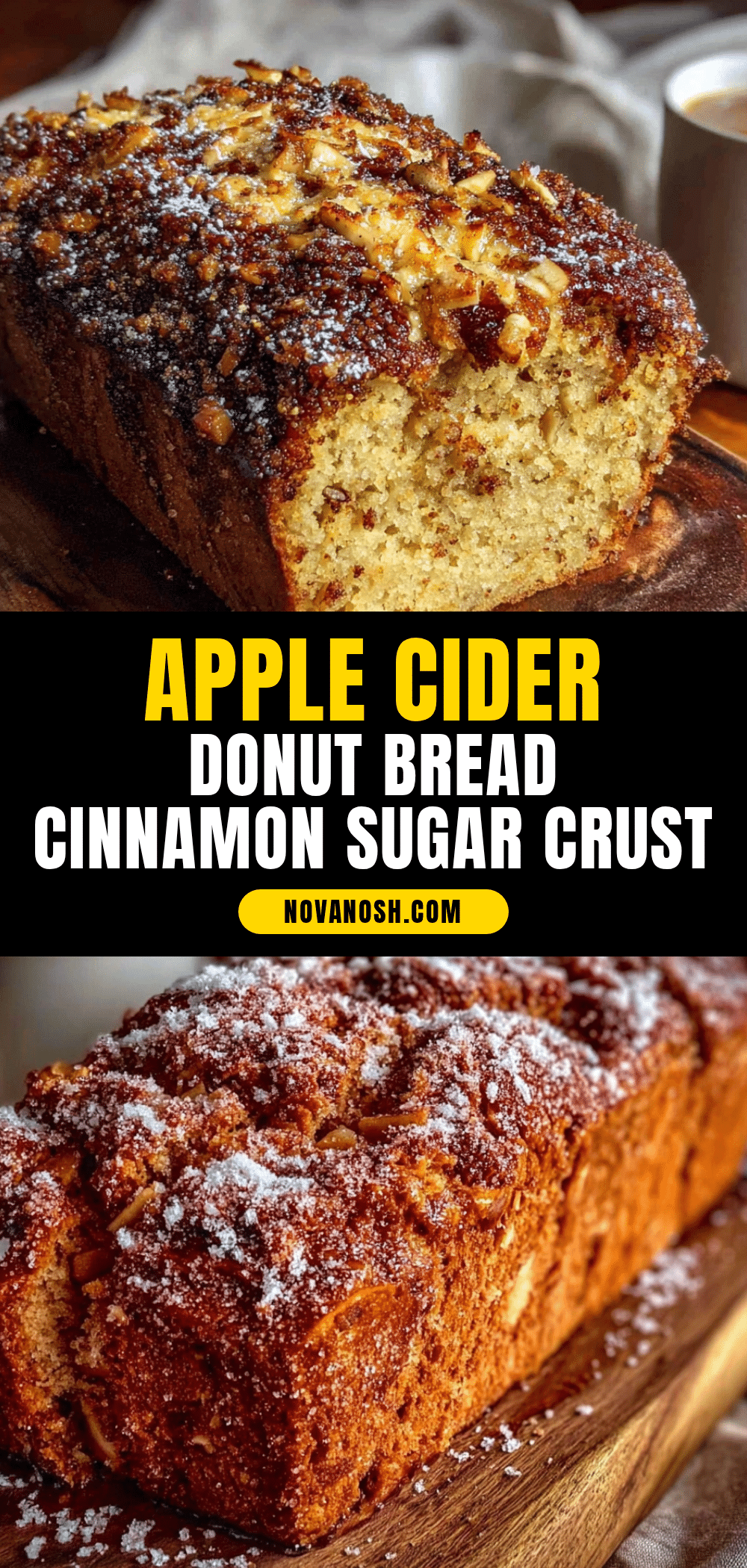
Cozy Apple Cider Donut Bread with Cinnamon Sugar Crust
This cozy apple cider donut bread with cinnamon sugar crust tastes like you spent all day in the kitchen, but really, you just let the oven do the work. It’s tender, spiced, and perfect for fall mornings.
- Prep Time: 15 minutes
- Cook Time: 55-65 minutes
- Total Time: 1 hour 20 minutes
- Yield: 10 servings 1x
- Category: Bread
- Cuisine: American
Ingredients
- 1 ½ cups (360 ml) apple cider
- ½ cup (113 g) unsalted butter, melted and slightly cooled
- ¾ cup (150 g) granulated sugar
- ¼ cup (50 g) light brown sugar, packed
- 2 large eggs, at room temperature
- ½ cup (120 ml) buttermilk, at room temperature
- 1 teaspoon vanilla extract
- 2 cups (250 g) all-purpose flour
- 1 ½ teaspoons baking powder
- ½ teaspoon baking soda
- ½ teaspoon salt
- 1 teaspoon ground cinnamon
- ¼ teaspoon ground nutmeg
- For the Cinnamon Sugar Crust:
- ¼ cup (57 g) unsalted butter, melted
- ½ cup (100 g) granulated sugar
- 1 ½ teaspoons ground cinnamon
Instructions
- Preheat your oven to 350°F (175°C). Position a rack in the center of the oven. Line your 9×5-inch loaf pan with parchment paper, leaving about 2 inches overhanging on the long sides. Lightly grease the exposed ends of the pan with butter or nonstick spray.
- Pour the 1 ½ cups of apple cider into a small saucepan. Bring it to a boil over medium-high heat, then reduce the heat to medium-low and let it simmer. Stir occasionally. You want it to reduce to about ½ cup (120 ml). This takes roughly 15-20 minutes. Set it aside to cool.
- In a medium bowl, whisk together the flour, baking powder, baking soda, salt, cinnamon, and nutmeg. Set aside.
- In a large bowl, whisk together the melted butter, granulated sugar, and brown sugar until well combined. Add the eggs one at a time, whisking well after each addition. Then whisk in the buttermilk, vanilla extract, and the reduced apple cider.
- Pour the dry ingredients into the wet ingredients. Use a rubber spatula to fold gently. Stir just until you no longer see streaks of flour. A few small lumps are fine.
- Pour the batter into the prepared loaf pan and spread it evenly. Bake for 55 to 65 minutes, or until a toothpick inserted into the center comes out clean or with just a few moist crumbs. If the top is browning too quickly after 45 minutes, tent the pan loosely with aluminum foil.
- Let the bread cool in the pan on a wire rack for 10 minutes. After 10 minutes, use the parchment paper handles to lift the bread out of the pan and transfer it to the wire rack. Let it cool for another 5 minutes.
- While the bread is still warm (but not hot), brush the top and sides generously with the melted butter. In a shallow bowl, whisk together the granulated sugar and cinnamon. Place the warm, buttered bread on a piece of parchment paper or a plate. Sprinkle or roll the cinnamon sugar mixture over all the buttered surfaces. Use your hands to press it gently so it sticks.
- Let the bread cool completely on the wire rack before slicing.
Notes
Don’t overmix the batter. Reduce the cider properly to ½ cup. Room temperature ingredients matter. Let the bread cool completely before slicing to keep the crust intact. The bread tastes even better on day two.
Nutrition
- Serving Size: 1 slice
- Calories: 285
- Sugar: 28
- Sodium: 210
- Fat: 12
- Saturated Fat: 7
- Carbohydrates: 42
- Fiber: 1
- Protein: 4
Keywords: apple cider donut bread, cinnamon sugar crust, fall bread, quick bread, apple cider recipe