Love this? Save it for later!
Share the inspiration with your friends
It was 11:47 PM on a random Wednesday in October, and I had a jar of sourdough discard staring at me from the fridge like a neglected pet. I’d been meaning to feed my starter for days—honestly, it was starting to look a little sad in there. But here’s the thing about late nights in the kitchen: they’re when the best accidents happen. I didn’t have the energy for a full sourdough loaf or the patience for another batch of crackers. But I did have a can of pumpkin puree left over from a pie I’d made three weeks ago, and suddenly, the idea hit me like a falling mixing bowl.
What if I just combined them? I mean, pumpkin bread is already a thing. Sourdough discard bread is also a thing. Why not smash them together and see what happens? I pulled out my favorite worn-out loaf pan—the one with the scratch from that time I tried to cut bread straight out of the oven (we’ve all been there)—and started mixing. No recipe, no plan, just a weird late-night hunch. The batter came together in maybe ten minutes, and honestly, I wasn’t expecting much. But when I pulled that loaf out of the oven at 1 AM, the kitchen smelled like fall had exploded in the best way possible.
That first slice was warm, tender, and had this subtle tang from the discard that made the pumpkin flavor actually pop. I stood there in my pajamas, eating it straight from the cutting board, and knew I’d stumbled onto something worth sharing. Maybe you’ve been there—staring at your sourdough discard, wondering what to do with it besides the same old recipes. This easy pumpkin sourdough discard bread is the answer you didn’t know you needed. It’s the recipe that kept me up that night, and it’s been a staple in my kitchen ever since.
Why You’ll Love This Recipe
Let me tell you why this pumpkin sourdough discard bread has earned a permanent spot in my rotation. I’ve tested this recipe at least six times—twice with different flours, once with a starter that was way too hungry (lesson learned), and once at a friend’s house with a borrowed oven. Every single time, it delivered. Here’s what makes it special:
- Quick & Easy: From mixing to oven in under 15 minutes. No rising time, no complicated folds. Just stir, pour, and bake. Perfect for those “I need bread right now” moments.
- Simple Ingredients: You probably have everything already. Pumpkin puree, flour, sugar, eggs, oil, spices, and that jar of discard you’ve been avoiding. No fancy grocery runs required.
- Perfect for Fall Baking: This bread screams autumn without being fussy. It’s great for Thanksgiving brunch, cozy Sunday mornings, or when you just want your kitchen to smell amazing.
- Crowd-Pleaser: I brought this to a potluck last month, and three people asked for the recipe before I’d even set the plate down. Kids love it, adults love it, and even my neighbor who “doesn’t like sourdough” went back for seconds.
- Unbelievably Delicious: The tangy discard balances the sweet pumpkin perfectly. It’s moist without being gummy, tender without being crumbly. Honestly, it might be the best quick bread I’ve ever made.
What makes this recipe different from every other pumpkin bread out there? It’s the sourdough discard. That tiny bit of fermented flour adds a depth of flavor you just can’t get from baking soda alone. The discard also helps keep the bread incredibly moist for days—I’m talking day-three bread that still tastes fresh. And because we’re using discard instead of active starter, there’s zero waiting. No feeding, no bubbling, no timing your starter. Just straight-from-the-fridge discard and you’re good to go.
This isn’t just another pumpkin bread recipe. It’s the one that makes you close your eyes after the first bite. It’s comfort food reimagined—faster, easier, and with a secret ingredient that makes everyone wonder what you did differently. Perfect for impressing guests without the stress, or turning a random Wednesday night into something worth staying up for.
What Ingredients You Will Need
This recipe uses simple, wholesome ingredients to deliver bold flavor and satisfying texture without the fuss. Most of these are pantry staples, especially if you keep a sourdough starter around. Here’s what you’ll need:
- All-purpose flour – 2 cups (260g). I use King Arthur Flour for consistent results, but any brand works. Spoon and level your flour—don’t scoop directly from the bag or you’ll end up with dense bread.
- Pumpkin puree – 1 cup (245g). Make sure it’s 100% pure pumpkin, not pumpkin pie filling. Libby’s is my go-to, but store brands work fine too. If your puree looks watery, blot it with a paper towel before measuring.
- Sourdough discard – 1 cup (240g). Straight from the fridge is perfect. It doesn’t need to be active or bubbly. If your discard has been sitting for a while and smells extra tangy, that’s actually great—more flavor.
- Granulated sugar – 3/4 cup (150g). Regular white sugar works beautifully. You can reduce it to 1/2 cup if you prefer less sweet bread.
- Brown sugar – 1/2 cup (100g), packed. Light or dark both work. Dark brown sugar gives a deeper molasses flavor that pairs wonderfully with pumpkin.
- Vegetable oil – 1/2 cup (120ml). Any neutral oil works—canola, avocado, or melted coconut oil. I’ve used olive oil in a pinch and it was surprisingly good, just slightly more savory.
- Eggs – 2 large, room temperature. If you forget to take them out early, place them in a bowl of warm water for 5 minutes.
- Vanilla extract – 1 teaspoon. Pure vanilla is best, but imitation works fine here since the pumpkin and spices are the stars.
- Baking soda – 1 teaspoon. This helps the bread rise since we’re not using active starter. Make sure it’s fresh—test it by dropping a pinch in vinegar; it should fizz immediately.
- Baking powder – 1/2 teaspoon. Adds a little extra lift for a tender crumb.
- Salt – 1/2 teaspoon. Don’t skip this—it balances the sweetness and enhances the pumpkin flavor.
- Pumpkin pie spice – 2 teaspoons. Store-bought is fine, but I make my own with cinnamon, nutmeg, ginger, and cloves. If you only have cinnamon, use 1 1/2 teaspoons and add a pinch of nutmeg.
- Cinnamon – 1 teaspoon. Because you can never have too much cinnamon in pumpkin bread.
Optional add-ins:
- 1/2 cup chocolate chips (semi-sweet or dark)
- 1/2 cup chopped pecans or walnuts
- 1/4 cup dried cranberries
- 2 tablespoons pepitas (pumpkin seeds) for topping
Equipment Needed
You don’t need a fancy kitchen to make this pumpkin sourdough discard bread. Here’s what I use:
- 9×5-inch loaf pan – This is the standard size. If you only have an 8×4 pan, the bread will take longer to bake and might dome more. Just adjust the time by 10-15 minutes.
- Mixing bowls – One large bowl for wet ingredients, one medium bowl for dry. I love my glass nesting bowls because I can see if everything is fully mixed.
- Whisk – For combining dry ingredients and smoothing out the wet mixture.
- Rubber spatula – For folding everything together without overmixing. This is crucial—use a spatula, not a mixer.
- Parchment paper – Line your loaf pan for easy removal. I fold it so it hangs over the long sides like handles. Total game-changer.
- Cooling rack – Lets air circulate under the bread so the bottom doesn’t get soggy. If you don’t have one, use the upside-down loaf pan trick—just balance the bread across the top.
- Measuring cups and spoons – For accuracy. I also recommend a kitchen scale for the flour and discard if you have one. It’s more precise and means less cleanup.
My first time making this, I used a glass loaf pan and it worked great. Metal pans tend to brown the crust more evenly, but glass is fine—just reduce the oven temperature by 25°F to prevent over-browning. Also, if you’re like me and lose your measuring spoons in the drawer of chaos, a 1-tablespoon measure equals 3 teaspoons. You’re welcome.
Preparation Method
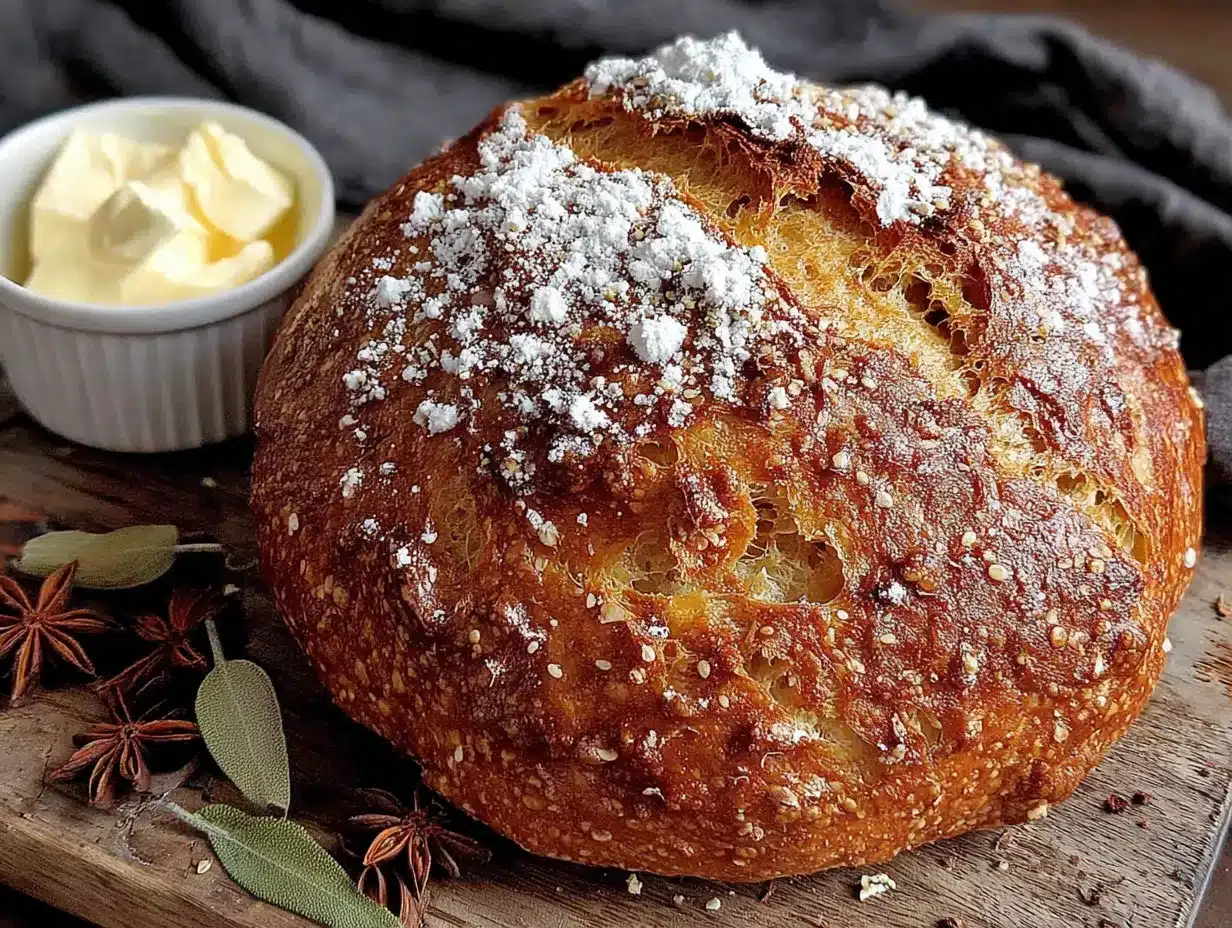
Okay, let’s make some bread. This is straightforward, but I’ll walk you through every step with the little tricks I’ve learned from making this recipe more times than I can count.
- Preheat your oven to 350°F (175°C). Position the rack in the center. While it’s heating, line your 9×5 loaf pan with parchment paper, leaving some overhang on the long sides. Lightly spray the exposed ends with cooking spray—trust me, this saves you from the heartbreak of stuck bread.
- In a medium bowl, whisk together the dry ingredients: 2 cups all-purpose flour, 1 teaspoon baking soda, 1/2 teaspoon baking powder, 1/2 teaspoon salt, 2 teaspoons pumpkin pie spice, and 1 teaspoon cinnamon. Whisk until everything is evenly distributed. This takes about 30 seconds. If you see clumps of baking soda, break them up with your fingers—nobody wants a bitter bite of baking soda in their bread.
- In a large bowl, combine the wet ingredients. Start with 1 cup pumpkin puree, 1 cup sourdough discard, 3/4 cup granulated sugar, 1/2 cup packed brown sugar, 1/2 cup vegetable oil, 2 large eggs, and 1 teaspoon vanilla extract. Whisk until smooth and well combined. The mixture should look like a thick, glossy orange batter. If your discard was really cold from the fridge, the oil might clump up a bit—just keep whisking, it’ll come together.
- Pour the dry ingredients into the wet ingredients. Here’s the important part: use a rubber spatula and fold gently. Stir just until you no longer see streaks of flour. A few lumps are totally fine—overmixing makes the bread tough and creates tunnels in the crumb. I count about 12-15 folds and stop, even if it looks a little shaggy. The batter will be thick but scoopable, like a very dense muffin batter.
- If you’re adding mix-ins, fold them in now. I usually add 1/2 cup chocolate chips and 1/4 cup pepitas for the top. Gently fold them in with 3-4 extra strokes. Don’t go crazy—you want the add-ins distributed, not pulverized.
- Scrape the batter into your prepared loaf pan. Use the spatula to spread it evenly into the corners. Give the pan a couple of gentle taps on the counter to release any air bubbles. If you’re topping with pepitas or coarse sugar, sprinkle them on now—they’ll stick to the batter as it bakes.
- Bake for 50-60 minutes. Start checking at 50 minutes. The bread is done when a toothpick inserted into the center comes out clean or with just a few moist crumbs. If the top is browning too fast (around the 40-minute mark), tent loosely with aluminum foil. My oven runs hot, so I usually check at 45 minutes and cover it then.
- Let the bread cool in the pan for 15 minutes. This is crucial—if you try to remove it too soon, it’ll fall apart. After 15 minutes, use the parchment paper handles to lift the bread out and transfer it to a cooling rack. Let it cool completely before slicing, about 1-2 hours. I know, I know, the smell is torture. But warm bread is crumbly bread. Patience pays off with clean slices.
Troubleshooting note: If your bread sank in the middle, your oven might have been too cool, or you opened the door too early. If it’s gummy inside, it needed more baking time—check with a thermometer next time (internal temp should be 200-205°F). And if the edges are burnt but the center is raw, your oven runs hot—lower the temperature by 25°F next time.
Cooking Tips & Techniques
After making this pumpkin sourdough discard bread more times than I care to admit, I’ve collected a few hard-earned tips. Let me save you from my mistakes.
Don’t overmix the batter. I cannot stress this enough. The first time I made this, I used a hand mixer because I was impatient. The bread came out dense and tough, with a weird rubbery texture. Sourdough discard is already a little delicate, and overmixing develops the gluten too much. Use a spatula. Mix by hand. Stop when it’s just combined. Your future self will thank you.
Room temperature ingredients matter. I learned this the hard way when I used cold eggs straight from the fridge. The batter seized up, and the oil started separating. Cold ingredients don’t emulsify well, which means your bread can end up greasy or unevenly baked. If you forget to set things out, place your eggs in warm water for 5 minutes and microwave your discard for 10 seconds to take the chill off.
Check your discard’s personality. Not all sourdough discard is created equal. If your discard is super tangy (like, three weeks without feeding tangy), reduce the discard to 3/4 cup and add 1/4 cup milk or water to keep the hydration balanced. If your discard is young and mild, use the full cup. I keep a jar of discard in my fridge that I feed every two weeks, and it’s perfect for this recipe—tangy enough to notice but not overpowering.
Use the toothpick test properly. Insert it into the center of the loaf, not near the edges. If it comes out with wet batter, give it 5 more minutes. If it comes out with moist crumbs, it’s done. If it comes out completely clean, you might have overbaked it slightly—still delicious, just a little drier. Also, if you hit a chocolate chip, try another spot. Chocolate will make the toothpick look wet even when the bread is done.
Let it cool completely. I know it’s tempting to cut into warm bread, but this loaf is especially fragile when hot. The steam inside needs time to redistribute, and the structure needs to set. I once cut into a warm loaf after 30 minutes, and it basically turned into pumpkin bread pudding. Delicious, but not what I was going for. Give it at least 1 hour on the cooling rack.
Variations & Adaptations
One of the best things about this pumpkin sourdough discard bread is how adaptable it is. Here are some variations I’ve tried and loved:
Gluten-Free Version: Substitute the all-purpose flour with a 1:1 gluten-free baking blend that contains xanthan gum. I’ve tested this with Bob’s Red Mill and King Arthur Measure for Measure, and both worked well. The texture is slightly more crumbly, so let it cool completely before slicing. Reduce the discard to 3/4 cup since gluten-free flours absorb liquid differently.
Dairy-Free Adaptation: This recipe is already dairy-free if you use vegetable oil! The eggs provide enough structure, and there’s no milk or butter in the base recipe. If you’re adding chocolate chips, make sure they’re dairy-free. Enjoy Life makes great ones.
Vegan Option: Replace the 2 eggs with 1/2 cup unsweetened applesauce or 2 flax eggs (2 tablespoons ground flaxseed mixed with 6 tablespoons water, let sit for 5 minutes). The bread will be slightly denser and more moist. I’ve made it with applesauce and honestly, it was still fantastic—just a little more pumpkin-pudding-like in texture.
Spice It Up: If you love a strong spice profile, add 1/4 teaspoon ground ginger, 1/4 teaspoon ground cloves, and a pinch of cardamom. My friend Sarah adds a teaspoon of orange zest to hers, and it’s incredible—bright and warm at the same time.
Chocolate Pumpkin Swirl: Before baking, melt 1/4 cup chocolate chips with 1 tablespoon coconut oil. Drop spoonfuls of the melted chocolate into the batter and swirl with a knife. It makes the bread look fancy and tastes like a pumpkin chocolate croissant in loaf form.
Savory Twist: Reduce the sugar to 1/4 cup total, omit the pumpkin pie spice, and add 1 teaspoon dried rosemary, 1/2 teaspoon black pepper, and 1/2 cup shredded sharp cheddar. Bake as directed. This savory version is incredible with soup or as a breakfast bread with butter. I was skeptical the first time I tried it, but now I make it just as often as the sweet version.
Serving & Storage Suggestions
This pumpkin sourdough discard bread is versatile enough for any time of day. Here’s how I like to serve and store it:
Serving: Serve at room temperature or slightly warm. For breakfast, slice and toast lightly, then spread with salted butter or cream cheese. For dessert, dust with powdered sugar and serve with a dollop of whipped cream or a scoop of vanilla ice cream. I’ve also sliced it thin and used it for French toast—game changer. The bread is sturdy enough to hold up to the egg mixture but tender enough to soak it all up.
What to pair it with: A hot cup of coffee or chai latte is my go-to. For a fall brunch spread, serve alongside a cinnamon roll baked oatmeal or a simple arugula salad with apple slices and candied pecans. If you’re feeling extra, make a pumpkin spice latte to go with it. The bread also pairs beautifully with apple cider or a warm mug of spiced tea.
Storage: Wrap the cooled loaf tightly in plastic wrap or store in an airtight container at room temperature for up to 4 days. The sourdough discard actually helps keep it moist longer than regular pumpkin bread. I’ve had slices on day 4 that were still perfectly tender. If you live in a humid climate, store it in the fridge to prevent mold—just bring slices to room temperature before serving.
Freezing: This bread freezes beautifully. Wrap the cooled loaf (or individual slices) in plastic wrap, then in aluminum foil, and freeze for up to 3 months. To thaw, leave at room temperature for 2-3 hours or pop a frozen slice in the toaster for a quick treat. I always freeze a loaf in individual slices so I can grab one whenever the craving hits. Pro tip: freeze slices on a baking sheet first, then wrap them—this prevents them from sticking together.
Flavor development: Honestly, this bread tastes even better on day 2. The flavors meld together, and the pumpkin spice becomes more pronounced. If you can resist eating it all on day one, you’re in for a treat. The sourdough tang also mellows out slightly, making it more approachable for people who aren’t sure about fermented flavors.
Nutritional Information & Benefits
Here’s the approximate nutritional breakdown for one slice (based on 10 slices per loaf, without add-ins):
| Nutrient | Amount Per Slice |
|---|---|
| Calories | 245 |
| Total Fat | 10g |
| Saturated Fat | 1.5g |
| Cholesterol | 37mg |
| Sodium | 280mg |
| Total Carbohydrates | 35g |
| Dietary Fiber | 2g |
| Sugars | 18g |
| Protein | 4g |
| Vitamin A | 95% DV |
| Iron | 8% DV |
Health benefits: Pumpkin is packed with vitamin A (beta-carotene), which supports eye health and immune function. The sourdough fermentation process makes the bread easier to digest by breaking down some of the gluten and phytic acid. Plus, using discard means you’re reducing food waste—always a win in my book. This bread also contains a moderate amount of fiber from the pumpkin and flour, helping you feel fuller longer.
Dietary considerations: This recipe is dairy-free and nut-free (unless you add nuts). It can be made gluten-free with a 1:1 flour blend and vegan with the substitutions mentioned above. It contains eggs and gluten in its standard form. If you’re watching your sugar intake, you can reduce the sugar to 1 cup total without significantly affecting the texture.
Conclusion
This easy pumpkin sourdough discard bread is everything I love about fall baking—cozy, forgiving, and full of flavor. It started as a late-night experiment born from procrastination and a jar of neglected discard, and now it’s the recipe I turn to whenever I need a slice of comfort. The tangy sourdough, the sweet pumpkin, the warm spices—it all comes together in a way that feels both familiar and surprising.
I hope you give this recipe a try and make it your own. Maybe you’ll add chocolate chips like I usually do, or maybe you’ll go the savory route with cheese and rosemary. However you make it, I promise it’ll be worth staying up for. And if you do make it, I’d love to hear about it. Drop a comment below and let me know how it turned out, what variations you tried, or if you ate half the loaf standing in your kitchen at midnight (no judgment here).
Happy baking, friends. May your discard never go to waste and your pumpkin bread always be perfectly moist.
Frequently Asked Questions
Can I use active sourdough starter instead of discard?
Yes, you can use active starter, but the texture will be slightly different. Active starter has more air bubbles, which can make the bread a little lighter. However, since we’re using baking soda and baking powder as leaveners anyway, the difference is minimal. If you use active starter, you might need to reduce the liquid slightly since active starter is often thinner than discard. Start with 3/4 cup and add more if the batter seems too thick.
Why did my pumpkin sourdough bread turn out dense?
Dense bread usually comes from overmixing the batter or using too much flour. Remember to fold gently with a spatula and stop as soon as the flour disappears. Also, make sure you’re measuring your flour correctly—spoon it into the measuring cup and level it off, don’t scoop directly from the bag. Another culprit could be expired baking soda or baking powder. Test them before using by dropping a pinch into vinegar or hot water—they should bubble immediately.
Can I make this into muffins instead of a loaf?
Absolutely! This batter works beautifully as muffins. Divide the batter among 12 lined muffin cups and bake at 350°F for 18-22 minutes, or until a toothpick comes out clean. The baking time is much shorter, so keep an eye on them. Muffins are great for freezing individually and grabbing for breakfast on the go. I actually prefer the muffin version when I’m meal-prepping for the week.
How do I know when the bread is fully baked?
The most reliable method is the toothpick test—insert a toothpick into the center of the loaf and check that it comes out clean or with just a few moist crumbs. You can also use an instant-read thermometer; the internal temperature should be between 200-205°F. The bread should also be pulling away slightly from the edges of the pan, and the top should be golden brown and spring back when lightly pressed. If you’re unsure, it’s better to bake a few extra minutes than to underbake it.
Can I reduce the sugar in this recipe?
Yes, you can reduce the total sugar to 1 cup (instead of 1 1/4 cups) without major issues. I’ve tested it with 3/4 cup total sugar, and the bread was still sweet enough for most people—just less dessert-like and more breakfast-friendly. Keep in mind that sugar contributes to moisture and browning, so reducing it too much might result in a slightly denser, paler loaf. If you’re using very sweet add-ins like chocolate chips, you can definitely cut back on the sugar.
Pin This Recipe!
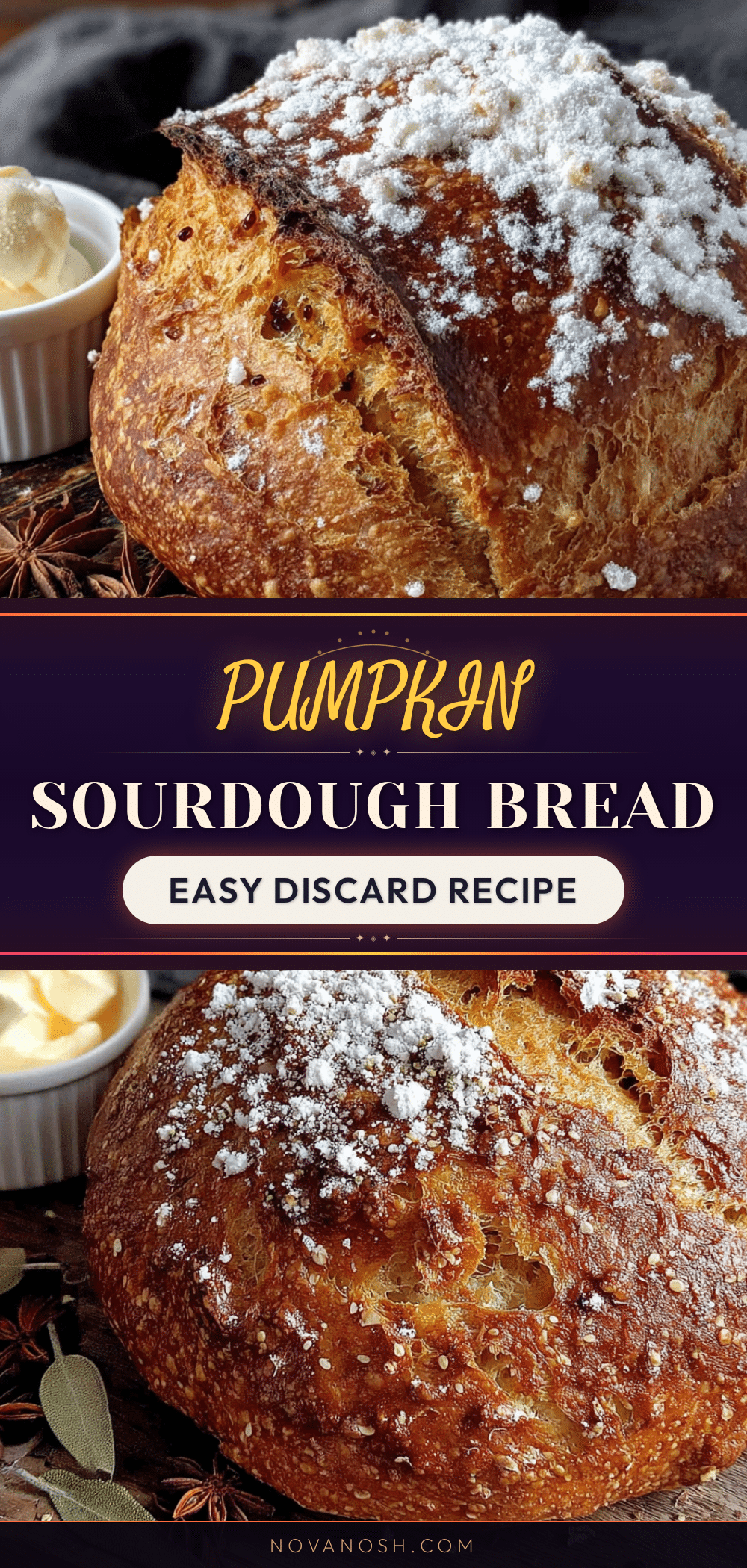
Easy Pumpkin Sourdough Discard Bread: Best Homemade Recipe

This easy pumpkin sourdough discard bread is a quick and delicious way to use up your sourdough discard. It’s moist, tender, and full of warm fall spices, perfect for breakfast, dessert, or a cozy snack.
- Prep Time: 15 minutes
- Cook Time: 55 minutes
- Total Time: 1 hour 10 minutes
- Yield: 10 servings 1x
- Category: Quick Bread
- Cuisine: American
Ingredients
- 2 cups (260g) all-purpose flour
- 1 cup (245g) pumpkin puree (100% pure pumpkin, not pie filling)
- 1 cup (240g) sourdough discard (straight from the fridge)
- 3/4 cup (150g) granulated sugar
- 1/2 cup (100g) packed brown sugar (light or dark)
- 1/2 cup (120ml) vegetable oil (or other neutral oil)
- 2 large eggs, room temperature
- 1 teaspoon vanilla extract
- 1 teaspoon baking soda
- 1/2 teaspoon baking powder
- 1/2 teaspoon salt
- 2 teaspoons pumpkin pie spice
- 1 teaspoon ground cinnamon
- Optional add-ins: 1/2 cup chocolate chips, 1/2 cup chopped pecans or walnuts, 1/4 cup dried cranberries, 2 tablespoons pepitas for topping
Instructions
- Preheat your oven to 350°F (175°C). Position the rack in the center. Line a 9×5-inch loaf pan with parchment paper, leaving overhang on the long sides. Lightly spray the exposed ends with cooking spray.
- In a medium bowl, whisk together the dry ingredients: 2 cups all-purpose flour, 1 teaspoon baking soda, 1/2 teaspoon baking powder, 1/2 teaspoon salt, 2 teaspoons pumpkin pie spice, and 1 teaspoon cinnamon. Whisk until evenly distributed.
- In a large bowl, combine the wet ingredients: 1 cup pumpkin puree, 1 cup sourdough discard, 3/4 cup granulated sugar, 1/2 cup packed brown sugar, 1/2 cup vegetable oil, 2 large eggs, and 1 teaspoon vanilla extract. Whisk until smooth and well combined.
- Pour the dry ingredients into the wet ingredients. Use a rubber spatula to fold gently, just until no streaks of flour remain. Do not overmix; a few lumps are fine.
- If using add-ins, fold them in gently with a few extra strokes.
- Scrape the batter into the prepared loaf pan and spread evenly. Tap the pan gently on the counter to release air bubbles. If desired, sprinkle pepitas or coarse sugar on top.
- Bake for 50-60 minutes, or until a toothpick inserted into the center comes out clean or with a few moist crumbs. If the top browns too quickly, tent loosely with aluminum foil after 40 minutes.
- Let the bread cool in the pan for 15 minutes. Then use the parchment paper handles to lift it out and transfer to a cooling rack. Cool completely before slicing, about 1-2 hours.
Notes
For best results, use room temperature ingredients. Do not overmix the batter. Let the bread cool completely before slicing to avoid crumbling. The bread tastes even better on day 2 as flavors meld. For a gluten-free version, substitute all-purpose flour with a 1:1 gluten-free baking blend and reduce discard to 3/4 cup. For a vegan option, replace eggs with 1/2 cup unsweetened applesauce or 2 flax eggs.
Nutrition
- Serving Size: 1 slice
- Calories: 245
- Sugar: 18
- Sodium: 280
- Fat: 10
- Saturated Fat: 1.5
- Carbohydrates: 35
- Fiber: 2
- Protein: 4
Keywords: pumpkin bread, sourdough discard, fall baking, quick bread, easy pumpkin bread, sourdough discard recipe