Love this? Save it for later!
Share the inspiration with your friends
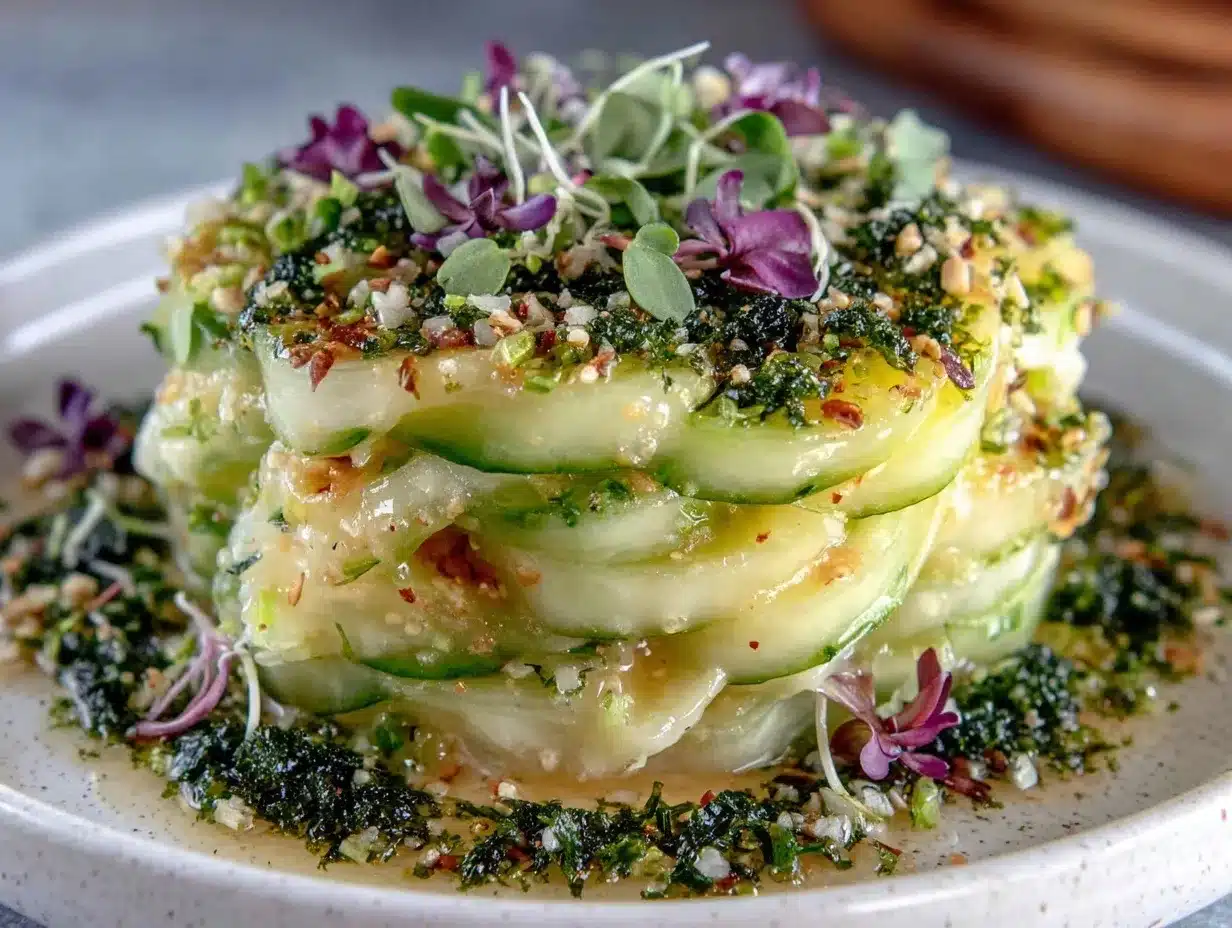
I still remember the night I stumbled upon the inspiration for this omakase-inspired spring salad. It wasn’t at some fancy sushi bar, but rather in my tiny apartment kitchen, armed with a handful of fresh, simple ingredients and a craving for something light yet exciting. After a few tries (and one accidental overdressing incident), I finally landed on a salad that felt like a curated tasting menu in a bowl—fresh, balanced, and bursting with subtle, layered flavors that keep you coming back for more.
This isn’t your everyday leafy green salad. It’s inspired by the Japanese omakase tradition—letting the chef choose the freshest, best ingredients and arranging them thoughtfully. Here, I capture that magic with ingredients you can find at any market, without any intimidating techniques or hard-to-find items. The best part? I’ve made this salad over a dozen times, tweaking the dressing and assembly, and it’s become my go-to springtime dish. It’s simple, elegant, and honestly, you’ll want to make it on repeat.
Whether you’re looking for a fresh side to complement your weeknight dinners or a light lunch that feels special, this omakase-inspired spring salad fits the bill. Plus, it pairs beautifully with dishes like the crispy skin salmon with brown butter caper sauce or the creamy one-pot sun-dried tomato orzo if you want to build a full meal around it. Let me walk you through why this salad works so well and how to make it your new favorite springtime staple.
Why This Recipe Works
This salad completely changed how I think about simple spring salads. Here’s why:
- Freshness Front and Center — Inspired by omakase, every ingredient shines on its own. Crisp cucumbers, delicate microgreens, and sweet snap peas combine for a refreshing crunch that never feels heavy.
- Easy to Assemble — No complicated prep or hard-to-find ingredients. I throw this together in under 15 minutes, making it perfect for busy weeknights or last-minute guests.
- Balanced Flavors — The dressing is a light mix of citrus, soy, and a hint of sesame that ties everything together without overpowering the veggies. It’s tangy, slightly nutty, and just a touch sweet.
- Versatile and Adaptable — You can easily swap ingredients based on what’s fresh or what you have on hand. It’s a salad that plays well with proteins like grilled chicken or tofu—or stands on its own as a light meal.
- Meal Prep Friendly — I often make a big batch and keep the components separate, assembling fresh salads throughout the week. The dressing stays bright, and the veggies hold up well.
What really gets me is how this salad feels like a treat without the fuss. It’s the kind of dish that makes you pause and appreciate fresh spring produce, and it’s a refreshing break from heavier meals. If you’ve been hunting for a salad that’s both simple and sophisticated, this is it.
Ingredients Breakdown
Here’s what you’ll need to make this omakase-inspired spring salad. Most of these are pantry staples or easy-to-find fresh produce, and I’ll share why I chose each one.
For the Salad Base:
- English cucumbers (2 medium, thinly sliced) — Crisp and mild, they add a cool crunch without the bitterness some cucumbers have. I prefer English cucumbers because they have fewer seeds and thinner skin, making them perfect for a delicate salad.
- Snap peas (1 cup, trimmed and halved) — Sweet, crunchy, and fresh, snap peas bring a bright pop of green and a satisfying snap. They’re a springtime favorite and add a nice texture contrast.
- Microgreens (1 cup) — I use a mix of radish and sunflower microgreens for a peppery bite and a burst of color. Microgreens make the salad feel elevated without extra effort.
- Shredded daikon radish (½ cup) — Adds a subtle peppery crunch and a hint of spice. If you can’t find fresh daikon, thinly sliced jicama works as a great substitute.
For the Dressing:
- Rice vinegar (2 tablespoons) — The acid in rice vinegar is mild and slightly sweet, perfect for brightening the salad without harshness.
- Light soy sauce (1 tablespoon) — Adds umami depth and saltiness. I use light soy sauce to keep the dressing balanced and not too salty.
- Sesame oil (1 teaspoon) — Just a little goes a long way to deliver that toasty, nutty aroma that ties the salad together.
- Honey or agave syrup (1 teaspoon) — Balances the acidity and rounds out the flavors. You can skip this if you prefer less sweetness.
- Fresh ginger (1 teaspoon, finely grated) — Adds a zesty warmth without overpowering the other flavors. Fresh is best here.
- Toasted sesame seeds (1 tablespoon) — For garnish and an extra crunch. Toasting them yourself brings out the best aroma.
Optional Add-ins:
- Thinly sliced scallions — Adds a mild onion flavor that complements the dressing.
- Shiso leaves (if available) — For an authentic Japanese flair with their unique herbal flavor.
- Avocado slices — For creamy richness that balances the crisp veggies.
If you’re curious about variations or want to explore similar fresh dishes, the fresh rainbow power bowl with tahini lemon dressing is a great option with a similar light, vibrant vibe.
Equipment You’ll Need
You don’t need any fancy gadgets for this salad. Here’s what I use:
- A sharp chef’s knife — For thin, even slicing of cucumbers, snap peas, and daikon.
- Vegetable peeler or mandoline (optional) — If you want perfectly thin slices of cucumber or daikon, a mandoline is handy but not required.
- Mixing bowls — One for tossing the salad and one small bowl for whisking the dressing.
- Whisk or fork — To emulsify the dressing ingredients.
- Salad tongs or spoons — For gentle tossing without bruising the microgreens.
That’s it. Super simple, right? No blender, no food processor, just fresh hands-on prep. If you want to make this a quick weeknight staple, the fewer tools the better.
Step-by-Step Instructions
- Prep the vegetables (10 minutes)
Wash and dry the cucumbers, snap peas, microgreens, and daikon thoroughly. Thinly slice the cucumbers using a sharp knife or mandoline. Trim the snap peas and cut them in half lengthwise. Shred or julienne the daikon radish finely. Set all aside in a large mixing bowl. - Make the dressing (3 minutes)
In a small bowl, whisk together the rice vinegar, light soy sauce, toasted sesame oil, honey (or agave), and grated fresh ginger. Whisk until the honey is fully dissolved and the dressing looks smooth and slightly glossy. Taste and adjust—if it’s too tangy, add a splash more honey; if it’s too sweet, a little more vinegar. - Toss the salad (2 minutes)
Pour the dressing over the prepared vegetables. Using salad tongs or clean hands, gently toss everything together, making sure the dressing coats all the ingredients evenly but without bruising the delicate microgreens. - Plate and garnish (2 minutes)
Transfer the salad to a serving dish or individual plates. Sprinkle toasted sesame seeds on top for a bit of crunch and nutty aroma. Add optional scallions or shiso leaves if using. - Serve immediately
This salad is best enjoyed fresh, when the microgreens are crisp and the dressing hasn’t wilted the veggies. If you want to prepare ahead, keep the dressing separate and toss just before serving.
Total active time is under 20 minutes, and the payoff is a salad that looks and tastes like something from a high-end omakase tasting menu.
Expert Tips & Troubleshooting
After making this salad a dozen times (and sometimes rushing through it), I picked up a few tips that make all the difference:
- Dry your greens well. I use a salad spinner for the microgreens and pat the cucumber slices dry if they seem watery. Too much moisture dilutes the dressing and makes the salad soggy fast.
- Don’t overdress. Start with about three-quarters of the dressing, toss, then add more if needed. You want a light coating, not a soggy mess.
- Grate ginger finely. Large chunks can overwhelm the salad. I use the fine side of a microplane grater for just a hint of warmth in every bite.
- Toast sesame seeds yourself. It takes two minutes in a dry skillet over medium heat, but the nutty aroma is a total game-changer.
- Use fresh veggies. Crisp snap peas and fresh microgreens make this salad sing. If your produce is limp, the salad won’t shine no matter how good the dressing is.
- Make the dressing ahead. It keeps well in the fridge for up to 3 days. Just give it a quick whisk before using.
If your salad feels flat or lacks brightness, try adding a splash more rice vinegar or a pinch of flaky sea salt to punch up the flavors.
Variations & Substitutions
Once you’ve mastered the basic omakase-inspired spring salad, it’s fun to experiment. Here are a few variations I’ve tried that worked beautifully:
- Add fresh herbs. A handful of chopped cilantro or mint adds a fresh twist.
- Swap snap peas for edamame. Shelled edamame adds protein and a buttery bite, great if you want a more filling salad.
- Use lime juice instead of rice vinegar. For a brighter, citrusy dressing with a slightly different tang.
- Include thinly sliced radishes. For extra crunch and color, radishes bring a mild peppery note similar to daikon.
- Top with toasted nuts. Slivered almonds or chopped pistachios add texture and richness.
For a heartier meal, try pairing this salad with the easy turkey cucumber roll-ups with creamy Boursin cheese—both dishes are light, fresh, and packed with flavor.
Serving & Storage
I usually serve this salad right after tossing—fresh, crisp, and vibrant. It’s perfect alongside grilled fish, like the crispy skin salmon with brown butter caper sauce, or as a refreshing side to a simple grilled chicken dinner.
If you want to prep ahead, store the dressing separately in an airtight container in the fridge for up to 3 days. Keep the salad ingredients refrigerated in individual containers or wrapped tightly. Toss just before serving to keep the greens from wilting.
Leftover salad doesn’t hold up well once dressed—it gets soggy quickly. But if you do have leftovers, eat them within a day and give the salad a quick toss before serving.
For picnics or packed lunches, keep the components separate and assemble right before eating. The crunchy snap peas and fresh cucumbers stay crisp this way.
Nutrition Information
I’m no nutritionist, but here’s a rough idea of what you’re getting with a generous serving of this salad:
| Nutrient | Amount |
|---|---|
| Calories | 120 |
| Protein | 4 g |
| Total Carbohydrates | 12 g |
| Dietary Fiber | 4 g |
| Sugars | 5 g (mostly natural from veggies and honey) |
| Total Fat | 7 g (mostly from sesame oil) |
| Sodium | 350 mg (mainly from soy sauce) |
The salad is light, low in calories, and offers a good amount of fiber and healthy fats. It’s a great way to get some fresh veggies and a touch of umami without feeling heavy or greasy.
Final Thoughts
So that’s the omakase-inspired spring salad that’s become a staple in my kitchen. It’s proof that you don’t need a long list of fancy ingredients or complicated steps to create something that feels elegant and satisfying. This salad captures the spirit of omakase—letting fresh, high-quality ingredients speak for themselves, with just a little help from a bright, balanced dressing.
I’ve made this salad enough times now to know it works—and I’m confident it’ll become one of your favorites too. The best part? It’s easy, fast, and endlessly adaptable. Try it alongside your favorite protein or as a light lunch, and don’t be shy about making it your own with different veggies or dressings.
When you give this recipe a try, I’d love to hear how it goes. Drop a comment and tell me which variation you loved or if you added your own twist. Cooking is better when we share, don’t you think?
Happy tossing and happy spring!
FAQs
Can I make this salad ahead of time?
Yes, but keep the dressing separate from the salad ingredients to prevent sogginess. Store the veggies in an airtight container in the fridge and toss with dressing just before serving. The dressing itself keeps well in the fridge for up to 3 days.
What can I substitute if I can’t find microgreens?
Baby arugula, baby spinach, or a mix of fresh herbs like cilantro and mint work nicely. They won’t have quite the same delicate texture, but they bring fresh flavor and color.
Can I use other types of vinegar instead of rice vinegar?
Rice vinegar has a mild sweetness that works best here, but white wine vinegar or apple cider vinegar can be used in a pinch. If you do, start with a little less and add more gradually to avoid overpowering the salad.
How do I store leftovers?
Dressed salad doesn’t keep well and will get soggy quickly. If you have leftovers, store them in an airtight container in the fridge and eat within 24 hours. For best texture, keep dressing and salad separate until ready to eat.
Can I add protein to make this a full meal?
Absolutely! Grilled shrimp, seared salmon, or even tofu cubes pair wonderfully with this salad. It also makes a great side to dishes like the creamy crockpot white chicken chili for a balanced meal.
Why does the salad sometimes taste bland?
Usually, it means the dressing needs tweaking. Don’t be afraid to add a bit more soy sauce for saltiness, honey for sweetness, or rice vinegar for brightness. Fresh ginger also adds a punch if you feel it’s missing something.
Can I add avocado to this salad?
Yes! Sliced avocado adds creamy richness that balances the crisp veggies and bright dressing beautifully. Add it just before serving to keep it from browning.
Pin This Recipe!
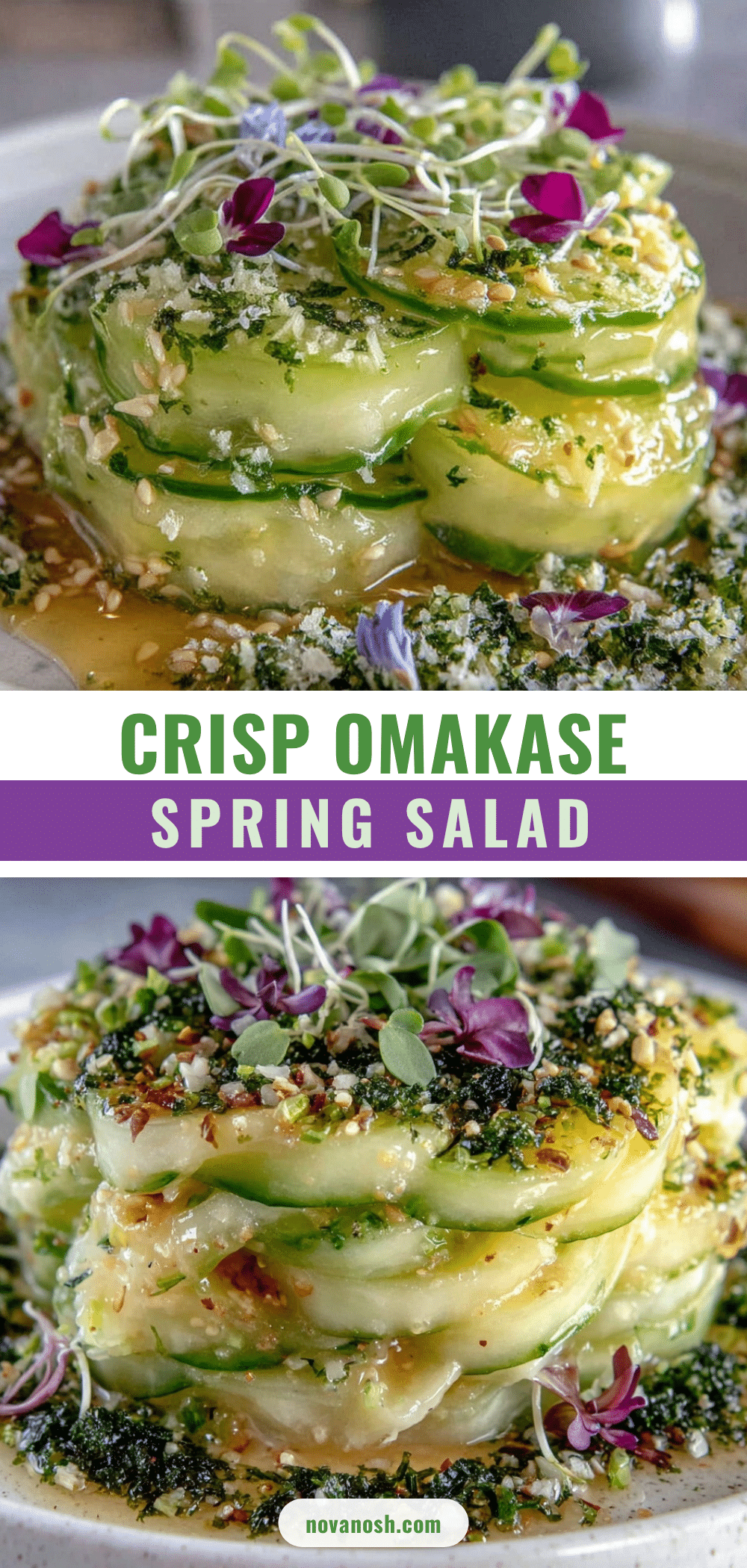
Omakase-Inspired Spring Salad
A fresh, balanced spring salad inspired by Japanese omakase tradition, featuring crisp cucumbers, snap peas, microgreens, and a light citrus-soy dressing with a hint of sesame.
- Prep Time: 10 minutes
- Cook Time: 0 minutes
- Total Time: 15 minutes
- Yield: 4 servings 1x
- Category: Salad
- Cuisine: Japanese-inspired
Ingredients
- 2 medium English cucumbers, thinly sliced
- 1 cup snap peas, trimmed and halved
- 1 cup microgreens (radish and sunflower mix recommended)
- ½ cup shredded daikon radish (or thinly sliced jicama as substitute)
- 2 tablespoons rice vinegar
- 1 tablespoon light soy sauce
- 1 teaspoon toasted sesame oil
- 1 teaspoon honey or agave syrup (optional)
- 1 teaspoon fresh ginger, finely grated
- 1 tablespoon toasted sesame seeds (for garnish)
- Optional add-ins: thinly sliced scallions, shiso leaves, avocado slices
Instructions
- Wash and dry the cucumbers, snap peas, microgreens, and daikon thoroughly.
- Thinly slice the cucumbers using a sharp knife or mandoline.
- Trim the snap peas and cut them in half lengthwise.
- Shred or julienne the daikon radish finely.
- Set all prepared vegetables aside in a large mixing bowl.
- In a small bowl, whisk together rice vinegar, light soy sauce, toasted sesame oil, honey or agave syrup, and grated fresh ginger until smooth and slightly glossy.
- Taste the dressing and adjust sweetness or acidity as desired.
- Pour the dressing over the prepared vegetables.
- Gently toss the salad using salad tongs or clean hands to coat all ingredients evenly without bruising the microgreens.
- Transfer the salad to a serving dish or individual plates.
- Sprinkle toasted sesame seeds on top.
- Add optional scallions, shiso leaves, or avocado slices if desired.
- Serve immediately for best freshness.
Notes
[‘Dry greens well to avoid soggy salad.’, ‘Start with three-quarters of the dressing and add more if needed to avoid overdressing.’, ‘Grate ginger finely for balanced flavor.’, ‘Toast sesame seeds in a dry skillet over medium heat for 2 minutes to enhance aroma.’, ‘Use fresh, crisp vegetables for best results.’, ‘Make dressing ahead and store in fridge up to 3 days; whisk before use.’, ‘Keep dressing and salad separate if prepping ahead to maintain freshness.’]
Nutrition
- Serving Size: About 1 cup per serv
- Calories: 120
- Sugar: 5
- Sodium: 350
- Fat: 7
- Carbohydrates: 12
- Fiber: 4
- Protein: 4
Keywords: spring salad, omakase salad, fresh salad, Japanese salad, healthy salad, easy salad recipe, microgreens salad, cucumber salad, snap peas salad