Love this? Save it for later!
Share the inspiration with your friends
One evening last spring, I found myself craving something fresh and elegant but totally doable after a long day. I’d been playing around with salmon recipes, wanting to capture that delicate, melt-in-your-mouth texture you get at a sushi bar but without the intimidation factor. That’s when I stumbled on the idea of Omakase Salmon Tataki with Ponzu Gel. The first time I served it to my family, jaws dropped—and not just because of the presentation.
Here’s the thing: salmon tataki feels fancy but is surprisingly simple. The ponzu gel adds a zesty, tangy punch that turns this dish into a flavor adventure. I’ve made this recipe a dozen times now, tweaking it to make sure it’s something your whole family will crave again and again. Even my picky eaters couldn’t resist going back for seconds.
This isn’t just another salmon dish; it’s a celebration of texture, freshness, and bright citrus notes wrapped up in a stunning plate. If you’ve been curious about making something restaurant-worthy at home without sweating over complicated steps, you’re in the right place.
Why This Recipe Works
This Omakase Salmon Tataki with Ponzu Gel recipe has completely reshaped how I cook salmon at home. I’ve tested it against other salmon dishes, and here’s why it keeps coming out on top:
- Perfectly Seared Texture — The quick sear locks in the salmon’s natural oils while keeping the center buttery and almost raw, just like the sushi restaurants do.
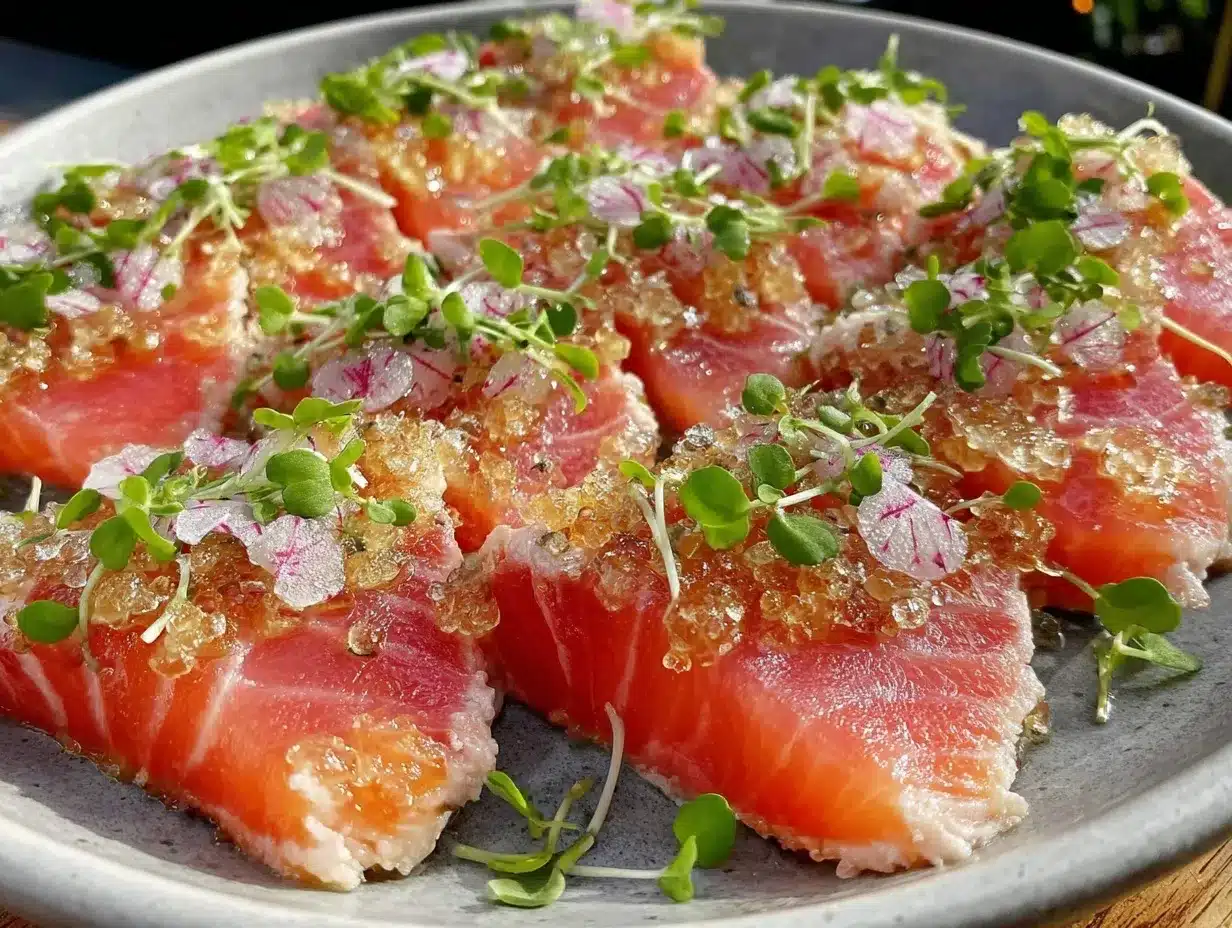
- Bright Ponzu Gel — The ponzu gel adds an umami-packed tang that cuts through the richness of the salmon, balancing every bite. Making it into a gel means it clings beautifully to the fish instead of just pooling on the plate.
- Family-Friendly Elegance — I was shocked when my kids, who usually avoid anything “fishy,” asked for more. The flavors are fresh and approachable, not overwhelming.
- Quick to Make — From start to finish, this recipe takes under 30 minutes, perfect for a weeknight when you want to impress without stress.
- Versatile Serving Options — Serve it as a light appetizer, a stunning main course, or part of a sushi night spread alongside dishes like tuna cucumber boats or a crisp salad.
This salmon tataki recipe has become my go-to when I want something that feels special but doesn’t require a full evening in the kitchen. I promise, once you try it, it’ll be on repeat at your house, too.
Ingredients Breakdown
Here’s the beauty: most of these ingredients are pantry staples or easy to find at your local grocery or Asian market. I’m picky about a few key components, so I’ll walk you through what makes this dish sing.
For the Salmon Tataki:
- Fresh sushi-grade salmon (12 oz / 340g) — This is the star. Buy the best quality you can find, ideally sashimi-grade. I’ve tried regular salmon, but the texture and flavor just aren’t the same. If you’re unsure, ask your fishmonger for the freshest piece suitable for raw eating.
- Neutral oil (1 tablespoon) — I use grapeseed or avocado oil for searing because they have a high smoke point and a clean flavor.
- Salt and freshly ground black pepper — Simple seasoning to enhance the natural salmon flavor without overpowering it.
For the Ponzu Gel:
- Ponzu sauce (½ cup / 120ml) — This citrusy soy sauce blend is essential for that umami-tangy kick. You can buy bottled ponzu or make your own (if you want to, check out my fresh Thai peanut mango slaw recipe where I share a quick homemade ponzu version).
- Gelatin powder (1 teaspoon) — This transforms the ponzu into a gel. Use unflavored gelatin and bloom it properly for the best texture.
- Mirin (1 tablespoon) — Adds a subtle sweetness to balance the tang of the ponzu.
- Soy sauce (1 tablespoon) — For depth and saltiness.
Optional Garnishes:
- Thinly sliced scallions — Adds freshness and a mild bite.
- Toasted sesame seeds — For nuttiness and crunch.
- Microgreens or shiso leaves — A pretty, fresh garnish that brightens the plate.
- Pickled ginger or thin radish slices — Adds a palate-cleansing bite.
Pro tip: If you want to serve this alongside a warm dish, try pairing it with the creamy sun-dried tomato orzo—the creaminess contrasts beautifully with the fresh salmon tataki.
Equipment You’ll Need
You don’t need a sushi chef’s toolkit for this. Here’s what I use and why:
- Non-stick skillet or cast iron pan — For searing the salmon quickly and evenly. I prefer cast iron for the crust it builds, but non-stick works well if you’re careful.
- Sharp chef’s knife — A must for slicing the salmon paper-thin. Take your time here; a dull knife will tear the fish.
- Small saucepan — To gently warm and bloom the gelatin with the ponzu mixture.
- Mixing bowl — For combining the ponzu gel.
- Plastic wrap or shallow dish — To set the ponzu gel in the fridge.
- Spoon or small squeeze bottle — For plating the ponzu gel artfully.
No blender needed. The ponzu gel sets perfectly with just gentle heating and chilling. If you don’t have a cast iron pan, a heavy-bottomed stainless steel skillet is a solid alternative.
Step-by-Step Instructions
-
Prep the Ponzu Gel (15 minutes + chilling)
In a small bowl, sprinkle gelatin over 2 tablespoons of cold water to bloom for 5 minutes. Meanwhile, combine ponzu sauce, mirin, and soy sauce in a small saucepan and warm gently over low heat—don’t boil, just warm enough to dissolve the gelatin.
Add the bloomed gelatin and stir until fully dissolved. Pour the mixture into a shallow dish lined with plastic wrap and refrigerate for at least 2 hours, or until firm but still pliable. -
Prepare the Salmon (5 minutes)
Pat the salmon dry with paper towels. Season lightly with salt and freshly ground black pepper on all sides. This is crucial because the sear will be quick, and the seasoning enhances the natural flavor. -
Sear the Salmon (5 minutes)
Heat your skillet over medium-high heat until shimmering. Add the oil, swirl to coat.
Place the salmon skin-side down (if it has skin) and sear for about 30 seconds to 1 minute per side—just enough to create a thin crust while keeping the center raw.
Remove immediately and let rest for 5 minutes. -
Slice the Salmon (5 minutes)
Using your sharp knife, slice the salmon into thin, even pieces—about ¼ inch thick. Arrange them on a serving plate. -
Plate with Ponzu Gel
Once your ponzu gel is set, use a spoon or small knife to cut it into small cubes or shards. Scatter these over the salmon slices.
Garnish with sliced scallions, toasted sesame seeds, microgreens, or shiso leaves for a burst of color and texture.
Timing note: The ponzu gel needs at least 2 hours to set, so plan ahead or make it the day before. The salmon sear and slicing take less than 15 minutes, making this perfect for a quick, elegant meal.
Expert Tips & Troubleshooting
I’ve learned a ton from trial and error making this recipe, so here are the nuggets that saved me from rookie mistakes:
- Don’t skip drying the salmon — Moisture on the surface prevents a good sear. I’ve ruined perfectly good fish by rushing this step.
- Use a very hot pan — The sear needs to be quick to keep the inside raw. If your pan isn’t hot enough, you’ll steam the salmon instead.
- Bloom the gelatin properly — This means sprinkling it over cold water and letting it sit for 5 minutes before warming. Skipping this makes the gel lumpy or runny.
- Don’t let the ponzu gel boil — Boiling destroys the delicate citrus flavors. Warm it gently and stir until the gelatin dissolves.
- Sharp knife is key — I sharpen mine regularly for this recipe. Thin, clean slices make all the difference in texture and presentation.
- Chilling the salmon slightly before slicing helps firm it up and makes slicing easier, but don’t refrigerate too long or it loses its silky texture.
- If you can’t find ponzu, try mixing soy sauce with freshly squeezed lemon and a touch of rice vinegar for a quick stand-in.
Variations & Substitutions
Once you’ve nailed the base recipe, feel free to play around. Here’s what I’ve tested:
- Spicy Kick: Add a drizzle of sriracha or a sprinkle of togarashi (Japanese chili powder) over the salmon for heat.
- Sesame Crust: Before searing, press the salmon lightly into toasted sesame seeds for a nutty crust that adds crunch and flavor.
- Alternative Fish: Tuna works beautifully with the same technique and ponzu gel. I’ve also tried a firm white fish like yellowtail with success.
- Vegan Version: Use thinly sliced grilled king oyster mushrooms instead of salmon and swap ponzu for a citrus-soy glaze thickened with agar agar.
- Serving Style: Turn this into bite-sized appetizers by cutting salmon into smaller cubes and serving with a dollop of ponzu gel on top, perfect for parties.
Serving & Storage
This dish is best enjoyed fresh—salmon tataki is all about that silky texture and bright flavor.
Serving: Serve chilled or at room temperature, garnished with fresh scallions and sesame seeds. Pair with a crisp, light side like cucumber salad or rolls like these turkey cucumber roll-ups for a complete spread.
Storage: If you have leftovers (lucky you!), keep the salmon tightly covered in the fridge and eat within 24 hours. The texture changes quickly once sliced. Ponzu gel can be stored in an airtight container in the fridge for up to 5 days and gently reheated or served at room temp.
Nutrition Information
| Nutrient | Amount per Serving (based on 4 servings) |
|---|---|
| Calories | 220 |
| Protein | 23g |
| Total Fat | 13g |
| Saturated Fat | 2.5g |
| Carbohydrates | 3g |
| Sugars | 2g |
| Sodium | 580mg |
This recipe packs a solid protein punch thanks to the salmon, with modest fat from healthy omega-3s. The ponzu gel adds flavor without many calories or sugar, making it a smart choice for a light but satisfying meal.
Final Thoughts
So there you have it—my Omakase Salmon Tataki with Ponzu Gel recipe your family will crave. I know it sounds fancy, but trust me, once you try this, it becomes a staple. The balance of rich, tender salmon with zesty, silky ponzu gel is addictive.
I’ve served this to friends and family, and everyone begs for the recipe. It’s the kind of dish that feels like a special occasion but comes together fast enough for a weeknight. Customize it with your favorite garnishes or pair it with simple sides like the creamy white chicken chili for a full meal that’s both comforting and elegant.
Try it out, and please tell me how it goes! I’m always here to help if you want to tweak it or add your own spin. Happy cooking—and enjoy that amazing salmon tataki flavor in your own kitchen!
FAQs
- Can I use regular salmon instead of sushi-grade?
- Technically, yes, but sushi-grade salmon is safer for eating raw or nearly raw. If you can’t find sushi-grade, cook the salmon a bit longer to avoid food safety risks. I always recommend buying from a trusted fishmonger.
- How do I know if my ponzu gel is set properly?
- It should be firm but still slightly jiggly, like a soft jelly. If it’s too runny, you may need to add a touch more gelatin and chill longer. If too firm, let it warm slightly before serving.
- Can I prepare the ponzu gel ahead of time?
- Absolutely! I often make it a day ahead and keep it in the fridge, which makes plating faster when you’re ready to serve.
- What if I don’t have gelatin?
- You can substitute agar agar powder (vegetarian option) but the setting process is different—heat it to boiling and cool quickly. The texture will be slightly different but still tasty.
- How long can I store leftover salmon tataki?
- Salmon tataki is best eaten within 24 hours of slicing. Keep it tightly wrapped in the fridge to preserve freshness. Leftover ponzu gel lasts several days, so you can refrigerate that separately.
- Can I make this recipe spicy?
- Yes! Adding a drizzle of sriracha or a sprinkle of togarashi over the plated salmon adds a nice kick. I love that contrast with the citrusy ponzu gel.
- Is there a way to serve this for a crowd?
- Definitely! Slice the salmon thinner and arrange on a large platter with plenty of ponzu gel and garnishes. This makes a stunning appetizer spread alongside other small bites like fresh cucumber sandwich bites.
Pin This Recipe!
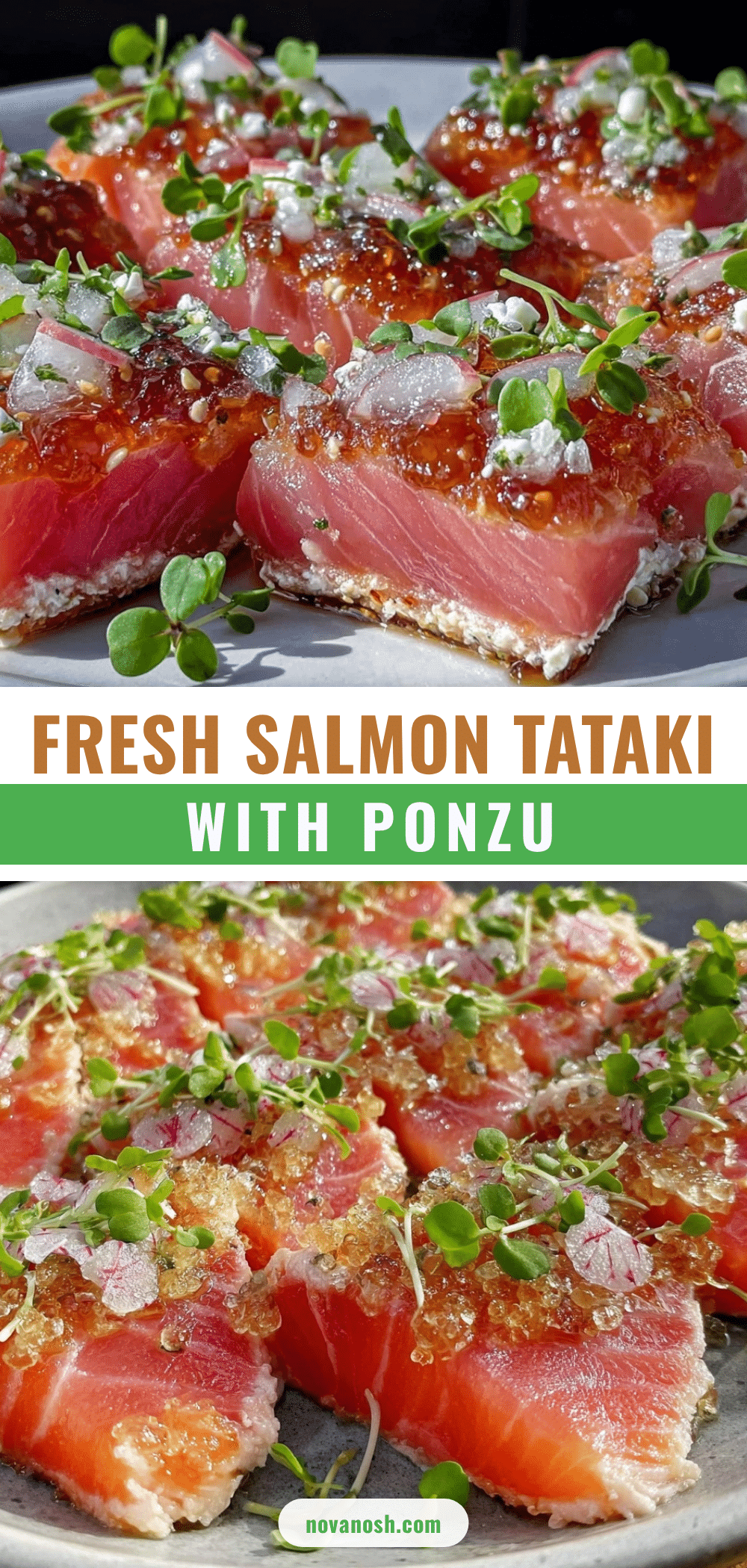
Omakase Salmon Tataki with Ponzu Gel
A fresh and elegant salmon tataki recipe featuring a perfectly seared texture and bright, tangy ponzu gel. This dish is quick to make, family-friendly, and restaurant-quality at home.
- Prep Time: 20 minutes
- Cook Time: 10 minutes
- Total Time: 2 hours 30 minutes
- Yield: 4 servings 1x
- Category: Main Course
- Cuisine: Japanese
Ingredients
- 12 oz (340g) fresh sushi-grade salmon
- 1 tablespoon neutral oil (grapeseed or avocado oil)
- Salt and freshly ground black pepper
- ½ cup (120ml) ponzu sauce
- 1 teaspoon gelatin powder (unflavored)
- 1 tablespoon mirin
- 1 tablespoon soy sauce
- Optional garnishes: thinly sliced scallions, toasted sesame seeds, microgreens or shiso leaves, pickled ginger or thin radish slices
Instructions
- Prep the Ponzu Gel: Sprinkle gelatin over 2 tablespoons of cold water to bloom for 5 minutes. Combine ponzu sauce, mirin, and soy sauce in a small saucepan and warm gently over low heat without boiling. Add bloomed gelatin and stir until dissolved. Pour into a shallow dish lined with plastic wrap and refrigerate for at least 2 hours until set but pliable.
- Prepare the Salmon: Pat salmon dry with paper towels. Season lightly with salt and freshly ground black pepper on all sides.
- Sear the Salmon: Heat skillet over medium-high heat until shimmering. Add oil and swirl to coat. Place salmon skin-side down if present and sear for 30 seconds to 1 minute per side to create a thin crust while keeping the center raw. Remove and let rest for 5 minutes.
- Slice the Salmon: Using a sharp knife, slice salmon into thin, even pieces about ¼ inch thick. Arrange on a serving plate.
- Plate with Ponzu Gel: Cut ponzu gel into small cubes or shards. Scatter over salmon slices. Garnish with scallions, toasted sesame seeds, microgreens, or shiso leaves.
Notes
Dry the salmon thoroughly before searing to ensure a good crust. Use a very hot pan for a quick sear to keep the center raw. Bloom gelatin properly for smooth ponzu gel texture. Do not boil ponzu mixture to preserve delicate citrus flavors. Chill ponzu gel for at least 2 hours or overnight. Sharp knife is essential for thin, clean slices. If ponzu is unavailable, substitute with soy sauce mixed with lemon juice and rice vinegar. Leftover salmon should be eaten within 24 hours; ponzu gel can be stored up to 5 days.
Nutrition
- Serving Size: 1/4 of the recipe (a
- Calories: 220
- Sugar: 2
- Sodium: 580
- Fat: 13
- Saturated Fat: 2.5
- Carbohydrates: 3
- Protein: 23
Keywords: salmon tataki, ponzu gel, sushi-grade salmon, Japanese appetizer, seared salmon, easy salmon recipe, family-friendly salmon