Love this? Save it for later!
Share the inspiration with your friends
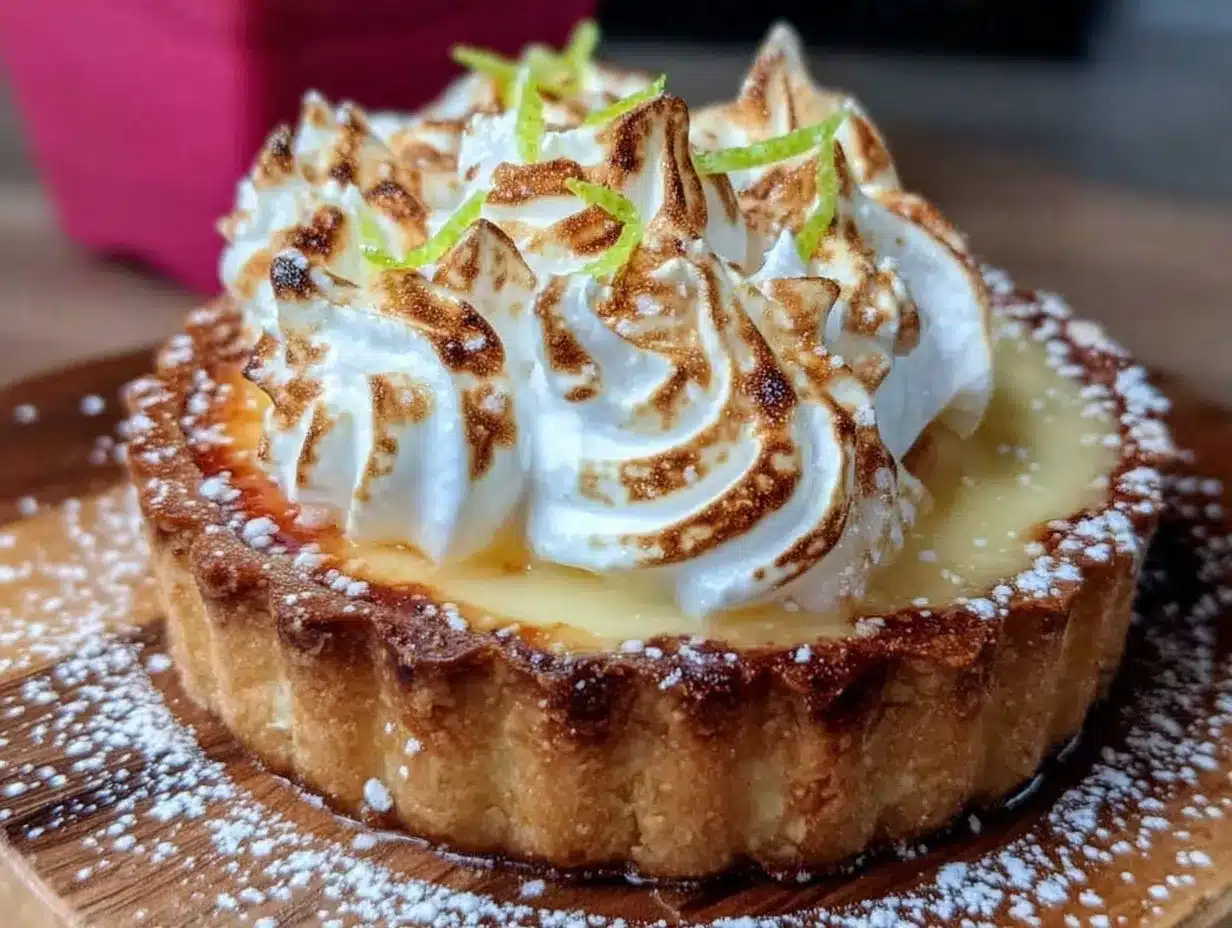
I still remember the first time I tried to make a lemon tarte with toasted meringue at home—it was a disaster. The crust was soggy, the lemon filling too tart, and the meringue ended up more marshmallow than golden cloud. After countless tweaks, burnt meringue tips, and late-night recipe testing, I finally nailed a patisserie-style lemon tarte with toasted meringue that impresses every time. It’s the kind of dessert that makes guests pause mid-conversation, eyes wide, reaching for seconds before you even offer.
What makes this lemon tarte so special? It’s the perfect balance of buttery, crisp pastry; silky, tangy lemon curd; and that show-stopping toasted meringue—light as air with just the right kiss of caramelization. I’ve made this over a dozen times now for parties, holidays, and quiet weekends when I want a little slice of French patisserie magic at home. If you’ve ever hesitated to try lemon tart because of the tricky meringue or crust, this recipe is your answer. And trust me, the reward is worth every minute spent.
By the way, if you love baking and want to keep your kitchen adventures going, you might enjoy the small-batch sourdough discard banana muffins I recently perfected—they’re a great companion when you want a break from citrus but not from flavor.
Why This Patisserie Lemon Tarte Recipe with Toasted Meringue Works
This lemon tarte recipe has completely changed how I approach citrus desserts. After testing it against several other recipes and techniques, this one consistently wins for taste, texture, and wow factor. Here’s why I keep coming back to it:
- Buttery, Flaky Crust — The pâte sucrée base is tender yet sturdy, holding the lemon curd without sogginess. I tested everything from shortbread crusts to graham cracker bases, and nothing matches this balance.
- Silky Lemon Curd Filling — Made from fresh lemon juice and zest, egg yolks, and a touch of butter, this curd is perfectly tart without being overpowering. Unlike boxed lemon curd or overly sweet recipes, this one tastes like sunshine in every bite.
- Light, Toasted Meringue — The meringue topping is whipped to fluffy peaks and toasted with a kitchen torch (or oven broiler if you don’t have one). It’s that golden caramelized finish that takes this tarte from everyday to patisserie-level.
- Impresses Every Time — Whether it’s a casual family gathering or a fancy dinner party, this tarte gets compliments and requests for the recipe. It’s a crowd-pleaser that feels fancy but is totally doable at home.
Real talk: baking a lemon tarte with toasted meringue can feel intimidating, but this recipe breaks it down into manageable steps. The best part? Once you learn the tricks here, you’ll want to make this again and again. And if you ever want a lighter, easier dessert, I’ve had great luck with the vanilla sweet cream cold foam for a refreshing finish post-meal.
Ingredients Breakdown
Here’s the thing about this recipe: while it looks fancy, most of the ingredients are pantry staples or easy to find at any grocery store. I’m picky about a few things, so I’ll share my go-to tips to get this right.
For the Pâte Sucrée (Sweet Tart Crust):
- All-purpose flour (1 ¼ cups / 160g) — This is the foundation. I always use a reliable brand like King Arthur for consistency. You want to measure by spooning the flour into your cup and leveling it off, not scooping straight from the bag, to avoid a tough crust.
- Unsalted butter (7 tablespoons / 100g, cold and cubed) — Cold butter is key to flaky layers. I never substitute margarine or salted butter here; the flavor and texture just won’t be the same.
- Powdered sugar (¼ cup / 30g) — Adds subtle sweetness and tenderness without graininess.
- Egg yolk (1 large) — Binds the dough and enriches flavor.
- Salt (a pinch) — Enhances all the other flavors, even in sweet dough.
- Vanilla extract (½ teaspoon) — Optional but recommended for a delicate aroma.
For the Lemon Curd Filling:
- Fresh lemon juice (½ cup / 120ml) — Fresh is non-negotiable here. Bottled juice is too harsh or artificial.
- Lemon zest (2 teaspoons) — Adds intense citrus oils and aroma.
- Granulated sugar (¾ cup / 150g) — Provides balance to the tartness.
- Eggs (3 large whole) and egg yolks (2 large) — This combo gives the curd the perfect silky texture and richness.
- Unsalted butter (6 tablespoons / 85g) — Stirred in at the end for smoothness and shine.
For the Toasted Meringue Topping:
- Egg whites (4 large) — Room temperature whites whip up better and higher.
- Granulated sugar (¾ cup / 150g) — Slowly added to create a stable, glossy meringue.
- Cream of tartar (½ teaspoon) — Stabilizes the meringue and helps it hold peak shape.
- Vanilla extract (1 teaspoon) — For a subtle flavor boost.
If you don’t have a kitchen torch, no worries—you can use your oven broiler for that perfect golden finish. Just keep a close eye; it browns fast. For a smoother experience with your crust, I highly recommend chilling the dough overnight if you have the time—it makes rolling easier and the crust flakier.
Equipment You’ll Need
You don’t need a fully stocked patisserie kitchen to pull this off. Here’s what I actually use:
- 9-inch tart pan with removable bottom — This makes unmolding the tarte a breeze. If you don’t have one, a regular pie dish works, but the presentation won’t be quite as neat.
- Food processor or blender — For quickly making the dough. You can also make the dough by hand, but it takes longer and requires good technique.
- Mixing bowls — For the lemon curd and meringue.
- Whisk and electric mixer — You’ll need a stand or hand mixer for whipping the meringue to stiff peaks.
- Fine grater or zester — For lemon zest.
- Kitchen torch (optional) — For that perfect toasted meringue finish. You can use your oven broiler instead.
- Rubber spatula — For folding and scraping bowls clean.
- Rolling pin — For rolling out the tart dough evenly.
Pro tip: If you want to get fancy, a digital kitchen scale will make measuring everything spot-on and your tart will thank you. But if you don’t have one, just be sure to measure carefully.
Step-by-Step Instructions
- Make the Pâte Sucrée Dough (10 minutes + chilling)
In a food processor, pulse flour, powdered sugar, and salt until combined. Add cold butter cubes and pulse until mixture resembles coarse crumbs with pea-sized butter chunks. Add the egg yolk and vanilla, then pulse a few times to bring the dough together. Don’t overprocess—it will get tough. Turn out onto plastic wrap, shape into a disc, wrap tightly, and chill in the fridge for at least 1 hour (overnight is best). - Preheat Oven and Prepare Tart Shell (15 minutes)
Preheat your oven to 350°F (175°C). On a lightly floured surface, roll the chilled dough into a 12-inch circle about ⅛ inch thick. Gently transfer it to your tart pan, pressing into edges without stretching. Trim excess dough, then prick the bottom with a fork to prevent bubbling. Chill the tart shell in the freezer for 15 minutes. - Blind Bake the Tart Shell (20-25 minutes)
Line the shell with parchment paper and fill with pie weights or dried beans. Bake for 15 minutes, remove weights and parchment, then bake 5-10 more minutes until golden and set. Let cool completely before filling. - Make the Lemon Curd Filling (15 minutes)
In a heatproof bowl, whisk together eggs, egg yolks, sugar, lemon juice, and zest until smooth. Place over a simmering pot of water (double boiler), stirring constantly until thickened and coats the back of a spoon (about 8-10 minutes). Remove from heat and whisk in butter until smooth. Strain through a fine sieve to remove zest bits for a silky finish. Pour into cooled tart shell and refrigerate for 1 hour to set. - Prepare Toasted Meringue (10 minutes)
In a clean bowl, beat egg whites and cream of tartar until soft peaks form. Gradually add sugar, a tablespoon at a time, while beating on high until stiff, glossy peaks form (about 5-7 minutes). Beat in vanilla extract last. - Top and Toast the Meringue (5-10 minutes)
Spread meringue evenly over chilled lemon curd with a spatula, making peaks and swirls for texture. Use a kitchen torch to toast the meringue until golden brown. If you don’t have a torch, place the tarte under a preheated broiler for 1-2 minutes — watch closely to prevent burning. - Chill and Serve (At least 15 minutes)
Let the finished tarte chill for another 15 minutes to set the meringue slightly before slicing and serving. This step helps the slices hold their shape.
In total, you’re looking at about 2.5 to 3 hours from start to finish, including chilling times. Most of that is hands-off, so don’t let the length intimidate you.
Expert Tips & Troubleshooting
Here’s what I learned the hard way, so you don’t have to:
- Chill the dough well. This prevents shrinkage and makes rolling out easier. I once skipped this and ended up with a misshapen crust that cracked everywhere.
- Don’t skip blind baking. It keeps your crust crisp under the wet lemon curd. Otherwise, you’ll get a soggy bottom, and no one wants that.
- Whisk lemon curd constantly. When cooking over a double boiler, stirring prevents curdling and lumps. I’ve had curd scramble on me before—gross.
- Strain the lemon curd. It’s worth the extra step for smoothness. If you want little bits of zest in there, feel free to skip it, but the texture won’t be as refined.
- Use room temperature egg whites for meringue. They whip higher and hold better. If you forget, warm them gently in a bowl over warm water for a minute.
- Slowly add sugar to meringue. Adding sugar too fast can deflate the mixture. Patience pays off with glossy, stable peaks.
- Toast meringue carefully. Keep your torch moving or watch the broiler closely to avoid bitter burnt spots.
- Leftover meringue? Spoon it onto a parchment-lined tray and bake at low heat for homemade meringue cookies.
Variations & Substitutions
Once you’ve mastered the classic, these twists keep things fun:
- Raspberry-Infused Lemon Tarte — Add a thin layer of fresh raspberry puree or jam between the crust and lemon curd for a tart-sweet surprise.
- Coconut Meringue — Fold ¼ cup toasted shredded coconut into your meringue before topping for a tropical crunch.
- Almond Crust — Swap ¼ cup of flour for finely ground almonds for an extra nutty flavor.
- Orange-Lemon Curd — Use half orange juice and zest for a bright citrus twist.
- Vegan Version — I haven’t personally tested this, but aquafaba meringue and a vegan butter crust can work with some adjustments.
For a lighter dessert option, you might enjoy pairing this with the refreshing fresh cucumber sandwich appetizer bites as a palate cleanser—perfect for summer gatherings.
Serving & Storage
This lemon tarte is best served chilled or at room temperature. I love slicing it thick and serving with a dollop of lightly whipped cream or a few fresh berries on the side. It’s equally delicious for dessert or an elegant afternoon tea treat.
Storage:
- Refrigerate: Cover loosely with plastic wrap and keep in the fridge for up to 3 days. The crust stays crisp and the meringue fresh.
- Freeze: I don’t recommend freezing this tarte as the meringue and curd don’t thaw well. But the dough can be frozen before baking.
Leftover slices are fantastic warmed slightly in the oven (300°F for 5 minutes) to revive that just-baked magic.
Nutrition Information (Per Slice, 12 slices)
| Nutrient | Amount |
|---|---|
| Calories | 280 |
| Protein | 4g |
| Total Carbohydrates | 34g |
| Sugars | 20g |
| Total Fat | 14g |
| Saturated Fat | 8g |
| Cholesterol | 110mg |
| Sodium | 120mg |
This dessert is indulgent but balanced with fresh lemon juice and zest. It’s not something you eat every day, but when you do, you get a seriously satisfying treat.
Final Thoughts
So that’s my patisserie lemon tarte recipe with toasted meringue that impresses every time. It’s taken me some trial and error to get here, but the payoff is a dessert that looks stunning, tastes incredible, and feels like a little celebration every time you slice into it.
If you want a dessert that’s as much about the experience as the flavor, this is it. Plus, once you’ve nailed this, you’ll feel confident tackling other classic French pastries or even experimenting with other citrus flavors. And if you love desserts with a bit of flair, you might appreciate the creamy texture of my Tuscan chicken meatballs for dinner before indulging in this tarte.
Try it out, make it yours by adding your favorite twist, and let me know how it goes. I read every comment and love hearing about your kitchen wins (and mishaps). Happy baking—and may your meringue always toast perfectly golden!
FAQs
- Can I use a store-bought pie crust instead of making pâte sucrée?
- Yes, you can use store-bought pie crust in a pinch. It won’t have the same tender, buttery texture as pâte sucrée, and it may not hold up as well under the lemon curd, but it will save time. Just blind bake it according to package instructions before filling.
- Why did my meringue weep or get watery?
- Weeping usually happens when meringue is undercooked or the lemon curd is too wet. Make sure to toast the meringue thoroughly. Also, the lemon curd should be well set and not overly runny before topping with meringue. Using fresh egg whites and properly stabilizing with cream of tartar helps too.
- Can I make the lemon curd ahead of time?
- Absolutely! Lemon curd can be made up to 3 days ahead and stored in an airtight container in the fridge. Just bring it to room temperature and whisk it before pouring into the tart shell for a smooth finish.
- How do I prevent the tart crust from shrinking?
- Chilling the dough thoroughly before rolling and again after fitting it in the pan is key. Also, avoid stretching the dough when placing it in the pan. Use pie weights during blind baking to keep the crust from puffing up and shrinking.
- What if I don’t have a kitchen torch to brown the meringue?
- No worries! You can place the tart under a very hot broiler for 1-2 minutes. Keep a close eye on it because it can go from golden to burnt quickly. Move the tart around if needed for even browning.
- Can I use lemon extract instead of fresh lemon juice?
- Fresh lemon juice and zest are essential for authentic flavor and acidity. Lemon extract lacks the brightness and can sometimes taste artificial. If you must, use a small amount combined with some fresh lemon zest, but the flavor won’t be quite the same.
- How long does this lemon tarte last?
- Stored covered in the refrigerator, it stays fresh for about 3 days. After that, the crust may begin to soften, and the meringue can lose its texture. For best results, enjoy within the first 48 hours.
Pin This Recipe!
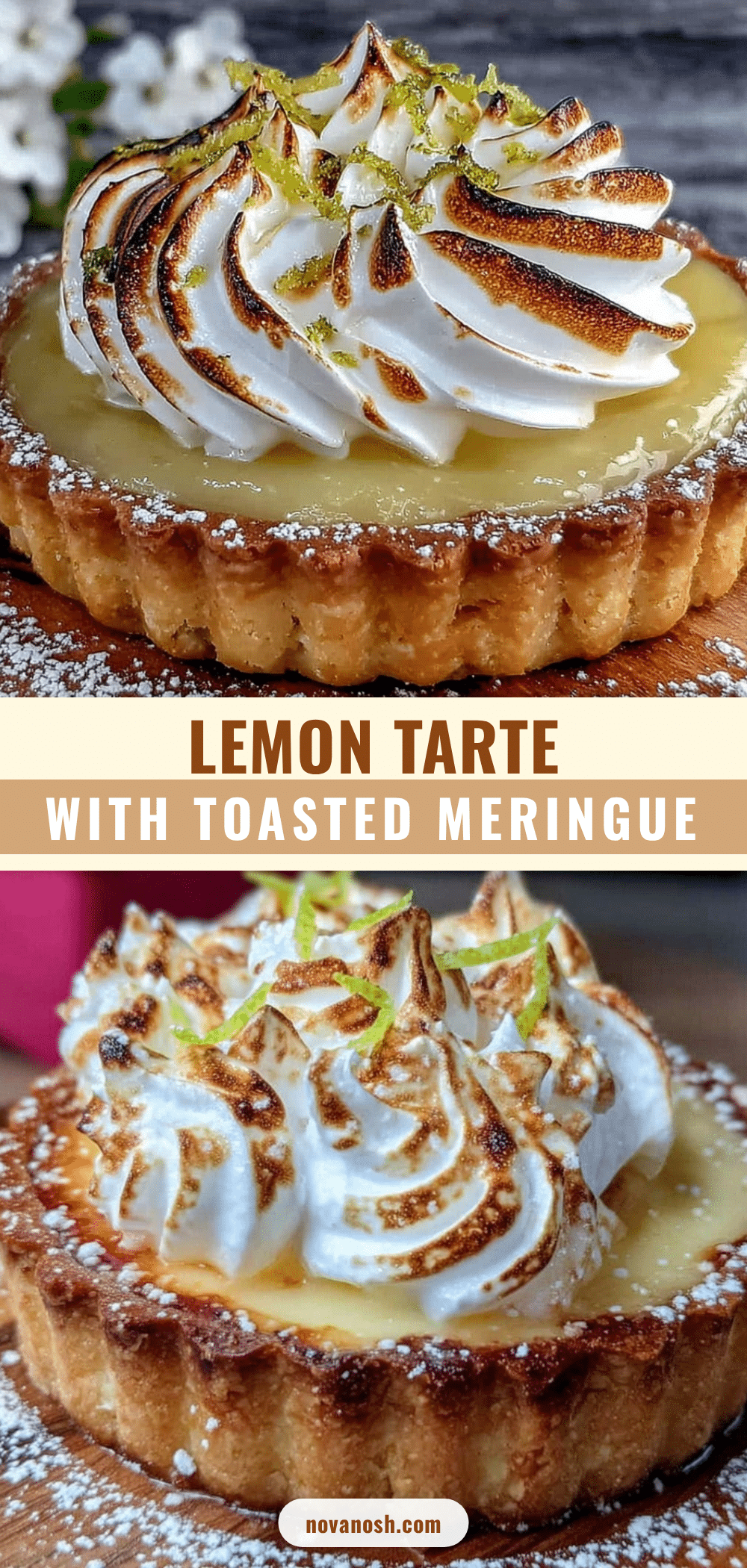
Patisserie Lemon Tarte Recipe with Toasted Meringue That Impresses Every Time

A classic French-style lemon tarte featuring a buttery, flaky pâte sucrée crust, silky lemon curd filling, and a light toasted meringue topping that impresses every time.
- Prep Time: 25 minutes (plus at least 1 hour chilling dough)
- Cook Time: 40-50 minutes (including blind baking and lemon curd cooking)
- Total Time: 2.5 to 3 hours (including chilling times)
- Yield: 12 servings 1x
- Category: Dessert
- Cuisine: French
Ingredients
- 1 1/4 cups (160g) all-purpose flour
- 7 tablespoons (100g) unsalted butter, cold and cubed
- 1/4 cup (30g) powdered sugar
- 1 large egg yolk
- Pinch of salt
- 1/2 teaspoon vanilla extract (optional)
- 1/2 cup (120ml) fresh lemon juice
- 2 teaspoons lemon zest
- 3 large whole eggs
- 2 large egg yolks
- 3/4 cup (150g) granulated sugar (for lemon curd)
- 6 tablespoons (85g) unsalted butter
- 4 large egg whites, room temperature
- 3/4 cup (150g) granulated sugar (for meringue)
- 1/2 teaspoon cream of tartar
- 1 teaspoon vanilla extract
Instructions
- Make the Pâte Sucrée Dough (10 minutes + chilling): In a food processor, pulse flour, powdered sugar, and salt until combined. Add cold butter cubes and pulse until mixture resembles coarse crumbs with pea-sized butter chunks. Add the egg yolk and vanilla, then pulse a few times to bring the dough together. Don’t overprocess. Turn out onto plastic wrap, shape into a disc, wrap tightly, and chill in the fridge for at least 1 hour (overnight is best).
- Preheat Oven and Prepare Tart Shell (15 minutes): Preheat oven to 350°F (175°C). On a lightly floured surface, roll the chilled dough into a 12-inch circle about 1/8 inch thick. Gently transfer to tart pan, pressing into edges without stretching. Trim excess dough, prick bottom with fork. Chill tart shell in freezer for 15 minutes.
- Blind Bake the Tart Shell (20-25 minutes): Line shell with parchment paper and fill with pie weights or dried beans. Bake 15 minutes, remove weights and parchment, bake 5-10 more minutes until golden and set. Let cool completely.
- Make the Lemon Curd Filling (15 minutes): In heatproof bowl, whisk eggs, egg yolks, sugar, lemon juice, and zest until smooth. Place over simmering water (double boiler), stirring constantly until thickened and coats back of spoon (8-10 minutes). Remove from heat, whisk in butter until smooth. Strain through fine sieve. Pour into cooled tart shell and refrigerate 1 hour to set.
- Prepare Toasted Meringue (10 minutes): Beat egg whites and cream of tartar until soft peaks form. Gradually add sugar, a tablespoon at a time, beating on high until stiff, glossy peaks form (5-7 minutes). Beat in vanilla extract last.
- Top and Toast the Meringue (5-10 minutes): Spread meringue evenly over chilled lemon curd with spatula, making peaks and swirls. Use kitchen torch to toast until golden brown or place under preheated broiler 1-2 minutes, watching closely.
- Chill and Serve (At least 15 minutes): Chill finished tarte for 15 minutes to set meringue before slicing and serving.
Notes
Chill dough overnight for easier rolling and flakier crust. Use fresh lemon juice and zest for best flavor. If no kitchen torch, use oven broiler carefully to toast meringue. Strain lemon curd for silky texture. Use room temperature egg whites for better meringue volume. Leftover meringue can be baked into cookies at low heat.
Nutrition
- Serving Size: 1 slice (1/12 of tar
- Calories: 280
- Sugar: 20
- Sodium: 120
- Fat: 14
- Saturated Fat: 8
- Carbohydrates: 34
- Protein: 4
Keywords: lemon tarte, toasted meringue, lemon curd, pâte sucrée, French dessert, tart recipe, citrus dessert, baking