Love this? Save it for later!
Share the inspiration with your friends
I was standing in the frozen food aisle last Tuesday, staring at a box of pre-seasoned salmon fillets, when the smell of garlic butter hit me from nowhere. Not from the store, but from my memory—a sharp, clear flash of my neighbor Mrs. Patino’s kitchen, the summer I was twelve. She’d let me sit on her counter while she cooked, handing me a spoon to taste the sauce, and I remember thinking, how does butter and garlic make everything feel like a hug? I grabbed a fresh fillet instead of the box, and honestly, I haven’t looked back.
That moment sent me on a mission. I wanted that exact feeling—the one where dinner comes together in a flash but tastes like you fussed for hours. The result is this Quick Garlic Butter Salmon Skillet, a recipe that’s become my Tuesday night hero. It’s simple, it’s fast, and let me tell you, the first time I made it, I burned the garlic a little (okay, a lot) and had to start over. But that failure taught me the secret: low heat, patience, and a splash of lemon at the end. Now, twenty minutes after I start, I’m sitting down to a meal that makes me close my eyes after the first bite. Maybe you’ve been there—chasing a taste from your past, trying to recreate something you can almost but not quite hold onto. This salmon skillet is my way of grabbing that feeling and keeping it close.
Why You’ll Love This Recipe
This isn’t just another salmon recipe. It’s the one you’ll turn to when you’re tired, hungry, and need something that works without a fuss. I’ve tested this more times than I can count—burned batches, undercooked fillets, and one particularly sad attempt where the butter separated into a greasy mess. But I kept tweaking, and now this version is bulletproof. Here’s why it’s worth your time:
- Quick & Easy: From start to finish, you’re looking at 20 minutes. No marinating, no complicated steps—just a hot skillet and a few simple moves.
- Simple Ingredients: You probably have garlic, butter, and lemon in your kitchen right now. The salmon is the only thing you might need to grab, and it’s available fresh or frozen at any grocery store.
- Perfect for Weeknights: Whether it’s a busy Tuesday or a lazy Sunday, this skillet fits the bill. It feels fancy enough for a date night but easy enough for a solo dinner.
- Crowd-Pleaser: I’ve served this to picky eaters, seafood skeptics, and my dad who “doesn’t like fish.” Every single plate came back clean.
- Unbelievably Delicious: The butter gets nutty and brown, the garlic infuses every bite, and the salmon stays flaky and moist. It’s comfort food that happens to be good for you.
What makes this different from the other salmon recipes out there? It’s the technique. I cook the salmon skin-side down first to get that crispy, golden crust, then flip it and baste it with the garlic butter. That basting step is where the magic happens—it keeps the fish tender while building layers of flavor. Plus, I finish it with a squeeze of lemon and a sprinkle of fresh parsley, which cuts through the richness and makes everything taste bright. This isn’t just another version of garlic butter salmon. It’s the best version I’ve ever made, and I’ve made a lot of them.
This recipe is the kind that makes you feel like a rockstar in the kitchen, even on your most tired nights. It’s quick enough for a weeknight scramble but special enough to serve to guests. And honestly, after the first bite, you’ll understand why I keep coming back to it.
What Ingredients You Will Need
This recipe uses simple, wholesome ingredients that work together to create something greater than the sum of their parts. Most of these are pantry staples, and the few that aren’t are easy to find at any grocery store. Here’s what you’ll need:
- Salmon Fillets: 4 fillets (about 6 ounces each), skin-on or skinless. I prefer skin-on because it gets beautifully crispy, but either works. Look for fillets that are evenly thick so they cook at the same rate. If using frozen, thaw them completely in the fridge overnight and pat them dry before cooking.
- Unsalted Butter: 4 tablespoons (half a stick). Unsalted gives you control over the salt level. If you only have salted butter, just reduce the added salt in the recipe.
- Garlic: 4 cloves, minced. Fresh garlic is non-negotiable here—the pre-minced stuff in a jar won’t give you the same flavor. I recommend smashing each clove with the flat side of your knife before mincing to release more of the oils.
- Lemon: 1 large lemon. You’ll need both the juice and the zest. The zest adds a bright, floral note that you can’t get from juice alone. Roll the lemon on the counter before juicing to get more out of it.
- Olive Oil: 1 tablespoon. This helps prevent the butter from burning and gives the salmon a nice sear. Use a good quality extra-virgin olive oil if you have it.
- Salt: 1 teaspoon, or to taste. I use kosher salt because it’s easier to control and distributes evenly. Sea salt works too.
- Black Pepper: ½ teaspoon, freshly ground. Freshly ground pepper makes a difference here—it’s more aromatic and less harsh than pre-ground.
- Fresh Parsley: 2 tablespoons, chopped. This is optional but highly recommended for color and freshness. Flat-leaf parsley is my go-to, but curly works fine too.
- Red Pepper Flakes: ¼ teaspoon (optional). If you like a little heat, this adds a gentle kick without overwhelming the dish. I sometimes add a pinch when I’m feeling adventurous.
Ingredient Tips from My Kitchen: For the best texture, I recommend wild-caught salmon if it’s in your budget—it’s firmer and has a cleaner flavor. But honestly, farmed Atlantic salmon works beautifully here and is more affordable. Just make sure you pat the fillets dry with paper towels before seasoning. Wet salmon won’t sear properly, and you’ll end up with steamed fish instead of crispy, golden goodness. Also, let the salmon sit at room temperature for 10 minutes before cooking. This helps it cook more evenly.
If you’re out of fresh garlic, you can use 1 teaspoon of garlic powder, but the flavor won’t be as bright. And if you’re dairy-free, swap the butter for a high-quality vegan butter or ghee (which is lactose-free). The recipe is flexible, but these core ingredients are what make it sing.
Equipment Needed
You don’t need a fancy kitchen to make this recipe. In fact, you probably already have everything you need. Here’s the list:
- Large Skillet: A 12-inch skillet is ideal. Cast iron is my favorite because it holds heat evenly and gives the salmon a gorgeous crust. But a non-stick or stainless steel pan works perfectly too. Just avoid using a pan that’s too small—you want the fillets to have space so they sear instead of steam.
- Tongs: A good pair of tongs makes flipping the salmon easy and safe. If you don’t have tongs, use a thin spatula. I’ve used a fork in a pinch, but it can break the fillet apart.
- Cutting Board: For prepping the garlic and parsley. I prefer a wooden board because it’s gentler on knife blades, but plastic is fine too.
- Chef’s Knife: A sharp knife makes mincing garlic a breeze. If your knife is dull, it’s worth sharpening it—or use a garlic press as a shortcut.
- Paper Towels: For patting the salmon dry. This step is crucial, so don’t skip it.
- Small Bowl: For mixing the garlic butter sauce if you want to prep ahead. But honestly, you can just add everything directly to the pan.
- Measuring Spoons: For accuracy, especially with the salt and pepper. I’ve eyeballed it before and ended up with salty salmon—learn from my mistake!
Budget-Friendly Tip: If you don’t have a cast-iron skillet, a non-stick pan is the next best option. It’s cheaper and easier to clean, and it still gives you a good sear. Just be careful not to use metal utensils on non-stick surfaces—use silicone or wooden tools instead.
Preparation Method
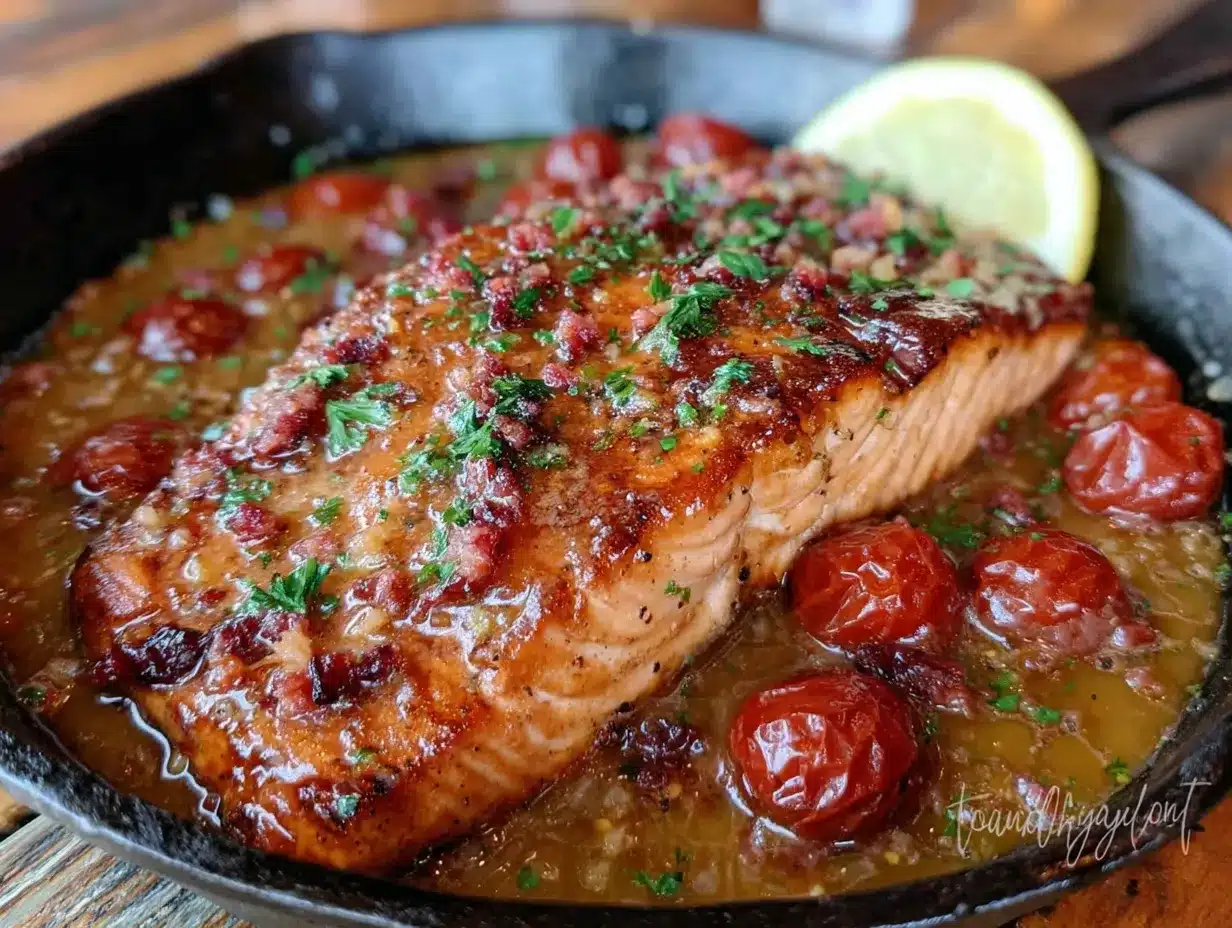
Let’s get cooking! This recipe moves fast, so I recommend reading through all the steps before you start. Trust me, it helps.
- Prep the Salmon (5 minutes): Take the salmon fillets out of the fridge and let them sit at room temperature for 10 minutes. Pat them dry with paper towels—this is the most important step for a good sear. Season both sides generously with salt and pepper. Don’t be shy with the seasoning; salmon can handle it.
- Zest and Juice the Lemon (2 minutes): While the salmon rests, zest the lemon using a microplane or the fine side of a box grater. Then cut the lemon in half and juice it. You’ll need about 2 tablespoons of juice. Set the zest and juice aside separately.
- Mince the Garlic (2 minutes): Peel the garlic cloves and mince them finely. If you’re in a hurry, you can use a garlic press, but mincing gives you more control over the size. Set the garlic aside with the parsley and red pepper flakes (if using).
- Heat the Skillet (2 minutes): Place your skillet over medium-high heat and add the olive oil. Let it heat until the oil shimmers—about 2 minutes. You can test it by flicking a drop of water into the pan; if it sizzles, you’re ready.
- Sear the Salmon (6 minutes): Place the salmon fillets in the skillet, skin-side down if you’re using skin-on fillets. Press down gently with a spatula to ensure even contact. Cook without moving for 4 minutes. The skin should be golden and crispy. Flip the fillets carefully using tongs or a spatula. Cook for another 2 minutes on the other side. The salmon should be opaque on the outside and slightly translucent in the center—it will continue cooking off the heat.
- Make the Garlic Butter (2 minutes): Reduce the heat to medium-low. Push the salmon to one side of the skillet and add the butter to the empty space. Let it melt, then add the minced garlic. Cook for 30 seconds, stirring constantly, until the garlic is fragrant but not browned. If it starts to brown, remove the pan from the heat immediately—burnt garlic tastes bitter.
- Baste the Salmon (2 minutes): Tilt the skillet slightly so the garlic butter pools on one side. Using a spoon, baste the salmon fillets with the butter for about 1 minute. This keeps the fish moist and infuses it with flavor. Add the lemon juice, lemon zest, and red pepper flakes (if using). Stir gently to combine.
- Finish and Serve (1 minute): Sprinkle the chopped parsley over the salmon. Remove the skillet from the heat. Let the salmon rest for 1 minute before serving. This allows the juices to redistribute, so every bite is tender and flavorful.
Sensory Cues: When you flip the salmon, the skin should be a deep golden brown and release easily from the pan. If it sticks, give it another 30 seconds—it’s not ready yet. When you baste, listen for the gentle sizzle of the butter hitting the hot pan. The garlic should smell nutty and sweet, not sharp or burnt. And when you add the lemon juice, watch for the butter to bubble and emulsify into a glossy sauce.
My Personal Tip: I always cook the salmon skin-side down first, even if I’m using skinless fillets. The skin acts as a protective barrier, keeping the fish moist and preventing it from overcooking. If you’re using skinless fillets, cook them for 3 minutes on the first side and 2 on the second—they cook faster without the skin.
Cooking Tips & Techniques
Over the years, I’ve made every mistake you can imagine with salmon. I’ve overcooked it until it was dry and chalky. I’ve undercooked it and had to pop it back in the pan. I’ve burned the garlic so badly that the whole kitchen smelled like a campfire. But from those failures, I learned a few things that make this recipe foolproof.
Pat the Salmon Dry: This is the number one tip I can give you. Moisture is the enemy of a good sear. If you skip this step, the salmon will steam instead of sear, and you’ll end up with pale, soggy fish. Use paper towels and really press them into the flesh to absorb any moisture.
Don’t Overcrowd the Pan: If you’re cooking more than four fillets, work in batches. Overcrowding lowers the pan temperature and causes the salmon to steam. I learned this the hard way when I tried to cook six fillets at once and ended up with a sad, gray mess. Give each fillet some breathing room.
Watch the Garlic: Garlic burns quickly, especially in butter. Once you add it to the pan, keep it moving and don’t walk away. If it starts to brown, remove the pan from the heat immediately. Burnt garlic is bitter and will ruin the dish. I’ve done this more times than I’d like to admit, so trust me on this.
Use a Meat Thermometer: If you want to be precise, the internal temperature of cooked salmon should be 125°F to 130°F for medium (my preferred doneness) or 145°F for well-done. Insert the thermometer into the thickest part of the fillet. But honestly, I usually just check by pressing gently on the fish—it should flake easily with a fork but still be moist in the center.
Multitasking Strategy: While the salmon is searing, prep your sides. I like to make a quick salad or steam some asparagus. The whole meal comes together in about 20 minutes, so having everything ready before you start cooking is a lifesaver.
Variations & Adaptations
One of the best things about this recipe is how versatile it is. Here are a few ways to change it up:
- Spicy Garlic Butter Salmon: Add an extra ½ teaspoon of red pepper flakes or a minced fresh chili for a fiery kick. I tried this on a whim one night and it’s now my husband’s favorite version.
- Herb-Crusted Salmon: Before searing, press the seasoned fillets into a mixture of chopped fresh dill, parsley, and chives. The herbs form a fragrant crust that’s absolutely gorgeous.
- Lemon-Dill Variation: Replace the parsley with fresh dill and add an extra tablespoon of lemon juice. This is a classic combination that screams springtime.
- Dairy-Free Option: Swap the butter for a high-quality vegan butter or use ghee (which is lactose-free and has a higher smoke point). The flavor will be slightly different but still delicious.
- Air Fryer Adaptation: Preheat the air fryer to 400°F. Season the salmon and cook for 8-10 minutes, flipping halfway through. While it cooks, melt the butter with the garlic in a small saucepan and drizzle it over the cooked salmon. This method is even faster and gives you a perfectly crispy exterior.
- Maple-Glazed Variation: Add 1 tablespoon of maple syrup to the butter mixture for a sweet and savory twist. The maple caramelizes beautifully and pairs wonderfully with the garlic. I made this for a brunch gathering and it disappeared in minutes.
My Personal Favorite: I love making this with a sprinkle of smoked paprika and a dash of cayenne. It adds a smoky warmth that makes the salmon taste like it came off a grill. Try it—you won’t regret it.
Serving & Storage Suggestions
This salmon is best served hot, straight from the skillet. But here’s how to make the most of it:
Serving Temperature: Serve immediately while the butter sauce is still warm and glossy. If you let it sit too long, the butter will solidify and the salmon will cool down. I like to spoon a little extra garlic butter over each fillet right before serving.
What to Serve With It: This salmon pairs beautifully with so many sides. I love it with a simple arugula salad dressed with lemon vinaigrette, or with steamed green beans tossed in a little more garlic butter. For a heartier meal, serve it over creamy mashed potatoes or alongside roasted asparagus. A crusty baguette is also amazing for sopping up the leftover butter sauce.
Storage: If you have leftovers (which is rare in my house), store them in an airtight container in the refrigerator for up to 3 days. The salmon will lose some of its crispiness, but the flavor will still be great. I don’t recommend freezing cooked salmon, as the texture becomes watery when thawed.
Reheating: The best way to reheat is in a skillet over medium heat. Add a splash of water or chicken broth to the pan and cover it with a lid. Cook for 3-4 minutes, until the salmon is warmed through. This method helps retain moisture. You can also reheat it in the microwave, but it will be drier. Honestly, I often flake the cold salmon into a salad or mix it into pasta for a quick lunch the next day.
Flavor Development: Interestingly, the flavors in this dish deepen overnight. The garlic and lemon meld together, and the salmon absorbs more of the butter sauce. So if you have leftovers, they might taste even better the next day. I’ve been known to make extra salmon just so I can have it cold on a salad for lunch.
Nutritional Information & Benefits
This recipe is not only delicious but also packed with nutrients. Here’s a rough breakdown per serving (based on 4 servings):
- Calories: Approximately 380-420
- Protein: 34-38 grams
- Fat: 24-28 grams (mostly healthy fats from the salmon and olive oil)
- Carbohydrates: 2-4 grams (minimal, mostly from the lemon and garlic)
- Omega-3 Fatty Acids: 2-3 grams per serving
- Vitamin D: Significant amount from the salmon
- Vitamin B12: High, supports energy and brain health
Health Benefits: Salmon is one of the best sources of omega-3 fatty acids, which are essential for heart and brain health. The garlic in this recipe is known for its anti-inflammatory and immune-boosting properties. And the lemon provides a healthy dose of vitamin C. This meal is naturally low in carbohydrates and high in protein, making it a great option for those following a low-carb or keto lifestyle. It’s also gluten-free and can be made dairy-free with a simple swap.
Dietary Considerations: This recipe is naturally gluten-free, low-carb, and keto-friendly. For a dairy-free version, use vegan butter or ghee. If you’re watching your sodium, reduce the added salt to ½ teaspoon and rely on the lemon and herbs for flavor. The salmon itself is relatively low in mercury compared to larger fish, making it a safe choice for regular consumption.
My Wellness Perspective: I love that this recipe feels indulgent but is actually really good for you. It’s proof that healthy eating doesn’t have to be boring or complicated. When I make this, I feel like I’m nourishing my body and my soul at the same time.
Conclusion
This Quick Garlic Butter Salmon Skillet has become a staple in my kitchen for a reason. It’s fast, it’s forgiving, and it delivers every single time. Whether you’re a seasoned cook or someone who’s nervous about cooking fish, this recipe will build your confidence. The technique is simple, the ingredients are humble, and the result is anything but.
I encourage you to make this your own. Add a little more lemon, a pinch more chili, or a handful of fresh herbs. Cooking is about playing and finding what makes you happy. And honestly, this salmon is the perfect canvas for that kind of creativity.
If you try this recipe, I’d love to hear about it. Leave a comment below and tell me how it turned out—did you add any twists? What did you serve it with? Your feedback helps me and other readers discover new ways to enjoy this dish. And if you loved it, please share it with a friend who needs a quick, delicious dinner idea. Happy cooking, and I hope this salmon brings you as much joy as it’s brought me!
Frequently Asked Questions
Can I use frozen salmon for this recipe?
Yes, absolutely! Just make sure to thaw the fillets completely in the refrigerator overnight. Pat them very dry with paper towels before seasoning, as frozen salmon tends to release more moisture. The cooking time might be slightly longer, so use a meat thermometer to check for doneness.
How do I know when the salmon is cooked through?
The easiest way is to use a meat thermometer—the internal temperature should reach 125°F to 130°F for medium or 145°F for well-done. If you don’t have a thermometer, gently press the center of the fillet with a fork. It should flake easily and be opaque all the way through, but still moist.
Can I make this recipe without butter?
Absolutely! You can substitute the butter with olive oil, avocado oil, or ghee for a dairy-free option. The flavor will be slightly different, but it will still be delicious. If using oil, add a little extra lemon juice to brighten the dish.
Why did my garlic burn?
Garlic burns easily because it’s high in natural sugars. To prevent this, always add the garlic to the pan after you’ve reduced the heat to medium-low. Cook it for no more than 30 seconds, stirring constantly. If you see it turning brown, remove the pan from the heat immediately.
Can I prepare this recipe ahead of time?
This recipe is best made fresh, as the salmon loses its crispy texture when reheated. However, you can prep the ingredients in advance—mince the garlic, chop the parsley, and zest and juice the lemon. Store them in the refrigerator, and you’ll be ready to cook in minutes.
Pin This Recipe!
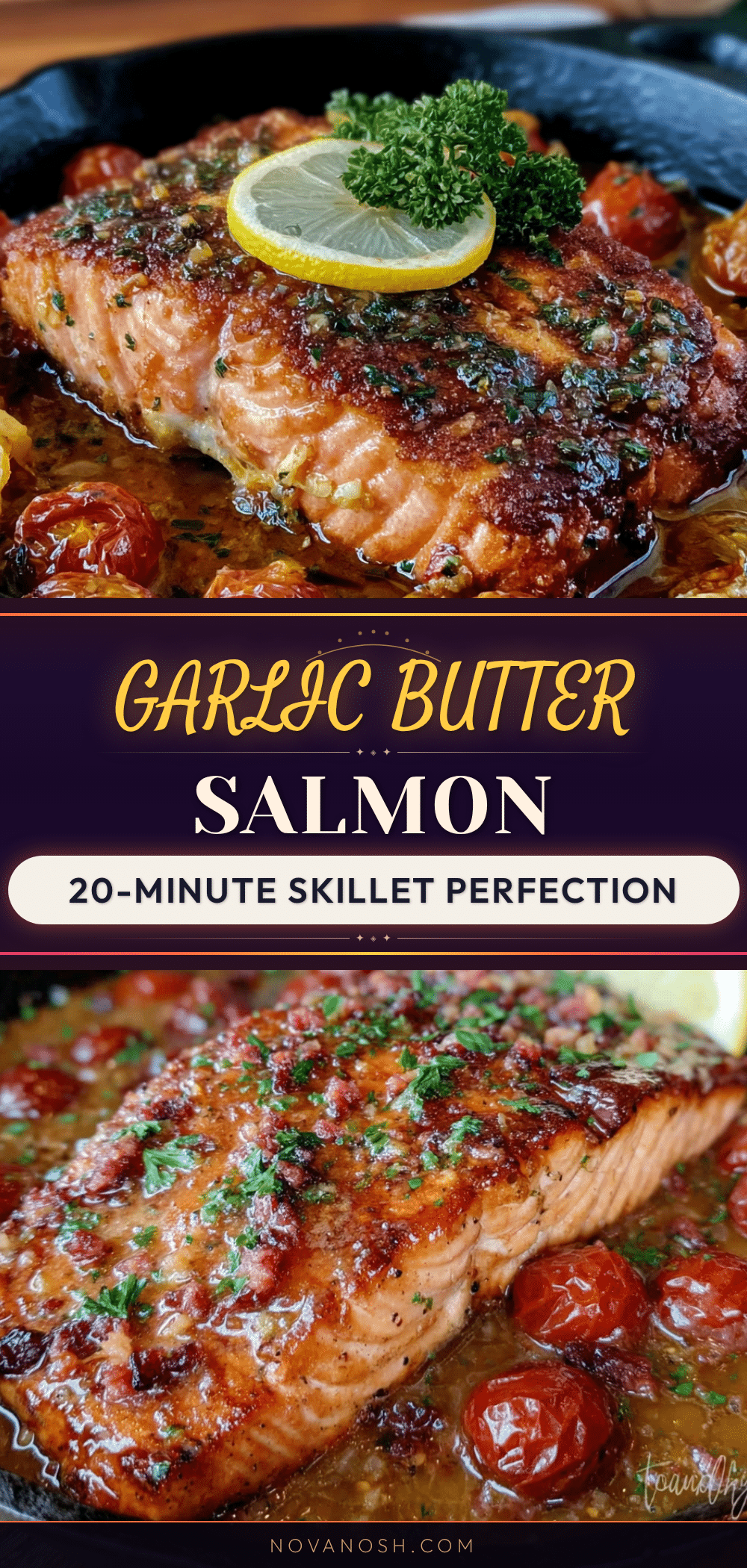
Quick Garlic Butter Salmon Skillet in 20 Minutes

A quick and easy garlic butter salmon skillet that comes together in just 20 minutes. Perfect for busy weeknights, this recipe delivers flaky, moist salmon with a crispy golden crust and a rich, nutty garlic butter sauce.
- Prep Time: 10 minutes
- Cook Time: 10 minutes
- Total Time: 20 minutes
- Yield: 4 servings 1x
- Category: Main Course
- Cuisine: American
Ingredients
- 4 salmon fillets (about 6 ounces each), skin-on or skinless
- 4 tablespoons unsalted butter
- 4 cloves garlic, minced
- 1 large lemon (zest and juice)
- 1 tablespoon olive oil
- 1 teaspoon kosher salt
- ½ teaspoon freshly ground black pepper
- 2 tablespoons fresh parsley, chopped
- ¼ teaspoon red pepper flakes (optional)
Instructions
- Prep the Salmon: Take the salmon fillets out of the fridge and let them sit at room temperature for 10 minutes. Pat them dry with paper towels. Season both sides generously with salt and pepper.
- Zest and Juice the Lemon: Zest the lemon using a microplane or fine side of a box grater. Cut the lemon in half and juice it (about 2 tablespoons). Set zest and juice aside separately.
- Mince the Garlic: Peel and finely mince the garlic cloves. Set aside with parsley and red pepper flakes (if using).
- Heat the Skillet: Place a large skillet over medium-high heat and add olive oil. Heat until the oil shimmers, about 2 minutes.
- Sear the Salmon: Place salmon fillets in the skillet, skin-side down. Press gently with a spatula. Cook without moving for 4 minutes until skin is golden and crispy. Flip carefully and cook for another 2 minutes on the other side.
- Make the Garlic Butter: Reduce heat to medium-low. Push salmon to one side. Add butter to the empty space and let it melt. Add minced garlic and cook for 30 seconds, stirring constantly, until fragrant but not browned.
- Baste the Salmon: Tilt the skillet slightly so garlic butter pools. Spoon the butter over the salmon fillets for about 1 minute. Add lemon juice, lemon zest, and red pepper flakes (if using). Stir gently.
- Finish and Serve: Sprinkle chopped parsley over the salmon. Remove from heat and let rest for 1 minute before serving.
Notes
Pat the salmon dry for a good sear. Don’t overcrowd the pan. Watch the garlic carefully to prevent burning. Use a meat thermometer for precise doneness (125°F-130°F for medium). Let salmon rest at room temperature for 10 minutes before cooking.
Nutrition
- Serving Size: 1 fillet
- Calories: 400
- Sugar: 1
- Sodium: 600
- Fat: 26
- Saturated Fat: 10
- Carbohydrates: 3
- Fiber: 1
- Protein: 36
Keywords: garlic butter salmon, quick salmon recipe, salmon skillet, weeknight dinner, healthy salmon, 20 minute meal