Love this? Save it for later!
Share the inspiration with your friends
There used to be a tiny soup-and-sandwich spot tucked between a dry cleaner and a hardware store on the corner of Elm Street that made the most incredible chicken noodle soup. When they closed suddenly—a “For Lease” sign taped in the window one gray Tuesday—I actually felt a little lost. That soup had gotten me through two bad colds, one breakup, and countless rainy afternoons. After twelve tries—some so bland I threw them out, others that tasted like salty dishwater—I finally got it. And the secret? A rotisserie chicken from the grocery store. I mean, honestly, it feels almost like cheating, but the flavor is so spot-on that I don’t even care. The broth has that deep, slow-cooked taste, the vegetables are tender but not mushy, and the noodles soak up all that goodness without turning to paste. If you’ve ever been disappointed by a homemade chicken noodle soup that just didn’t hit the same as that one perfect bowl from somewhere else, this recipe is for you. Let me tell you—this one brings it back.
Why You’ll Love This Recipe
This isn’t just another chicken noodle soup recipe. It’s the one that gets dinner on the table on a Tuesday night when you’re running on fumes and the kids are asking what’s for dinner before you’ve even taken off your coat. Here’s why it works:
- Ready in 30 Minutes: No joke. From fridge to table in under half an hour, thanks to that rotisserie chicken doing all the heavy lifting.
- Simple Ingredients: You probably have most of this stuff already—carrots, celery, onion, garlic, noodles, broth. No special trips to a fancy market required.
- Perfect for Busy Weeknights: This is the kind of meal that feels like a hug in a bowl but doesn’t demand your whole evening. Minimal prep, minimal cleanup, maximum comfort.
- Crowd-Pleaser: My picky nephew who “doesn’t like soup” ate two bowls last time I made this. The noodles and tender chicken are basically kid kryptonite.
- Unbelievably Delicious: The secret is browning the tomato paste with the veggies before adding the broth. It adds this deep, savory richness that makes the soup taste like it simmered for hours.
This is comfort food that respects your time. It’s not about spending all day in the kitchen—it’s about getting something genuinely good on the table without the stress. You deserve a meal that feels like a warm blanket, even on the busiest nights.
What Ingredients You Will Need
This recipe uses simple, honest ingredients that work together to create a broth that tastes like it’s been bubbling away all afternoon. No weird stuff, no hunting down obscure items.
- Rotisserie chicken (1 whole, about 2–3 pounds) — This is your shortcut to flavor town. Pick one up from the deli section—I usually grab a plain or herb-roasted one. You’ll need about 3–4 cups of shredded meat, skin and bones reserved for extra flavor if you’re feeling ambitious.
- Olive oil (2 tablespoons) — For sautéing the veggies. A good extra-virgin works, but regular is fine too.
- Yellow onion (1 medium, diced) — The aromatic foundation. Sweet and mellow once cooked.
- Carrots (3 medium, peeled and sliced into rounds) — Adds sweetness and color. I like cutting them on a slight diagonal so they look a little fancier.
- Celery stalks (3, sliced) — That classic savory note. Don’t skip it—it adds so much depth.
- Garlic cloves (4, minced) — Because garlic makes everything better. I use pre-minced in a jar on really tired nights—no judgment here.
- Tomato paste (2 tablespoons) — This is the secret weapon. Browning it with the veggies creates a rich, almost roasted flavor that makes the broth taste slow-cooked.
- Dried thyme (1 teaspoon) — Earthy and warm. Pairs beautifully with chicken.
- Dried oregano (1/2 teaspoon) — A little Italian-inspired twist.
- Bay leaf (1) — Adds background complexity. Remember to fish it out before serving!
- Low-sodium chicken broth (8 cups, or 2 quarts) — I like Swanson or Kitchen Basics for consistent flavor. Low-sodium lets you control the salt level.
- Wide egg noodles (8 ounces) — The classic choice. They cook quickly and hold up well in the broth. No-boil or fresh pasta works too.
- Fresh parsley (1/4 cup, chopped) — For brightness and a pop of green at the end.
- Salt and black pepper (to taste) — Start with 1 teaspoon salt and 1/2 teaspoon pepper, then adjust.
- Optional: Lemon juice (1 tablespoon) — A squeeze at the end brightens everything up. Trust me on this one.
If you’re gluten-free, swap the egg noodles for rice noodles or gluten-free pasta—just adjust the cooking time. For a dairy-free version, you’re already good since there’s no dairy in this recipe. If you want extra veggies, throw in a cup of frozen peas or a handful of spinach at the end.
Equipment Needed
Nothing fancy here—just basic kitchen tools you probably already own.
- Large pot or Dutch oven (at least 5–6 quarts) — A heavy-bottomed pot distributes heat evenly and prevents scorching. My go-to is a Lodge enameled Dutch oven, but any large soup pot works.
- Cutting board — Preferably one with a groove to catch juices. I use a big wooden one for veggies and a separate plastic one for the chicken.
- Chef’s knife (8-inch) — For dicing onions, slicing carrots, and mincing garlic. Keep it sharp—it makes prep faster and safer.
- Wooden spoon or silicone spatula — For stirring and scraping up any browned bits from the bottom of the pot.
- Measuring cups and spoons — I keep a set of dry measuring cups for the broth and a set of spoons for the spices.
- Two forks or your hands — For shredding the rotisserie chicken. Honestly, I just use my hands once the chicken is cool enough to handle—it’s faster and you can feel for any little bones.
- Ladle — For serving. A 1-cup ladle is perfect for portioning.
- Optional: Microplane or zester — If you’re adding lemon zest for extra brightness.
If you don’t have a Dutch oven, a regular stockpot works fine. Just keep an eye on the heat so the bottom doesn’t burn.
Preparation Method
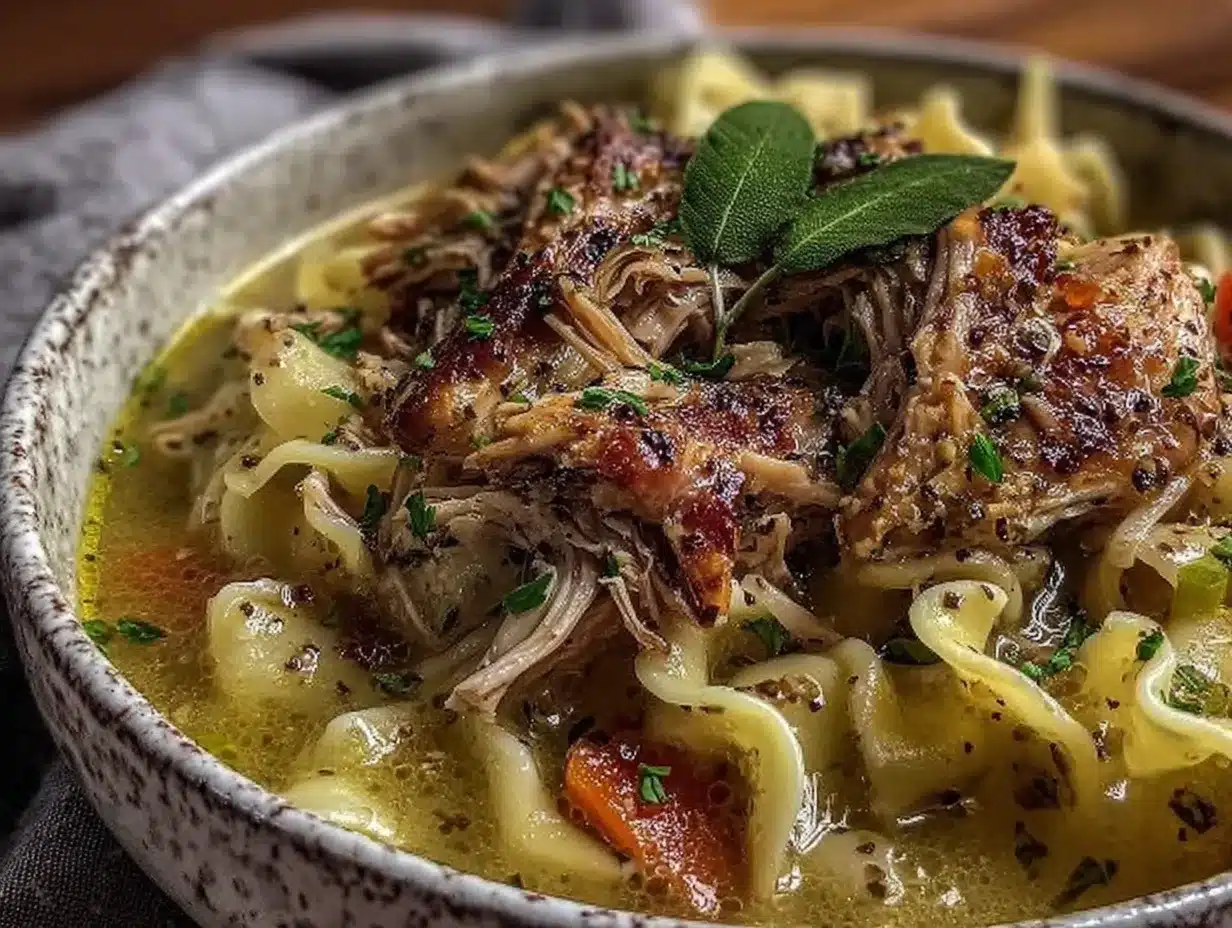
Let’s get cooking. This whole process takes about 30 minutes from start to finish, so put on some music and let’s go.
- Prep the chicken. Pull the meat off the rotisserie chicken and shred it into bite-sized pieces. Discard the skin and bones, or save the bones for making stock later if you’re feeling thrifty. You should end up with about 3–4 cups of shredded chicken. Set it aside.
- Heat the pot. Place your large pot or Dutch oven over medium heat and add 2 tablespoons of olive oil. Let it warm up for about 30 seconds—you want it shimmering but not smoking.
- Sauté the aromatics. Add the diced onion, sliced carrots, and sliced celery to the pot. Cook for 5–6 minutes, stirring occasionally, until the onions turn translucent and the carrots start to soften. The kitchen should start smelling amazing right about now.
- Add the garlic and tomato paste. Stir in the minced garlic, tomato paste, dried thyme, and dried oregano. Cook for 1–2 minutes, stirring constantly, until the tomato paste darkens to a rusty red color and smells deeply savory. This step is key—don’t rush it.
- Pour in the broth. Slowly add the 8 cups of low-sodium chicken broth, scraping the bottom of the pot with your wooden spoon to loosen any browned bits. Drop in the bay leaf. Increase the heat to high and bring the soup to a boil.
- Cook the noodles. Once the soup is boiling, add the 8 ounces of wide egg noodles. Reduce the heat to medium-high and cook according to the package directions, usually 6–8 minutes, until the noodles are tender but still have a little bite. Stir occasionally to prevent sticking.
- Add the chicken. When the noodles are almost done, stir in the shredded rotisserie chicken. Let it heat through for about 1–2 minutes. You don’t want to boil the chicken for too long or it can get a little dry.
- Finish and season. Remove the pot from the heat. Fish out the bay leaf and discard it. Stir in the fresh parsley and the optional squeeze of lemon juice. Taste the broth and add salt and pepper as needed—I usually start with 1 teaspoon of salt and 1/2 teaspoon of pepper, then adjust.
- Rest and serve. Let the soup sit for about 5 minutes before serving. This allows the flavors to meld and the noodles to absorb a little more broth. Ladle into bowls and enjoy immediately.
Troubleshooting Tip: If your soup seems too thick after adding the noodles, stir in an extra 1/2 cup of broth or water. If it’s too thin, let it simmer uncovered for a few extra minutes to reduce. The noodles will also continue to absorb liquid as the soup sits, so leftovers might need a splash of broth when reheated.
Cooking Tips & Techniques
I’ve made this soup more times than I can count, and I’ve learned a few things the hard way. Here’s what I wish someone had told me sooner.
Don’t skip browning the tomato paste. This is probably the single most important step in the whole recipe. When you cook tomato paste for a minute or two in hot oil, it develops this deep, almost caramelized flavor that adds incredible richness to the broth. I once forgot to do this and the soup tasted flat—like something was missing. Now I never skip it.
Shred the chicken while it’s still warm. Cold rotisserie chicken is harder to shred and tends to clump together. If your chicken has been in the fridge, pop it in the microwave for 30 seconds to take the chill off before you start pulling it apart. Your hands will thank you.
Cook the noodles separately if you’re meal prepping. This is a game-changer for leftovers. If you know you’re going to have extra soup, cook the noodles in a separate pot of salted water, drain them, and store them separately from the broth. When you reheat, just add the noodles to the hot broth—they’ll stay firm and not turn into mushy blobs. Learned this one after a sad bowl of leftover soup that looked more like porridge.
Use low-sodium broth. Regular broth can be crazy salty, especially once it reduces. Low-sodium gives you control. You can always add more salt at the end, but you can’t take it out. I learned this after a soup that was so salty I had to add a whole extra cup of water to fix it.
Let the soup rest before serving. Those 5 minutes of resting time aren’t just for patience—they actually make the soup better. The flavors have a chance to come together, the noodles absorb a little broth, and everything settles into harmony. Plus, it cools down to a safe temperature so nobody burns their tongue.
Variations & Adaptations
This recipe is a great starting point, but don’t be afraid to make it your own. Here are some ways I’ve adapted it over the years.
Vegetable-Loaded Version: Add a cup of frozen peas or corn in the last 2 minutes of cooking. Or stir in a handful of fresh spinach just before serving—it wilts right into the broth and adds a boost of nutrients. I did this once when I had half a bag of spinach that needed using up, and now I do it every time.
Spicy Kick: Add 1/2 teaspoon of red pepper flakes along with the garlic and tomato paste. The heat builds slowly and adds a nice warmth without overwhelming the soup. My husband loves this version, especially when he’s fighting a cold.
Herb-Forward Twist: Swap the dried thyme and oregano for 2 tablespoons of fresh dill or a handful of fresh basil stirred in at the end. The dill version tastes almost like a Greek avgolemono soup without the eggs. I tried this on a whim last spring and it was a total revelation.
Creamy Chicken Noodle Soup: Stir in 1/2 cup of heavy cream or full-fat coconut milk at the end, off the heat. It makes the broth velvety and rich—perfect for when you want something extra comforting. Just note that leftovers might separate a little, so give it a good stir when reheating.
Gluten-Free Adaptation: Use rice noodles, gluten-free pasta, or even quinoa instead of egg noodles. Cook them separately according to package directions and add to individual bowls before ladling in the broth. This prevents them from getting waterlogged.
Serving & Storage Suggestions
This soup is best served hot, straight from the pot, with a little something on the side to soak up every last drop.
Serving Temperature: Ladle the soup into deep bowls while it’s still steaming. The noodles should be tender, the chicken warm, and the broth fragrant. A final sprinkle of fresh parsley or a crack of black pepper on top makes it look restaurant-ready.
What to Serve With It: A crusty baguette or sourdough bread is my go-to—perfect for dipping. A simple green salad with lemon vinaigrette balances the richness. Or just a handful of saltine crackers crumbled on top, the way my grandma used to do it.
Storing Leftovers: Let the soup cool completely before transferring to an airtight container. Store in the refrigerator for up to 4 days. The noodles will absorb more broth as they sit, so the soup will thicken—that’s normal.
Reheating: Reheat on the stovetop over medium-low heat, adding a splash of broth or water to thin it out. Microwave in 30-second bursts, stirring between each, until hot. If you stored the noodles separately, add them to the hot broth and let them warm through for a minute.
Freezing: Freeze the soup without the noodles for up to 3 months. Thaw overnight in the refrigerator, reheat, and add freshly cooked noodles. The texture is so much better this way. I keep quart-sized freezer bags of the broth and chicken on hand for emergency soup cravings.
Nutritional Information & Benefits
This soup is as nourishing as it is comforting. Here’s a rough breakdown per serving (based on 6 servings):
- Calories: Approximately 350–400
- Protein: 28–32 grams
- Carbohydrates: 35–40 grams
- Fat: 10–12 grams
- Fiber: 3–4 grams
- Sodium: 700–900 mg (varies based on broth and added salt)
Health Highlights: The chicken provides lean protein to keep you full and satisfied. Carrots and celery are packed with vitamins A and K, plus fiber for digestive health. The broth is hydrating and soothing, especially when you’re feeling under the weather. Garlic and onions contain compounds that support immune function—bonus points during cold season.
Dietary Notes: This recipe is naturally dairy-free and nut-free. For a gluten-free version, use gluten-free noodles or rice. For a lower-carb option, swap the noodles for zucchini noodles or omit them entirely and double the veggies. The soup is also easily made vegetarian by using vegetable broth and adding chickpeas or white beans instead of chicken.
Allergen Warning: Contains gluten (from the egg noodles) and eggs (in the noodles). If you have celiac disease or an egg allergy, choose certified gluten-free or egg-free pasta.
Conclusion
This quick rotisserie chicken noodle soup has become my weeknight hero. It’s the recipe I turn to when I need something that feels like a warm hug but doesn’t require a whole afternoon in the kitchen. The rotisserie chicken is the ultimate shortcut—it gives you all the flavor of a slow-simmered stock without any of the waiting. And that browned tomato paste trick? It’s the little touch that makes the broth taste like it’s been bubbling away for hours.
I hope you give this soup a try, and I hope it becomes a staple in your kitchen too. Maybe you’ll tweak it—add more garlic, throw in some spinach, or give it a spicy kick. That’s the beauty of a simple recipe. It’s a starting point, not a rulebook.
When you make it, I’d love to hear how it turned out. Did you add your own twist? Did the kids ask for seconds? Drop a comment below or tag me in your photos—I read every single one. And if you’re looking for more quick weeknight dinners, check out our 30-minute meal collection for more ideas that respect your time and your taste buds.
Happy cooking, friends. You’ve got this.
Frequently Asked Questions
Can I use a different type of noodle?
Absolutely! Wide egg noodles are classic, but you can use any pasta you have on hand—spaghetti broken into pieces, fusilli, or even orzo work great. Just adjust the cooking time according to the package directions. For a low-carb option, try zucchini noodles added in the last 2 minutes.
Can I make this soup in a slow cooker or Instant Pot?
Yes! For a slow cooker, sauté the vegetables and tomato paste on the stovetop first, then transfer to the slow cooker with the broth and chicken. Cook on low for 4–6 hours, then add the noodles and cook on high for another 20–30 minutes. For an Instant Pot, use the sauté function for the vegetables, then add broth and chicken, pressure cook on high for 5 minutes, quick release, and stir in the noodles. Cook on sauté for 6–8 minutes until tender.
How can I make the broth more flavorful?
Besides browning the tomato paste (non-negotiable!), you can add a Parmesan rind while the soup simmers, or stir in a splash of soy sauce or fish sauce for extra umami. A teaspoon of Better Than Bouillon roasted chicken base also works wonders. And don’t forget that squeeze of lemon juice at the end—it brightens everything up.
Can I use leftover homemade chicken instead of rotisserie?
Of course! If you have leftover roasted or poached chicken, use it the same way. You’ll need about 3–4 cups of shredded meat. Just keep in mind that rotisserie chicken adds a little extra flavor from its seasoned skin and roasting juices, so you might want to boost the herbs and spices slightly if using plain chicken.
How do I prevent the noodles from getting mushy in leftovers?
This is the number one question I get! The trick is to cook the noodles separately and store them apart from the broth. When you’re ready to eat, just add the noodles to the reheated broth and let them warm through for a minute. If you’ve already combined them, add a splash of broth or water when reheating to loosen things up—the noodles will have absorbed a lot of liquid overnight.
Pin This Recipe!
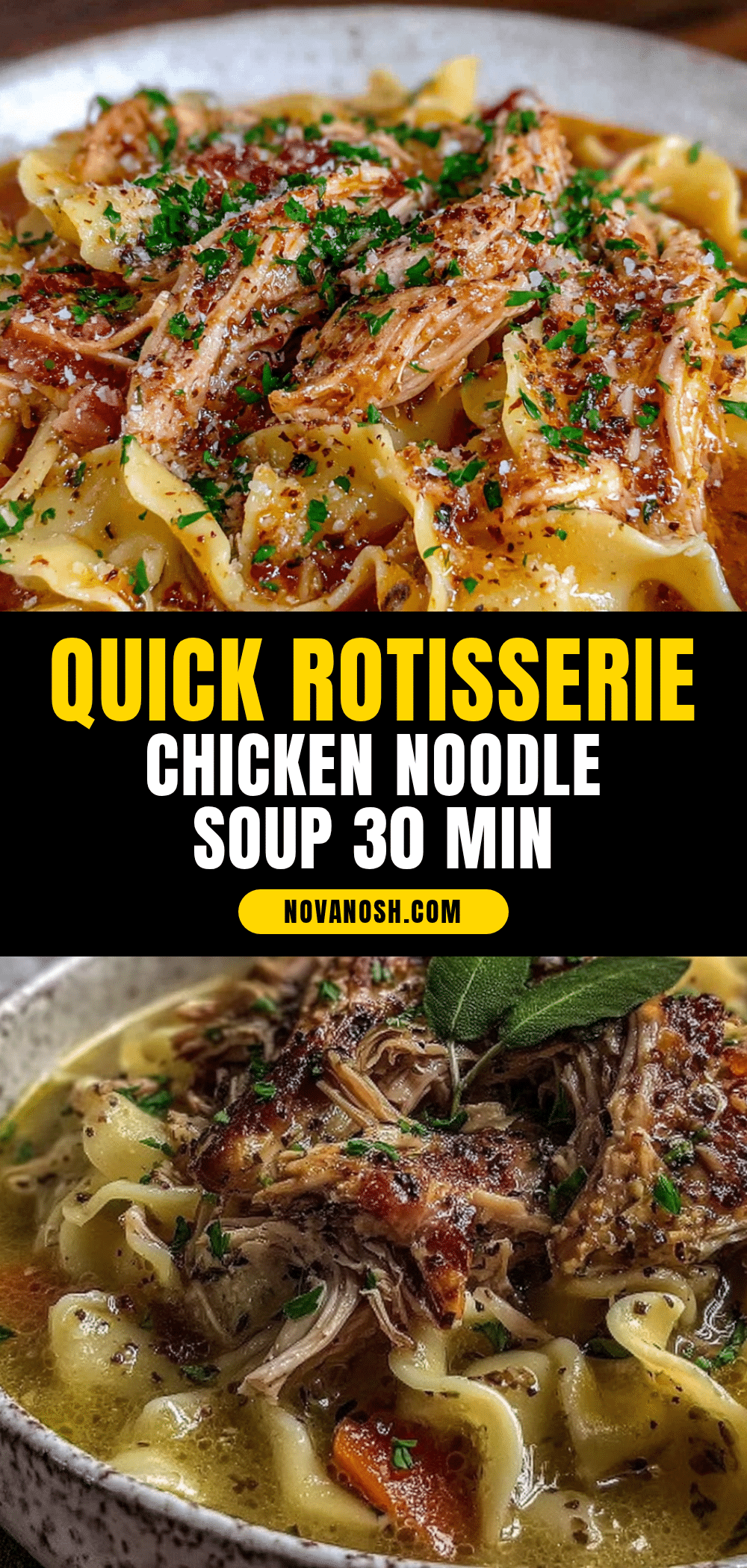
Quick Rotisserie Chicken Noodle Soup Ready in 30 Minutes
This quick rotisserie chicken noodle soup is the ultimate weeknight comfort food, ready in just 30 minutes. Using a store-bought rotisserie chicken and a secret trick of browning tomato paste, it delivers deep, slow-cooked flavor without the long simmer.
- Prep Time: 10 minutes
- Cook Time: 20 minutes
- Total Time: 30 minutes
- Yield: 6 servings 1x
- Category: Main Course
- Cuisine: American
Ingredients
- 1 whole rotisserie chicken (about 2–3 pounds), shredded (3–4 cups meat)
- 2 tablespoons olive oil
- 1 medium yellow onion, diced
- 3 medium carrots, peeled and sliced into rounds
- 3 celery stalks, sliced
- 4 garlic cloves, minced
- 2 tablespoons tomato paste
- 1 teaspoon dried thyme
- 1/2 teaspoon dried oregano
- 1 bay leaf
- 8 cups low-sodium chicken broth
- 8 ounces wide egg noodles
- 1/4 cup fresh parsley, chopped
- Salt and black pepper to taste (start with 1 teaspoon salt and 1/2 teaspoon pepper)
- 1 tablespoon lemon juice (optional)
Instructions
- Pull the meat off the rotisserie chicken and shred into bite-sized pieces. Discard skin and bones (or save bones for stock). Set aside.
- Place a large pot or Dutch oven over medium heat and add 2 tablespoons olive oil. Heat until shimmering.
- Add diced onion, sliced carrots, and sliced celery. Cook for 5–6 minutes, stirring occasionally, until onions are translucent and carrots start to soften.
- Stir in minced garlic, tomato paste, dried thyme, and dried oregano. Cook for 1–2 minutes, stirring constantly, until tomato paste darkens to a rusty red color.
- Slowly add 8 cups low-sodium chicken broth, scraping the bottom of the pot to loosen browned bits. Add bay leaf. Increase heat to high and bring to a boil.
- Once boiling, add 8 ounces wide egg noodles. Reduce heat to medium-high and cook according to package directions (usually 6–8 minutes), stirring occasionally.
- When noodles are almost done, stir in shredded chicken. Heat through for 1–2 minutes.
- Remove pot from heat. Discard bay leaf. Stir in fresh parsley and optional lemon juice. Season with salt and pepper to taste.
- Let soup rest for 5 minutes before serving. Ladle into bowls and enjoy.
Notes
Don’t skip browning the tomato paste—it adds deep flavor. For meal prep, cook noodles separately and store apart from broth to prevent mushiness. Use low-sodium broth to control salt. Let soup rest 5 minutes before serving for best flavor.
Nutrition
- Serving Size: 1 bowl (about 1.5 cu
- Calories: 375
- Sugar: 6
- Sodium: 800
- Fat: 11
- Saturated Fat: 2.5
- Carbohydrates: 38
- Fiber: 3.5
- Protein: 30
Keywords: chicken noodle soup, rotisserie chicken, quick soup, weeknight dinner, comfort food, 30 minute meal