Love this? Save it for later!
Share the inspiration with your friends
One summer evening last year, I was hosting a small dinner party on my patio, determined to impress without the usual stress of complicated dishes. I’d picked up a beautiful halibut fillet at the market, fresh and glistening, but wasn’t quite sure how to make it sing. Inspired by a French technique I’d been curious about for a while, I decided to try cooking it en papillote—wrapped in parchment paper with simple, seasonal ingredients.
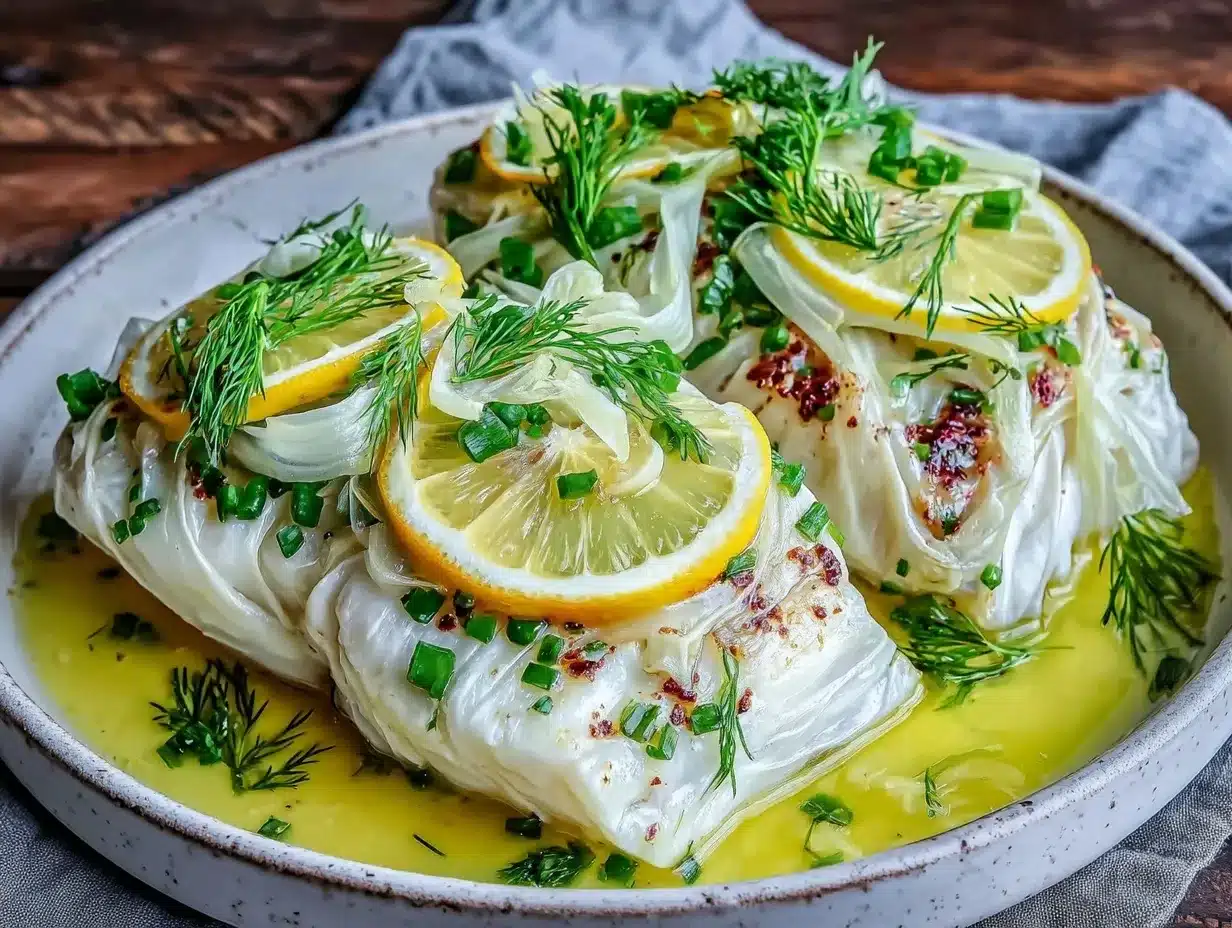
The magic happened when I paired the fish with thinly sliced fennel, bright lemon zest, and a luxurious saffron butter that melted into every crevice. The result? A perfectly tender, fragrant halibut that looked stunning when I unfolded the parchment at the table. My guests were wowed, and honestly, I was too. This summer halibut en papillote with lemon fennel and saffron butter has since become my go-to for effortless entertaining that feels fancy but isn’t a pain.
I’ve made this recipe at least a dozen times now, tweaking the saffron butter just right and learning how thin to slice the fennel for the best texture. It’s the kind of dish that makes you feel like a chef, even if you’re juggling kids, work, or just a hot kitchen. And the best part? It impresses every time.
Why This Recipe Works
This summer halibut en papillote recipe completely changed my approach to cooking fish. It’s reliable, elegant, and packed with fresh flavor without being fussy. Here’s why I keep coming back to it:
- Effortless Elegance — The parchment packet does most of the work, steaming the fish gently and locking in moisture. No flipping, no fuss. I’ve served this at casual weeknight dinners and fancy celebrations alike.
- Fresh, Seasonal Flavor — The combination of lemon and fennel is bright and refreshing, perfect for summer but easy to adapt year-round. The saffron butter adds a subtle, luxurious depth that elevates the whole dish.
- Healthy and Light — Halibut is a lean, flaky fish that cooks quickly. Steaming it en papillote means no added oil or frying, making this recipe a great choice when you want something nourishing and satisfying but not heavy.
- Make-Ahead Friendly — You can assemble the packets hours ahead and keep them in the fridge until you’re ready to bake. This makes entertaining stress-free because the “hard” part is done upfront.
- Impressive Presentation — There’s nothing like unfolding a parchment packet at the table to release a burst of aroma. It’s like a little food theater that guests love, and the colorful lemon and fennel peek out beautifully.
This recipe has become my secret weapon when I want to impress but keep things simple. If you’ve ever been intimidated by cooking fresh fish, this method will change your mind.
Ingredients Breakdown
Here’s the thing about this recipe: it looks fancy but uses just a handful of ingredients you can find easily. I’m picky about a few key components, and I’ll explain why each one matters.
For the Fish and Aromatics:
- Halibut fillets (4 fillets, about 6 oz / 170g each) — The star of the show. Halibut has a firm, flaky texture that holds up beautifully in parchment. If you can’t find halibut, cod or sea bass are decent substitutes but adjust the cooking time slightly.
- Fennel bulb (1 medium, thinly sliced) — Adds a subtle anise flavor and crunchy texture. I use a mandoline slicer to get perfect, paper-thin slices that soften just right during cooking.
- Lemon (1 large, zested and thinly sliced) — Brightens the whole dish with acidity and fragrance. Use unwaxed lemons if possible for zesting. The lemon slices also add moisture inside the packet.
- Fresh parsley (2 tablespoons, chopped) — A fresh herbal note that complements the fennel and saffron butter. Flat-leaf parsley works best for its bold flavor.
For the Saffron Butter:
- Unsalted butter (4 tablespoons / 57g) — The base for the sauce. I always use good-quality European-style butter for richness.
- Saffron threads (about 10 threads) — This is what takes the butter from ordinary to extraordinary. Soak the threads in a tablespoon of warm water for 5 minutes to release their color and flavor before adding. It’s worth the splurge.
- Garlic (1 clove, minced) — Adds a gentle savory depth to the butter without overpowering the delicate fish.
- Salt and freshly ground black pepper — Essential for seasoning. I add salt to the butter and also lightly season the fish.
Optional Enhancements:
- White wine (2 tablespoons) — A splash adds acidity and complexity to the packet. I usually use a dry white like Sauvignon Blanc.
- Capers (1 tablespoon) — For a briny punch that contrasts beautifully with the richness of the butter.
If you’re new to saffron, it might seem intimidating, but a little goes a long way here. For the fennel, if you don’t have a mandoline, a sharp knife and patience will get you there (though it takes a bit longer). I’ve also swapped parsley for fresh dill or tarragon, which are lovely alternatives if you want a different herbal twist.
Equipment You’ll Need
You don’t need a fancy kitchen setup for this recipe. Here’s what I actually use:
- Parchment paper — This is the heart of the en papillote technique. I buy the wide rolls so I can cut large sheets to fold around the fish.
- Baking sheet — To hold the packets. Any rimmed sheet works.
- Mandoline slicer — For thinly slicing fennel and lemon. Not mandatory, but it speeds things up and makes the slices consistent.
- Small saucepan — To melt the butter and infuse saffron.
- Sharp knife and cutting board — For prep work.
- Kitchen scissors or sharp knife — To cut parchment paper into the right size.
If you don’t have a mandoline, no worries—thinly slice the fennel and lemon with a knife as evenly as you can. And if you don’t have parchment, aluminum foil can work in a pinch, but parchment gives you the classic light steaming effect.
Step-by-Step Instructions
- Preheat and prep (10 minutes)
Preheat your oven to 400°F (200°C). Cut four sheets of parchment paper, about 15×15 inches (38×38 cm) each. Fold each sheet in half, then open it back up. - Prepare the saffron butter (5 minutes)
In a small saucepan, melt the butter over low heat. Add the soaked saffron threads along with their soaking water, plus the minced garlic. Stir gently for 2-3 minutes, then remove from heat. Set aside. - Assemble the packets (10 minutes)
On one half of each parchment sheet, layer thin fennel slices, a few lemon slices, and a sprinkle of chopped parsley. Place one halibut fillet on top, skin-side down if it has skin. Season lightly with salt and pepper. Drizzle about a tablespoon of the saffron butter over each fillet. If using, add a splash of white wine and a few capers now. - Seal the packets (5 minutes)
Fold the other half of the parchment over the fish and vegetables. Starting at one corner, fold the edges tightly together, making small overlapping folds all around to seal the packet completely. This traps the steam inside. - Bake (12-15 minutes)
Place the packets on a baking sheet and slide into the oven. Bake until the fish is opaque and flakes easily with a fork. Halibut cooks quickly; check at 12 minutes. If you have a thinner fillet, start checking around 10 minutes. - Serve immediately
Bring the packets to the table and cut them open carefully—watch out for hot steam! Serve the halibut right in the parchment with a drizzle of the buttery sauce from the packet.
Timing is key here—overcooked halibut gets dry. I always set a timer and start testing early. The fennel should be tender-crisp, and the lemon slices soften but hold their shape.
Expert Tips & Troubleshooting
After making this recipe over a dozen times, here’s what I’ve learned to make it foolproof:
- Don’t skip soaking the saffron — The flavor and color bloom in the soaking water, which infuses the butter beautifully. I learned this after a batch that was pale and lacked depth.
- Slice fennel and lemon paper-thin — Thick slices won’t steam properly and can overpower the delicate fish. Thin slices soften just enough to complement the halibut without turning mushy.
- Seal packets tightly — This traps steam and cooks the fish evenly. Loose packets can let steam escape and dry out the fish.
- Use fresh halibut — Fresh fish makes all the difference. I buy from a trusted fishmonger or market with high turnover to ensure quality.
- Check for doneness early — Halibut can go from perfect to dry quickly. Start testing at 12 minutes and adjust based on thickness.
Common hiccups: If your fish is undercooked, pop the packet back in for a few minutes—no harm done. If the fennel is still crunchy, try slicing it thinner next time or bake a couple minutes longer before adding the fish.
Variations & Substitutions
Once you’ve nailed the classic version, here are some fun twists I’ve tried and loved:
- Swap halibut for salmon or cod — Adjust cooking time slightly. Salmon adds a richer flavor, while cod is more delicate.
- Add fresh herbs — Dill, tarragon, or basil can replace parsley for a different herbal note.
- Use orange instead of lemon — For a sweeter citrus touch. Thinly slice and pair with fennel and saffron butter.
- Make it spicy — Add thin slices of fresh chili or a pinch of red pepper flakes to the packet.
- For a heartier meal — Add thinly sliced baby potatoes or asparagus spears under the fish in the packet. Just be sure to slice them thinly so they cook through.
If you want to branch out beyond fish, the saffron butter and fennel combo also works beautifully with chicken breasts cooked en papillote. It’s a family favorite for a quick weeknight that feels special.
Serving & Storage
I usually serve this halibut with a simple side like steamed green beans or a crisp salad—something fresh to balance the rich saffron butter. It pairs wonderfully with a chilled glass of Sauvignon Blanc or a light rosé. For a bright, seasonal touch, try serving alongside my fresh heirloom tomato panzanella salad. The acidity and crunch are a perfect match.
Storage: This dish is best enjoyed fresh, but leftovers keep well. Store any uneaten fish and vegetables in an airtight container in the fridge for up to 2 days. Reheat gently in a covered dish at 300°F (150°C) for about 10 minutes to avoid drying it out.
I don’t recommend freezing this dish because the delicate texture of the fish and fennel doesn’t hold up well. Instead, plan to enjoy it fresh or repurpose leftovers in a light salad or fish tacos the next day.
Nutrition Information
| Nutrient | Per Serving |
|---|---|
| Calories | 320 |
| Protein | 35g |
| Total Fat | 15g |
| Saturated Fat | 8g |
| Carbohydrates | 5g |
| Fiber | 1g |
| Sodium | 280mg |
This recipe is high in protein thanks to the halibut, with moderate healthy fats from the butter. The carbs come mostly from the fennel and lemon, keeping it light and low-carb. Saffron adds flavor without any calories, so you get luxury without the guilt.
Final Thoughts
So that’s my summer halibut en papillote with lemon fennel and saffron butter—a dish that feels like a celebration but comes together with surprisingly little effort. I love how the simple ingredients transform into something elegant and impressive, perfect for when you want to wow without stress.
It’s my go-to for summer dinners on the patio, and I promise it’ll impress your guests too. Pair it with fresh, seasonal sides and maybe a crisp white wine, and you’ve got a meal that’s as beautiful as it is delicious.
If you give this recipe a try, I’d love to hear how it goes or what variations you add. Drop a comment below—I’m always here to help troubleshoot or swap ideas.
Happy cooking, and enjoy the magic of en papillote!
FAQs
Can I use frozen halibut for this recipe?
Yes, you can use frozen halibut, but make sure to thaw it completely and pat it dry before assembling the packets. Excess moisture will steam the fish too much and dilute flavors. I prefer fresh fillets for the best texture and flavor, but frozen works in a pinch.
How do I know when the halibut is done?
The fish is done when it flakes easily with a fork and is opaque all the way through. Since halibut cooks quickly, start checking at 12 minutes. If you have a thicker fillet, it might need a few more minutes. Avoid overcooking as it dries out fast.
Can I make the saffron butter ahead of time?
Absolutely! You can prepare the saffron butter a day ahead and store it in the fridge. Just gently reheat before drizzling over the fish. The flavors actually deepen after resting overnight.
What if I don’t have saffron?
If saffron isn’t in your pantry, you can skip it or substitute with a pinch of turmeric for color (but not flavor). The saffron adds a unique aroma and richness, so it’s worth trying if you can find it.
Can I use foil instead of parchment paper?
You can, but foil will steam rather than gently steam the fish. It might affect the texture slightly, making it a bit firmer and less delicate. Parchment paper is traditional and gives a lighter, more tender result.
How do I serve leftovers?
Leftovers are great cold in salads or gently reheated. I sometimes flake the fish into a quick fish taco with fresh slaw or add it to a light pasta with lemon and herbs.
What sides pair well with this dish?
Light, fresh sides work best—think steamed green beans, a crisp garden salad, or even my fresh cucumber sandwich appetizer bites. You want to keep the meal balanced and bright to complement the rich saffron butter and delicate halibut.
Pin This Recipe!
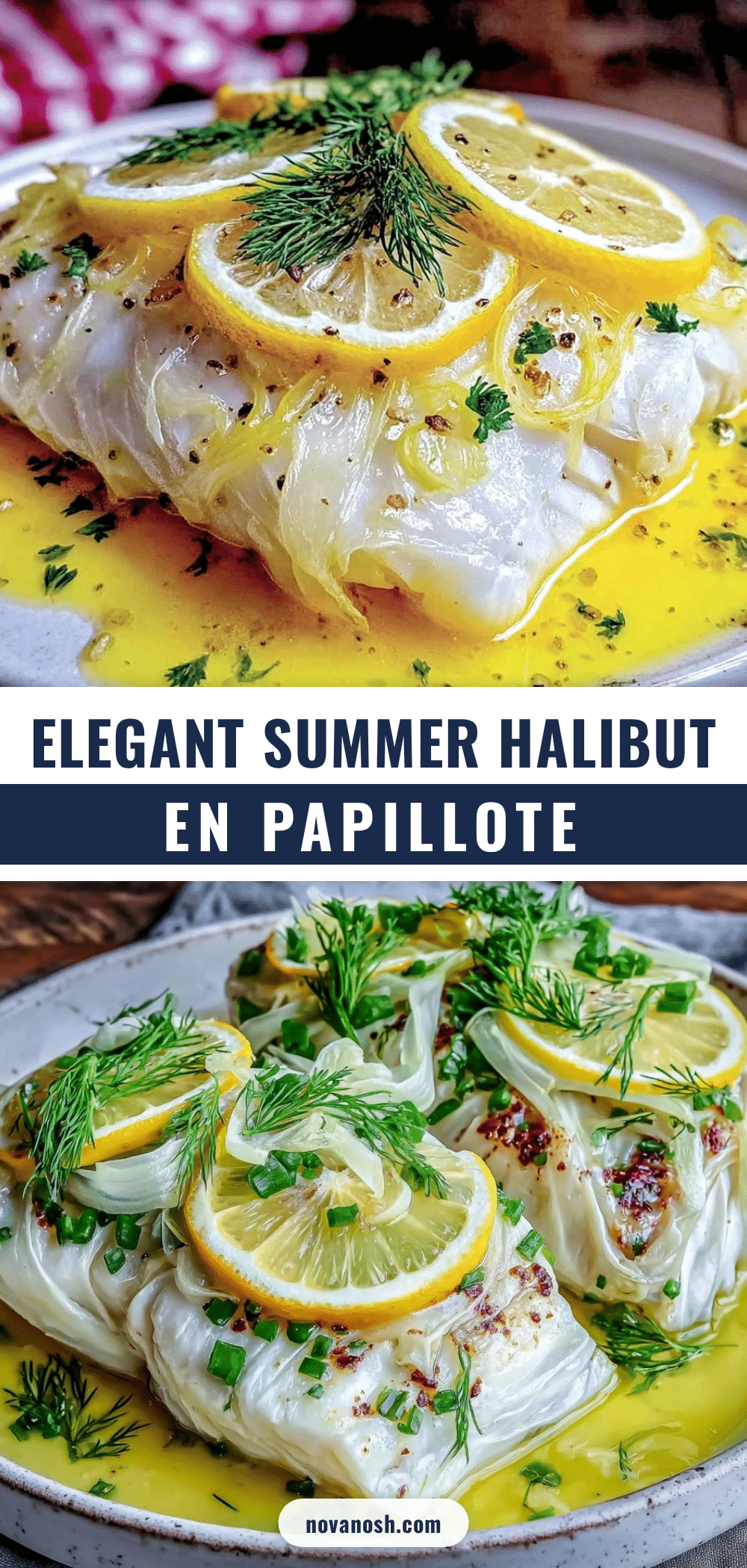
Summer Halibut en Papillote Recipe With Lemon Fennel and Saffron Butter That Impresses Every Time

A light and elegant halibut dish cooked en papillote with thinly sliced fennel, lemon, and a luxurious saffron butter that locks in moisture and flavor. Perfect for effortless entertaining with fresh, seasonal ingredients.
- Prep Time: 15 minutes
- Cook Time: 12-15 minutes
- Total Time: 27-30 minutes
- Yield: 4 servings 1x
- Category: Main Course
- Cuisine: French-inspired
Ingredients
- 4 halibut fillets (about 6 oz / 170g each)
- 1 medium fennel bulb, thinly sliced
- 1 large lemon, zested and thinly sliced
- 2 tablespoons fresh parsley, chopped
- 4 tablespoons unsalted butter (57g)
- About 10 saffron threads, soaked in 1 tablespoon warm water for 5 minutes
- 1 clove garlic, minced
- Salt and freshly ground black pepper, to taste
- Optional: 2 tablespoons dry white wine (e.g., Sauvignon Blanc)
- Optional: 1 tablespoon capers
Instructions
- Preheat your oven to 400°F (200°C). Cut four sheets of parchment paper, about 15×15 inches (38×38 cm) each. Fold each sheet in half, then open it back up.
- In a small saucepan, melt the butter over low heat. Add the soaked saffron threads along with their soaking water, plus the minced garlic. Stir gently for 2-3 minutes, then remove from heat. Set aside.
- On one half of each parchment sheet, layer thin fennel slices, a few lemon slices, and a sprinkle of chopped parsley. Place one halibut fillet on top, skin-side down if it has skin. Season lightly with salt and pepper. Drizzle about a tablespoon of the saffron butter over each fillet. If using, add a splash of white wine and a few capers now.
- Fold the other half of the parchment over the fish and vegetables. Starting at one corner, fold the edges tightly together, making small overlapping folds all around to seal the packet completely. This traps the steam inside.
- Place the packets on a baking sheet and slide into the oven. Bake until the fish is opaque and flakes easily with a fork. Check at 12 minutes; thinner fillets may need less time.
- Bring the packets to the table and cut them open carefully—watch out for hot steam! Serve the halibut right in the parchment with a drizzle of the buttery sauce from the packet.
Notes
Soak saffron threads before use to release flavor and color. Slice fennel and lemon paper-thin for best texture. Seal packets tightly to trap steam and cook fish evenly. Start checking fish doneness at 12 minutes to avoid overcooking. Fresh halibut is preferred but frozen can be used if thawed and patted dry. Leftovers keep well refrigerated for up to 2 days; reheat gently to avoid drying out.
Nutrition
- Serving Size: 1 halibut fillet wit
- Calories: 320
- Sodium: 280
- Fat: 15
- Saturated Fat: 8
- Carbohydrates: 5
- Fiber: 1
- Protein: 35
Keywords: halibut, en papillote, saffron butter, lemon fennel, summer fish recipe, healthy fish, easy entertaining, baked fish, light dinner