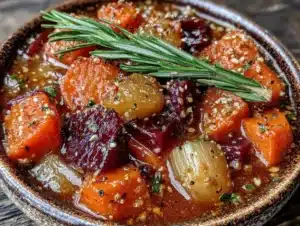
Love this? Save it for later!
Share the inspiration with your friends
I was elbow-deep in a pile of kale at the grocery store last October when the smell hit me. Not the kale—that smelled like rain on dirt, which is fine but not nostalgic. No, it was the guy next to me opening a bag of pre-chopped butternut squash. That sweet, earthy scent of fresh winter squash cut through the cold air of the produce section, and just like that, I was nine years old in my neighbor Mrs. Kowalski’s kitchen.
She wasn’t my grandmother. She was just the lady next door who had a way of showing up with a steaming pot of something whenever our street felt quiet. Her kitchen always smelled like thyme and something caramelizing, and she’d let me stir the pot even though I was too short to see over the rim. I had to stand on a step stool, and I’m pretty sure I splashed broth on her wallpaper more than once. She never cared. She’d just say, “Stir it like you mean it, kiddo,” and hand me the spoon.
That memory came back so sharp and sudden in that grocery aisle that I almost bought two bags of squash. I didn’t. But I did go home and start chopping root vegetables, trying to capture that same feeling—the warmth, the patience, the way a slow-simmering pot can make a whole house feel like a hug. This crockpot fall harvest soup is my best attempt at bottling that memory. It’s not her recipe, not exactly, but it carries the same spirit. It’s the kind of soup you put on in the morning and forget about until your kitchen starts smelling like October, and suddenly everything feels a little more okay. Maybe you’ve had a moment like that, where a smell just grabs you by the collar and drags you somewhere warm. That’s what this soup is for.
Why You’ll Love This Recipe
Let me tell you why this soup has become my go-to for fall. I’ve tested this recipe about seven times (my family is very patient), and I’ve tweaked it until it felt just right. This isn’t just another vegetable soup—it’s the one that makes people ask for the recipe before they finish their bowl.
- Set It and Forget It: You chop some vegetables, toss everything in the crockpot, and walk away. That’s it. No stirring, no watching, no stress. It’s the perfect meal for busy weekdays or lazy Sundays when you want the house to smell amazing without actually doing much.
- Simple, Affordable Ingredients: Everything in this soup is a basic root vegetable you can find at any grocery store. No fancy trips to specialty markets. I’m talking carrots, sweet potatoes, parsnips, onions—the kind of stuff that’s cheap and hearty and actually good for you.
- Perfect for Meal Prep: This soup gets better after a day in the fridge. I make a big batch on Sunday, and it carries me through lunches all week. It freezes beautifully too, so you can stash some for those cold days when you just can’t.
- Crowd-Pleaser: I’ve served this at a fall dinner party and to my picky-eating nephew, and both asked for seconds. It’s creamy without being heavy, savory without being boring, and it hits that sweet spot between healthy and indulgent.
- Unbelievably Comforting: The first time I made this, I actually closed my eyes after that first spoonful. It’s that kind of soup. The kind that makes you slow down and just breathe for a minute.
What makes this version different from all the other harvest soups out there? It’s the way the vegetables are prepped—roasting them just a little before they hit the crockpot. I know, I know, it’s an extra step. But trust me on this. That quick roast caramelizes the natural sugars in the root vegetables and gives the soup a depth of flavor you just can’t get from dumping raw veggies into a slow cooker. It’s a small thing that makes a huge difference.
What Ingredients You Will Need
This recipe uses simple, wholesome ingredients that work together to create something greater than the sum of their parts. Most of these are pantry staples or easy to find at any grocery store, especially during fall when root vegetables are at their peak.
For the Soup Base
- Butternut squash, 1 medium (about 3 cups, peeled and cubed) — look for one that feels heavy for its size, with firm, unblemished skin. I prefer buying whole squash and cubing it myself, but pre-cut works in a pinch (just know the flavor won’t be quite as fresh)
- Sweet potatoes, 2 medium (about 2 cups, peeled and cubed) — orange-fleshed ones work best for sweetness and color
- Carrots, 3 large (about 1 ½ cups, chopped) — I use regular orange carrots, but rainbow ones make it prettier if you’re feeling fancy
- Parsnips, 2 medium (about 1 cup, chopped) — these add a subtle, almost nutty sweetness that I honestly didn’t appreciate until I started making this soup
- Yellow onion, 1 large (diced) — any onion works, but yellow has the best balance of sweet and sharp for slow cooking
- Celery stalks, 2 (chopped) — don’t skip these, they add that savory backbone
- Garlic cloves, 4 (minced) — fresh only, please. The jarred stuff just doesn’t hit the same here
For the Liquid & Seasoning
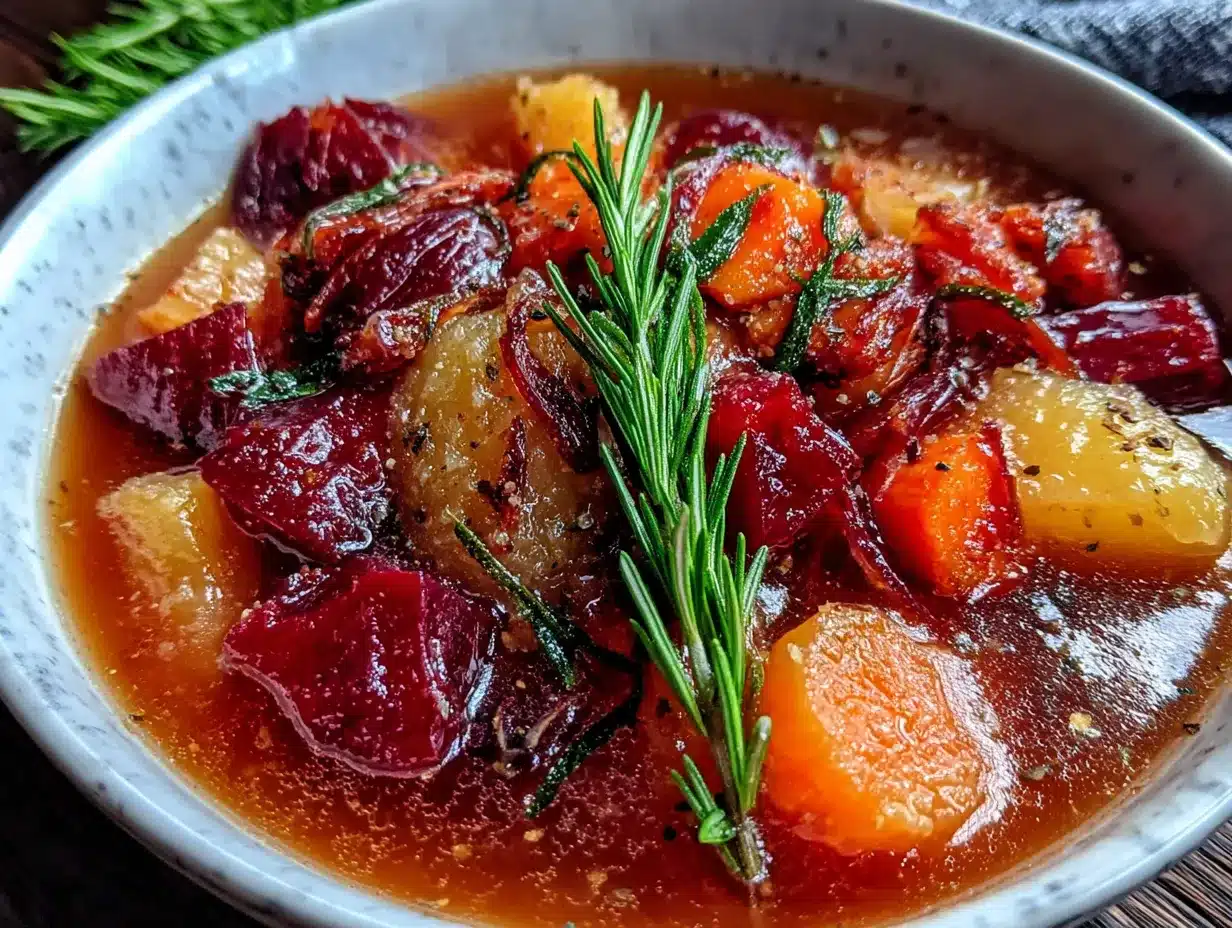
- Vegetable broth, 4 cups (use low-sodium so you can control the salt) — I like Imagine brand for its clean flavor, but any good-quality broth works
- Canned coconut milk, 1 can (full-fat for creaminess, but light works if you’re watching calories) — this is my secret ingredient for that velvety texture without actual cream
- Fresh thyme sprigs, 4 to 5 — dried works in a pinch (use 1 teaspoon), but fresh really makes a difference here
- Fresh rosemary, 1 sprig (or ½ teaspoon dried) — go easy, rosemary is bossy
- Bay leaves, 2
- Ground cumin, 1 teaspoon — this is my little twist, it adds warmth without being spicy
- Ground turmeric, ½ teaspoon — mostly for color, but it’s good for you too
- Salt and black pepper, to taste — I start with 1 teaspoon salt and ½ teaspoon pepper, then adjust at the end
- Olive oil, 2 tablespoons (for roasting)
For Garnish (Optional but Recommended)
- Fresh parsley, chopped — for color and freshness
- Pumpkin seeds, toasted — adds a nice crunch
- A drizzle of coconut milk or heavy cream — makes it look fancy for company
- Crusty bread — because soup needs something to dip into it
Equipment Needed
You don’t need a fancy kitchen to make this soup. Here’s what you’ll actually use:
- Crockpot or slow cooker (5 to 6 quart) — this is non-negotiable, obviously. I use a Cuisinart 6-quart model and it’s perfect for this amount. If yours is smaller, just halve the recipe
- Baking sheet (for roasting) — any rimmed sheet pan works. Line it with parchment for easier cleanup
- Chef’s knife — a sharp one makes all the difference when you’re cubing squash. I learned that the hard way after a close call with a dull knife
- Cutting board — get a big one, you’ll need the space
- Vegetable peeler — for the carrots and parsnips
- Immersion blender — this is my preferred tool for blending the soup right in the crockpot. If you don’t have one, a regular blender works, but you’ll need to work in batches and be careful with the hot liquid
- Large spoon or ladle — for stirring and serving
- Measuring cups and spoons — because eyeballing broth never ends well
If you don’t have an immersion blender, honestly, you can still make this soup. Just let it cool for 10 minutes, then carefully transfer it to a blender in batches. Fill the blender no more than halfway, hold the lid down with a towel, and blend until smooth. It’s a little more work, but the result is the same creamy goodness.
Preparation Method
Alright, let’s make some soup. I’ve broken this down so even if you’re new to cooking, you won’t feel lost. Take your time with the prep—it’s the most hands-on part, and it goes fast once you get into a rhythm.
Step 1: Prep the Vegetables (15 minutes)
Wash all your vegetables well. Peel the butternut squash, sweet potatoes, carrots, and parsnips. Cut the squash in half lengthwise, scoop out the seeds (save them for roasting later if you’re ambitious), and cube everything into 1-inch pieces. Try to keep them roughly the same size so they cook evenly. I know, I know, it’s tedious. Put on a podcast or some music and just zone out. I usually mess up my kitchen counters during this step, but that’s part of the charm.
Step 2: Roast the Vegetables (25 minutes)
Preheat your oven to 400°F (200°C). Toss the cubed squash, sweet potatoes, carrots, and parsnips with 2 tablespoons of olive oil, a pinch of salt, and some black pepper. Spread them in a single layer on your baking sheet. Roast for 20 to 25 minutes, flipping halfway through. You want them just starting to brown at the edges—they don’t need to be fully cooked since they’ll finish in the crockpot. This step is where the magic happens. The roasting caramelizes the natural sugars and adds a depth of flavor that you just can’t get any other way. I forgot to do this once and the soup was… fine. Just fine. Not great. Don’t skip this.
Step 3: Sauté the Aromatics (5 minutes)
While the vegetables roast, heat a splash of olive oil in a skillet over medium heat. Add the diced onion and celery, and cook for about 5 minutes until they’re soft and translucent. Add the minced garlic and cook for another 30 seconds until fragrant. This step wakes up the flavors and gives your soup a better base than just throwing raw onions into the crockpot. I learned this trick from a chef friend who said, “You gotta give the aromatics a head start.” She was right.
Step 4: Assemble in the Crockpot (5 minutes)
Transfer the roasted vegetables and sautéed aromatics to your crockpot. Add the vegetable broth, coconut milk, thyme sprigs, rosemary, bay leaves, cumin, and turmeric. Give everything a good stir. Don’t worry if it looks a little thin—the vegetables will break down and thicken it as they cook.
Step 5: Slow Cook (6 to 8 hours on low, or 3 to 4 hours on high)
Put the lid on and let it do its thing. I prefer cooking on low for about 7 hours—it gives the flavors more time to meld together and makes the house smell incredible all day. If you’re in a rush, high for 3 to 4 hours works, but the flavor won’t be quite as deep. About an hour before serving, remove the thyme sprigs, rosemary stem, and bay leaves. They’ve done their job by then.
Step 6: Blend (10 minutes)
Use your immersion blender directly in the crockpot to blend the soup until smooth. If you want it extra velvety, blend for a full minute. If you like a little texture, leave some small chunks. Taste it and adjust the salt and pepper. This is where you make it yours—maybe a little more salt, maybe a pinch of cayenne if you want heat. I usually add another ½ teaspoon of salt and a good crack of pepper at this stage.
Step 7: Serve (5 minutes)
Ladle into bowls and top with your garnishes. A sprinkle of fresh parsley, some toasted pumpkin seeds, and a swirl of coconut milk make it look like you tried way harder than you did. Serve with crusty bread for dipping, because soup without bread is just sad.
Cooking Tips & Techniques
I’ve made this soup enough times to learn a few things the hard way. Here’s what I wish someone had told me:
Don’t skip the roasting step. I know it adds time, and I know you want to just dump everything in the crockpot. But that roasting step is what gives this soup its deep, almost nutty flavor. The first time I made it without roasting, my husband said, “It’s good, but it tastes… healthy.” He wasn’t wrong. Roasted vegetables taste like comfort. Unroasted vegetables taste like a diet. You decide.
Cut your vegetables evenly. I know it’s tedious, but pieces that are roughly the same size cook at the same rate. You don’t want some chunks that are mushy and others that are still crunchy. Aim for 1-inch cubes and you’ll be fine.
Season as you go, not just at the end. A pinch of salt on the roasting vegetables, a little in the sautéed aromatics, and then adjust at the end. Layering the seasoning builds complexity. I once forgot to salt the roasting vegetables and the final soup tasted flat no matter how much salt I added at the end. Learn from my mistakes.
Use full-fat coconut milk for the creamiest texture. Light coconut milk works, but the soup won’t be as velvety. If you’re dairy-free but don’t love coconut, you can use a splash of oat milk or cashew cream instead. I’ve done both and they work, but coconut milk is my favorite.
Taste before blending. Seriously. This is your last chance to adjust the seasoning before it’s all one uniform texture. Get it right now.
Let it cool slightly before blending. Hot soup in a blender is a disaster waiting to happen. If you’re using a regular blender, let the soup cool for 10 to 15 minutes first. Trust me, I’ve cleaned soup off my kitchen ceiling before. It’s not fun.
Variations & Adaptations
This soup is forgiving, which is one of the reasons I love it. Here are some ways to make it your own:
Make it vegan — It already is! Just use vegetable broth and coconut milk, and you’re good. If you want to add protein, stir in a can of drained chickpeas during the last hour of cooking.
Add some heat — Toss in a diced jalapeño (seeds removed if you want mild heat) with the aromatics, or add ¼ teaspoon of cayenne pepper with the spices. I did this once when I had a cold and it cleared my sinuses beautifully.
Swap the vegetables — This recipe is flexible. Don’t have parsnips? Use more carrots. Have a rutabaga sitting around? Toss it in. I’ve made this with celeriac instead of potatoes and it was surprisingly good. Just keep the total vegetable volume about the same.
Make it chunky — Instead of blending the whole thing, blend only half and leave the rest chunky. It gives you the creamy texture with some bite. My husband prefers it this way, so sometimes I compromise.
Add some greens — Stir in a few handfuls of spinach or kale during the last 15 minutes of cooking. They’ll wilt right into the soup and add color and nutrients. I do this when I want to pretend I’m extra healthy.
Try different herbs — Thyme and rosemary are classic, but sage works beautifully here too. Add about 6 fresh sage leaves with the other herbs. It gives the soup a slightly earthier, more autumnal flavor.
Serving & Storage Suggestions
This soup is best served hot, obviously, with a good crusty bread for dipping. I like to toast some sourdough slices, rub them with a cut garlic clove, and drizzle with olive oil. It’s simple but so good with the creamy soup.
For a heartier meal, serve it alongside a simple green salad with a tangy vinaigrette. The acidity cuts through the richness of the soup nicely. A grilled cheese sandwich is also a classic pairing—try it with sharp cheddar and apple slices for a fall twist.
Storage: Let the soup cool completely, then transfer it to an airtight container. It will keep in the refrigerator for up to 5 days. The flavors actually get better after a day or two, so don’t be afraid to make it ahead.
Freezing: This soup freezes beautifully. Portion it into freezer-safe containers or zip-top bags (lay them flat for easy stacking). It will keep for up to 3 months. Thaw overnight in the refrigerator before reheating.
Reheating: Reheat gently on the stovetop over medium-low heat, stirring occasionally. You can also microwave individual portions in 30-second bursts, stirring between each. If the soup seems too thick after storage, thin it with a splash of broth or water.
One thing I’ve noticed: this soup tastes even better the next day. Something about the flavors melding overnight makes it deeper and more complex. So if you can, make it a day ahead. Your future self will thank you.
Nutritional Information & Benefits
This soup is packed with good-for-you ingredients that actually taste good. Here’s the rough nutritional breakdown per serving (about 1 ½ cups, assuming 6 servings):
- Calories: Approximately 280
- Protein: 5g
- Fat: 12g (mostly from coconut milk and olive oil)
- Carbohydrates: 38g
- Fiber: 8g
- Sugar: 12g (natural from vegetables)
- Sodium: 650mg (varies based on broth and added salt)
The root vegetables are rich in vitamins A and C, which are great for your immune system—especially important during fall and winter. Butternut squash is loaded with beta-carotene, which your body converts to vitamin A for healthy skin and eyes. Sweet potatoes are high in fiber and potassium. The turmeric adds anti-inflammatory properties, and the garlic is good for your heart. Honestly, this soup is basically a hug in a bowl that also happens to be good for you.
It’s naturally gluten-free, dairy-free, and vegan, so it works for a lot of dietary needs. Just double-check your broth if you’re strictly gluten-free—some brands add wheat-based ingredients.
Conclusion
This crockpot fall harvest soup is the kind of recipe that becomes a tradition. It’s the soup I make on the first truly cold day of autumn, the one I bring to friends who need a little comfort, the one I look forward to all year. It’s simple enough for a beginner but impressive enough for company, and it fills your house with that unmistakable smell of something good simmering away.
I hope you make it your own. Add more garlic if you’re like me. Skip the parsnips if they’re hard to find. Top it with whatever crunchy thing you have on hand. That’s the beauty of a recipe like this—it’s a starting point, not a rulebook. The best version is the one that makes you happy.
If you try this soup, I’d love to hear about it. Drop a comment below and tell me how it turned out, what you changed, or just say hi. And if you share a photo on Pinterest or Instagram, tag me—I want to see your cozy bowls of fall goodness. Happy cooking, friends. Stay warm out there.
Frequently Asked Questions
Can I make this soup without a crockpot?
Absolutely. You can make it in a large pot on the stovetop instead. After roasting the vegetables and sautéing the aromatics, add everything to the pot, bring to a boil, then reduce to a simmer. Cook for about 30 to 40 minutes until the vegetables are tender, then blend as directed. It’s faster but requires more attention.
Can I use frozen vegetables instead of fresh?
You can, but I don’t recommend it for this recipe. Frozen vegetables release a lot of water as they cook, which can make the soup watery and dilute the flavor. Plus, you can’t roast frozen vegetables properly, and that roasting step is key to the depth of flavor. Fresh is worth the effort here.
How can I make this soup higher in protein?
Stir in a can of drained chickpeas or white beans during the last hour of cooking. You can also add cooked lentils or even shredded rotisserie chicken if you’re not keeping it vegan. For a protein boost without changing the flavor, stir in a scoop of unflavored collagen powder after blending.
My soup turned out too thick. How do I fix it?
Just stir in more broth or water until it reaches your desired consistency. Start with ¼ cup at a time and adjust. Remember that the soup will thicken as it cools and as it sits in the fridge, so you might need to thin it again when reheating leftovers.
Can I use a different type of squash?
Yes! Acorn squash, pumpkin, or even kabocha squash work well. Just keep in mind that different squashes have different moisture levels and sweetness. Acorn squash is a bit less sweet than butternut, so you might want to add an extra carrot for sweetness. Pumpkin can be more watery, so you may need to cook it a little longer to let the liquid reduce.
Pin This Recipe!
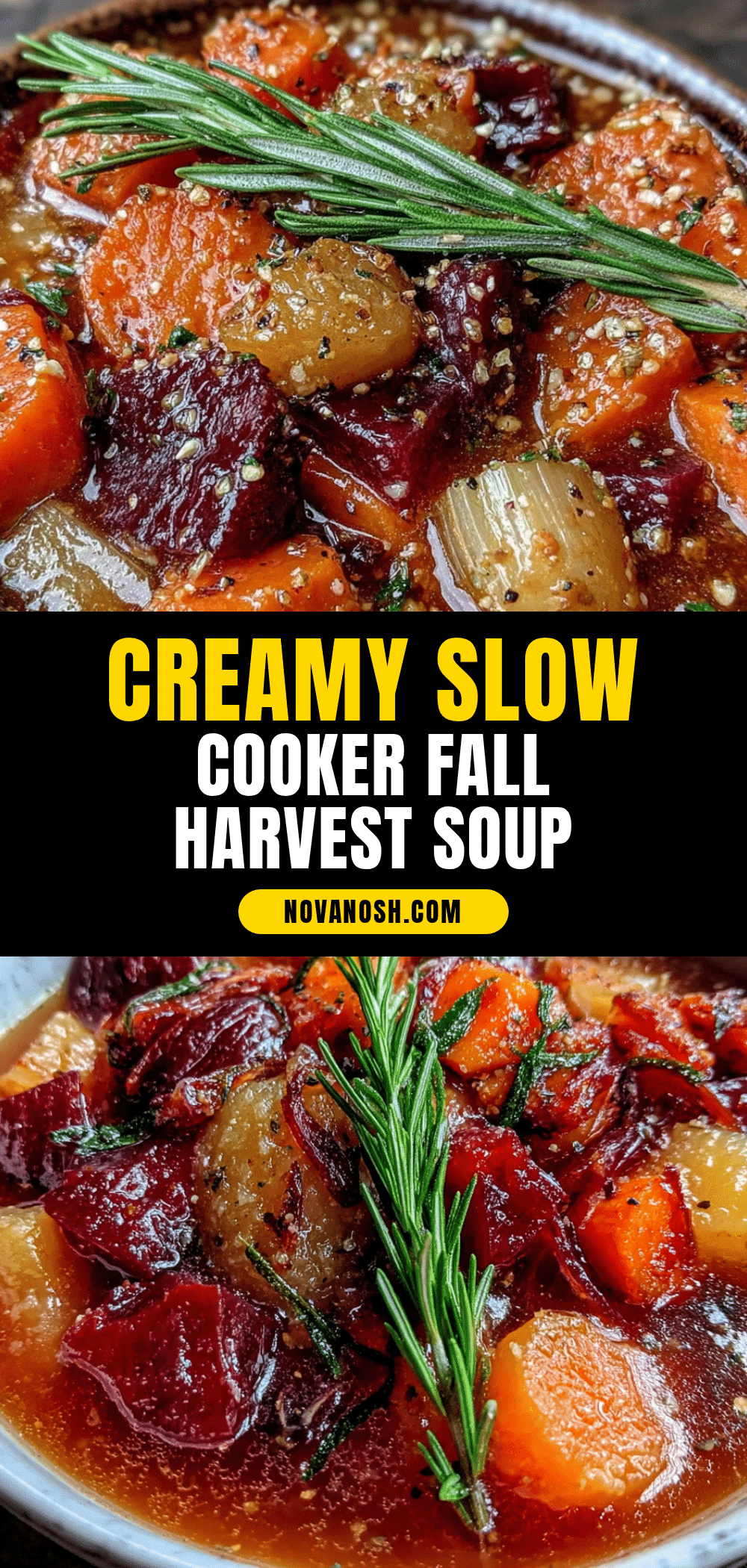
Cozy Crockpot Fall Harvest Soup with Root Vegetables

A warm, comforting slow-cooker soup made with roasted root vegetables, coconut milk, and aromatic herbs. This easy, hands-off recipe captures the cozy essence of autumn in every creamy, flavorful bowl.
- Prep Time: 20 minutes
- Cook Time: 6 to 8 hours (low) or 3 to 4 hours (high)
- Total Time: 6 hours 20 minutes to 8 hours 20 minutes
- Yield: 6 servings 1x
- Category: Soup
- Cuisine: American
Ingredients
- 1 medium butternut squash (about 3 cups, peeled and cubed)
- 2 medium sweet potatoes (about 2 cups, peeled and cubed)
- 3 large carrots (about 1 ½ cups, chopped)
- 2 medium parsnips (about 1 cup, chopped)
- 1 large yellow onion (diced)
- 2 celery stalks (chopped)
- 4 garlic cloves (minced)
- 4 cups low-sodium vegetable broth
- 1 can (13.5 oz) full-fat coconut milk
- 4 to 5 fresh thyme sprigs (or 1 teaspoon dried)
- 1 fresh rosemary sprig (or ½ teaspoon dried)
- 2 bay leaves
- 1 teaspoon ground cumin
- ½ teaspoon ground turmeric
- Salt and black pepper to taste (start with 1 teaspoon salt and ½ teaspoon pepper)
- 2 tablespoons olive oil (for roasting)
- Fresh parsley (chopped, for garnish)
- Toasted pumpkin seeds (for garnish)
- Additional coconut milk or heavy cream (for garnish, optional)
- Crusty bread (for serving)
Instructions
- Wash all vegetables. Peel the butternut squash, sweet potatoes, carrots, and parsnips. Cut the squash in half lengthwise, scoop out the seeds, and cube all vegetables into 1-inch pieces.
- Preheat oven to 400°F (200°C). Toss the cubed squash, sweet potatoes, carrots, and parsnips with 2 tablespoons olive oil, a pinch of salt, and black pepper. Spread in a single layer on a baking sheet. Roast for 20 to 25 minutes, flipping halfway, until just starting to brown at the edges.
- While vegetables roast, heat a splash of olive oil in a skillet over medium heat. Add diced onion and celery, cook for about 5 minutes until soft and translucent. Add minced garlic and cook for 30 seconds until fragrant.
- Transfer roasted vegetables and sautéed aromatics to a 5- to 6-quart crockpot. Add vegetable broth, coconut milk, thyme sprigs, rosemary, bay leaves, cumin, and turmeric. Stir to combine.
- Cover and cook on low for 6 to 8 hours, or on high for 3 to 4 hours. About 1 hour before serving, remove thyme sprigs, rosemary stem, and bay leaves.
- Use an immersion blender to blend the soup directly in the crockpot until smooth. Alternatively, let cool slightly, then blend in batches in a regular blender. Taste and adjust salt and pepper as needed.
- Ladle into bowls and garnish with fresh parsley, toasted pumpkin seeds, and a swirl of coconut milk. Serve with crusty bread.
Notes
Don’t skip the roasting step—it caramelizes the natural sugars and adds depth of flavor. Cut vegetables evenly for consistent cooking. Season in layers for best flavor. Use full-fat coconut milk for creamiest texture. Let soup cool slightly before blending if using a regular blender. Soup tastes even better the next day.
Nutrition
- Serving Size: 1 ½ cups
- Calories: 280
- Sugar: 12
- Sodium: 650
- Fat: 12
- Saturated Fat: 8
- Carbohydrates: 38
- Fiber: 8
- Protein: 5
Keywords: crockpot soup, fall harvest soup, root vegetable soup, slow cooker soup, vegan soup, gluten-free soup, butternut squash soup, sweet potato soup