Love this? Save it for later!
Share the inspiration with your friends
It was a quarter past ten on a random Thursday night, and I was supposed to be meal-prepping for the week ahead. Honestly, I was just staring into the fridge, feeling that familiar mix of exhaustion and hunger that hits right before you give up and order takeout. I had a bag of baby carrots, a sad-looking cucumber, and a container of hummus that was about to hit its expiration date. The idea for a football snack board—but make it healthy—just sort of appeared. I mean, I wasn’t even thinking about the big game; I was thinking about how to trick myself into eating vegetables at 10 PM without feeling like I was punishing myself.
So I grabbed a cutting board and started arranging. I sliced the cucumber into thick rounds, dumped the carrots into a little pile, and spooned the hummus into a small bowl I found buried in the back of the cabinet. I even found a forgotten bell pepper and a handful of cherry tomatoes. It wasn’t a masterpiece, but as I stood there eating straight from the board, I realized something: this was the kind of snack I’d actually want to serve to friends. No fuss, no guilt, just a pile of colorful, crunchy, satisfying food that makes you feel good.
Maybe you’ve been there—wanting to host a game day gathering but dreading the greasy, heavy spreads that leave everyone in a food coma by halftime. This healthy football snack board with veggies and hummus is my late-night revelation turned crowd-pleaser. It’s the kind of platter that keeps people munching happily without the post-game slump, and honestly, it’s become my go-to for every gathering, from Super Bowl parties to casual Friday nights. Let me tell you, once you make this veggie and hummus platter, you won’t miss the wings one bit.
Why You’ll Love This Recipe
This isn’t just another veggie platter. After countless trials—some where the hummus was too bland, others where the veggies got soggy—I landed on a formula that works every single time. I’ve tested this board for everything from rowdy game-day crowds to quiet family dinners, and it always disappears. Here’s why this one stands out:
- Quick & Easy: This whole board comes together in under 20 minutes. Seriously, you can assemble it during a commercial break and still catch the kickoff.
- Simple Ingredients: You likely have most of these veggies in your fridge right now. No fancy grocery trips or obscure ingredients required.
- Perfect for Game Day: Whether it’s the Super Bowl, a Monday night game, or just a casual hangout, this board fits the vibe without the grease.
- Crowd-Pleaser: Even the pickiest eaters will go for crunchy veggies when they’re paired with a creamy, flavorful hummus. I’ve seen it happen.
- Unbelievably Delicious: The key is in the texture—crisp, cold veggies against smooth, seasoned hummus. It’s a flavor and crunch combo that hits every time.
What makes this recipe different is the balance. I use a technique of lightly seasoning the veggies with a pinch of salt and a squeeze of lemon before arranging—it wakes up their flavor without making them wet. Plus, I’ve perfected a simple hummus base that’s creamy, garlicky, and just tangy enough to keep you coming back for more. This isn’t just another version; it’s the version that makes you forget you’re eating healthy. Honestly, it’s the kind of board that makes you close your eyes after that first crunchy, dippy bite.
What Ingredients You Will Need
This recipe uses fresh, colorful vegetables and a creamy hummus to deliver bold flavor and satisfying crunch without any complicated cooking. Most of these are pantry and fridge staples, so you can whip this together on a whim.
- For the Veggie Board:
- 1 large cucumber, sliced into thick rounds or half-moons
- 1 cup baby carrots (or regular carrots, peeled and cut into sticks)
- 1 red bell pepper, sliced into strips
- 1 cup cherry tomatoes, halved
- 1 cup snap peas or sugar snap peas, ends trimmed
- 1 cup broccoli florets (blanched for 1 minute if you prefer them tender)
- 1/2 cup radishes, thinly sliced (adds a nice peppery bite)
- Optional: 1/2 cup celery sticks or jicama sticks for extra crunch
- For the Hummus (or use store-bought):
- 1 can (15 oz) chickpeas, drained and rinsed (I recommend Biona or Whole Foods 365 for creaminess)
- 1/4 cup tahini (stir well before using)
- 2 tablespoons extra-virgin olive oil, plus more for drizzling
- 2 tablespoons lemon juice (freshly squeezed is best)
- 1 small garlic clove, minced
- 1/2 teaspoon ground cumin
- 1/4 teaspoon salt (or to taste)
- 2-3 tablespoons ice-cold water (for that ultra-smooth texture)
- For Garnish & Serving:
- 1 tablespoon fresh parsley, chopped
- 1/2 teaspoon paprika or smoked paprika (for color and a smoky kick)
- Optional: a handful of pita chips or whole-grain crackers (for those who want extra crunch)
- Optional: a sprinkle of red pepper flakes for heat
If you’re using store-bought hummus, look for a brand with simple ingredients—I love Sabra for a reliable option, but Cedar’s has a great garlicky flavor. For a twist, you can swap the cucumber for zucchini slices or add some roasted red peppers. If you’re avoiding chickpeas, try a white bean hummus or even a beet hummus for a vibrant color change.
Equipment Needed
You don’t need a professional kitchen to put this together, but a few tools make the process smoother. Here’s what I use:
- Large cutting board or serving platter: I prefer a wooden board for its rustic look, but any large plate works. A rimmed baking sheet is a great budget-friendly alternative.
- Sharp chef’s knife: A good knife makes slicing veggies a breeze. I’ve been using my Victorinox for years—it’s affordable and stays sharp.
- Vegetable peeler: Only needed if you’re using regular carrots or want to peel the cucumber.
- Small bowls or ramekins: For the hummus and any dips. I like to use a small ceramic bowl that fits snugly on the board.
- Food processor or blender: If you’re making hummus from scratch, a food processor is ideal. I use a Cuisinart 7-cup model, but a high-speed blender works too—just scrape down the sides a few times.
- Spatula: For scraping every last bit of hummus out of the processor.
- Serving spoons or tongs: Optional, but helpful for guests to serve themselves without touching everything.
Pro tip: If your board feels too small, use a large baking sheet lined with parchment paper. It’s not as fancy, but it gets the job done and makes cleanup a breeze.
Preparation Method
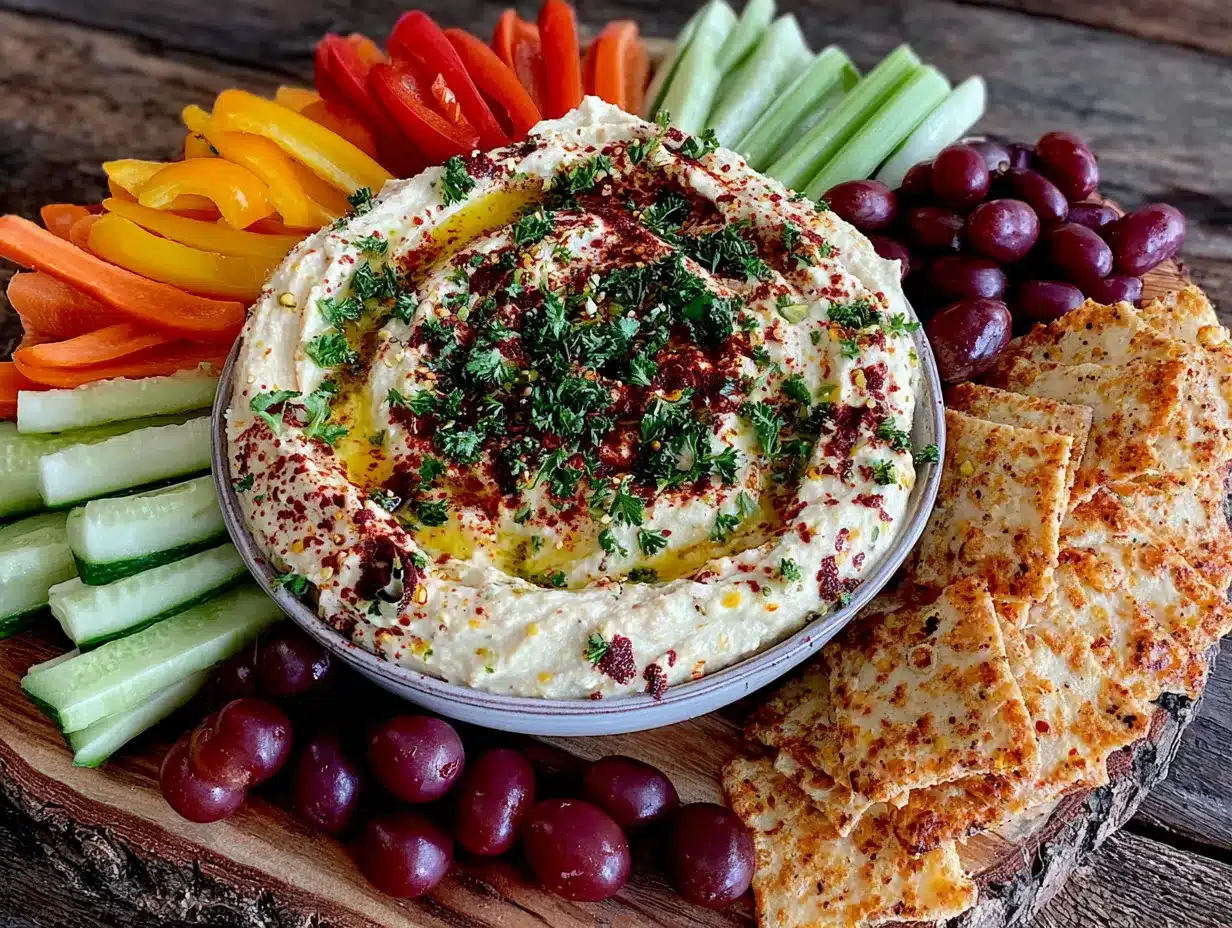
Follow these steps to build a beautiful, crowd-pleasing healthy football snack board. I’ve broken it down so you can multitask like a pro.
- Make the hummus (5 minutes active, 10 minutes total): In a food processor, combine the drained chickpeas, tahini, olive oil, lemon juice, minced garlic, cumin, and salt. Process for 30 seconds until the mixture is thick and pasty. Scrape down the sides, then with the motor running, add the ice-cold water 1 tablespoon at a time. Process for 2-3 minutes until the hummus is ultra-smooth and creamy. Taste and adjust salt or lemon juice as needed. Transfer to a small bowl, drizzle with a little olive oil, and sprinkle with paprika and parsley. Set aside. (If you’re using store-bought hummus, just spoon it into a bowl and garnish—easy!)
- Prep the vegetables (10 minutes): Wash all your veggies thoroughly. Slice the cucumber into thick rounds (about 1/2-inch thick) so they hold up for dipping. Cut the bell pepper into strips about 2 inches long. Halve the cherry tomatoes. Trim the ends off the snap peas. If using broccoli, blanch it in boiling water for 1 minute, then plunge into ice water to stop the cooking—this keeps it bright green and tender-crisp. Slice the radishes thinly for a pop of color and spice.
- Season the veggies (2 minutes): This is my secret step. Lightly sprinkle the cucumber rounds, bell pepper strips, and snap peas with a tiny pinch of salt and a squeeze of fresh lemon juice. This enhances their natural flavor without making them soggy. Don’t do this more than 10 minutes before serving, or they’ll release water.
- Arrange the board (5 minutes): Place the bowl of hummus in the center of your board or platter. Start arranging the veggies in groups around the hummus. I like to create little “piles” of each vegetable—carrots in one spot, cucumber in another, etc. This makes the board look intentional and colorful. Tuck the cherry tomatoes and radish slices in the gaps for visual interest. If using pita chips or crackers, place them in a separate small bowl or on the side of the board.
- Add final touches (2 minutes): Drizzle a little extra olive oil over the hummus and sprinkle with a pinch of red pepper flakes if you like heat. Garnish the board with a few fresh parsley leaves scattered over the veggies. Serve immediately, or cover with plastic wrap and refrigerate for up to 2 hours. If chilling, add the tomatoes and any delicate herbs just before serving to keep them fresh.
One thing I learned the hard way: don’t overcrowd the board. Leave a little space between veggie piles so guests can easily grab what they want. If you’re serving a big crowd, make two smaller boards instead of one giant one—it’s easier to manage and looks more inviting.
Cooking Tips & Techniques
I’ve made this board more times than I can count, and I’ve definitely had my share of mishaps. Here are the lessons I’ve learned so you don’t have to repeat them.
- Don’t skip the ice water in the hummus: I used to think it was a gimmick, but that cold water is what makes homemade hummus silky smooth. It breaks down the chickpeas without making the mixture greasy. If your hummus is too thick, add another tablespoon of water.
- Keep veggies cold and crisp: The secret to a great veggie board is crunch. After washing, dry your vegetables thoroughly with a clean kitchen towel or salad spinner. Any moisture left on the surface will make them limp. If you’re prepping ahead, store cut veggies in a bowl of ice water in the fridge for up to an hour—just drain and pat dry before arranging.
- Blanch broccoli for the win: Raw broccoli can be too tough for some people. A quick 1-minute blanch in boiling water, followed by an ice bath, makes it tender-crisp and brings out a sweeter flavor. It’s a small step that makes a big difference.
- Layer flavors in the hummus: Don’t just dump everything in at once. Start with the chickpeas and tahini to create a base, then add the liquids slowly. This gives you control over the texture. Also, let the hummus sit for at least 15 minutes after blending—the flavors meld and become more pronounced.
- Timing is everything: Assemble the board no more than 2 hours before serving. Any longer, and the veggies start to wilt, and the hummus develops a skin. If you need to prep earlier, keep the hummus and cut veggies separate in the fridge, then arrange just before guests arrive.
- My biggest failure: I once made this board for a big game-day party and forgot to season the hummus with salt. It was bland, and nobody touched it. Now I always taste the hummus before serving and adjust the salt and lemon. Trust your taste buds—they never lie.
Variations & Adaptations
This board is endlessly customizable. Here are a few ways I’ve adapted it for different diets and occasions.
- Seasonal Twist: In the summer, swap the snap peas for grilled zucchini slices and add some fresh corn kernels. In the fall, use roasted butternut squash cubes and add a handful of pomegranate seeds for a pop of sweetness. The base hummus works year-round.
- Protein-Packed Board: Add some hard-boiled eggs, grilled chicken strips, or a handful of almonds for extra staying power. This turns the snack board into a light meal. I’ve done this for lunch parties, and it’s always a hit.
- Spicy Hummus Variation: Add 1/2 teaspoon of smoked paprika and 1/4 teaspoon of cayenne pepper to the hummus while blending. This gives it a smoky, spicy kick that pairs beautifully with the cool cucumber and snap peas. My friends beg me to make this version.
- Vegan and Gluten-Free: This recipe is naturally vegan and gluten-free as written. Just make sure your pita chips (if using) are certified gluten-free, or skip them entirely—the veggies are plenty satisfying on their own.
- Low-Carb/Keto Option: Replace the carrots and cherry tomatoes with more cucumber, celery, and bell peppers. Add some avocado slices for healthy fats. The hummus can be made with half the chickpeas and extra tahini to reduce carbs while keeping it creamy.
Serving & Storage Suggestions
This board is best served at room temperature—it allows the flavors of the hummus to shine and the veggies to feel fresh, not fridge-cold. I usually take the hummus out of the fridge 15 minutes before assembling to let it soften slightly.
For presentation, I like to use a large wooden board or a white ceramic platter. The contrast of the green, red, orange, and purple veggies against the neutral background is stunning. If you’re feeling fancy, add a few edible flowers (like nasturtiums) for a pop of color—they’re completely safe and look gorgeous.
Storage: Leftover veggies can be stored in an airtight container in the fridge for up to 2 days. The hummus keeps well for 4-5 days in a sealed container. I don’t recommend storing the assembled board—the veggies will release moisture and get soggy. Instead, store components separately.
Reheating: This is a cold dish, so no reheating needed! If your hummus thickens in the fridge, just stir in a teaspoon of warm water until it’s creamy again. For the veggies, a quick rinse in cold water and a pat dry will revive their crunch.
One thing I love about this board is how the flavors develop. The hummus actually tastes better the next day—the garlic and cumin have time to meld. So if you’re planning ahead, make the hummus a day in advance. Just give it a good stir before serving.
Nutritional Information & Benefits
This board is packed with nutrients that make you feel great. Here’s a rough estimate per serving (based on 1/6 of the board, including 1/4 cup hummus):
- Calories: Approximately 180-220
- Protein: 7-9 grams (from chickpeas and tahini)
- Fiber: 6-8 grams (hello, digestive health!)
- Healthy Fats: 10-12 grams (from olive oil and tahini)
- Carbohydrates: 20-25 grams (mostly from veggies and chickpeas)
The vegetables are loaded with vitamins A, C, and K, plus antioxidants that support your immune system. The hummus provides plant-based protein and healthy fats that keep you full and satisfied. This board is naturally gluten-free, dairy-free, and vegan, making it a safe choice for most dietary needs. Just be mindful if you have a sesame allergy—tahini is made from sesame seeds. You can substitute sunflower seed butter for a nut-free, seed-free version.
Honestly, I love that this board lets me indulge in a game-day spread without feeling weighed down. It’s proof that healthy eating doesn’t have to be boring or complicated.
Conclusion
This healthy football snack board with veggies and hummus has become my secret weapon for every gathering. It’s the one dish that disappears before the wings, and people always ask for the recipe. I love how it brings everyone together—even the skeptics end up reaching for another cucumber slice dipped in that creamy hummus.
I encourage you to make this board your own. Swap in your favorite veggies, play with the hummus spices, or add a protein boost. The beauty of this recipe is its flexibility. It’s forgiving, it’s fast, and it’s genuinely delicious. Whether you’re hosting a Super Bowl party, a casual movie night, or just need a healthy snack for yourself, this board delivers every time.
I’d love to hear how it turns out for you! Leave a comment below with your favorite veggie combination or any twists you tried. Don’t forget to share a photo of your board on Pinterest—tag me so I can see your beautiful creation. Happy snacking, and here’s to a game day that leaves you feeling energized, not sluggish!
Frequently Asked Questions
Can I make this board ahead of time?
Yes, but with a few caveats. You can cut the veggies and make the hummus up to 2 days in advance. Store them separately in the fridge. Assemble the board no more than 2 hours before serving to keep everything crisp and fresh.
What if I don’t have a food processor for the hummus?
No problem! You can mash the chickpeas with a fork or potato masher until smooth, then whisk in the other ingredients. It won’t be as silky, but it’ll still taste great. Alternatively, use a high-quality store-bought hummus to save time.
How do I keep the veggies from getting soggy?
Dry your vegetables thoroughly after washing. A salad spinner is your best friend here. Also, avoid salting the veggies too early—wait until just before serving. If you’re prepping ahead, store cut veggies in a bowl of ice water in the fridge, then drain and pat dry before arranging.
Can I add fruit to this board?
Absolutely! Sliced apples, pear wedges, or grapes add a sweet contrast to the savory hummus. Just toss apple slices in a little lemon juice to prevent browning. I’ve added pomegranate seeds in the fall, and they’re always a hit.
Is this board suitable for a party with dietary restrictions?
Yes! This recipe is naturally vegan, gluten-free, and dairy-free. For nut allergies, skip any nut-based garnishes and check your pita chips for cross-contamination. For sesame allergies, use sunflower seed butter instead of tahini in the hummus. It’s a versatile crowd-pleaser.
Pin This Recipe!
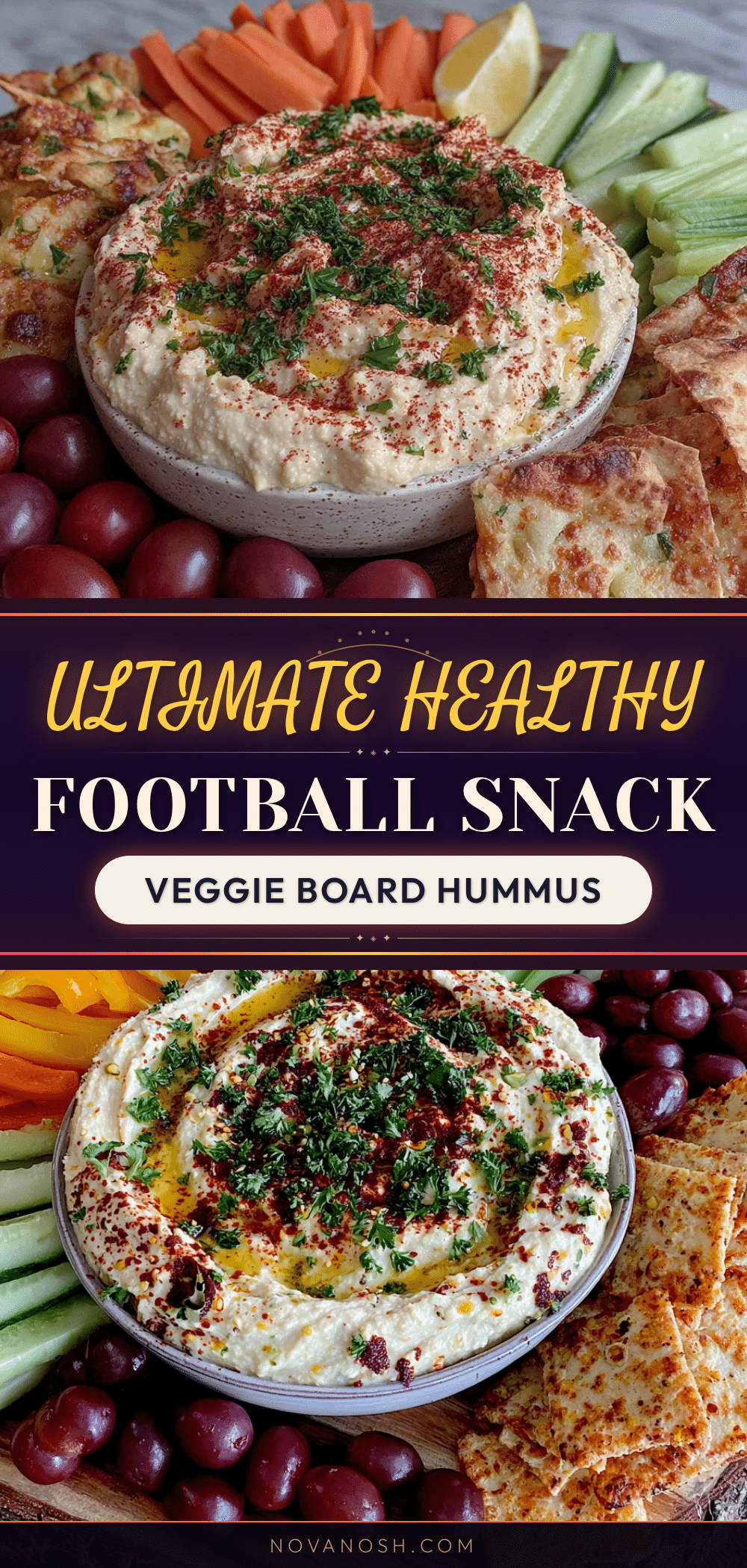
Healthy Football Snack Board: Easy Veggie & Hummus Platter
A quick and easy veggie and hummus platter perfect for game day gatherings. This healthy snack board is packed with colorful, crunchy vegetables and creamy hummus, making it a crowd-pleaser that leaves you feeling energized, not sluggish.
- Prep Time: 20 minutes
- Cook Time: 0 minutes
- Total Time: 20 minutes
- Yield: 6 servings 1x
- Category: Appetizer
- Cuisine: American
Ingredients
- 1 large cucumber, sliced into thick rounds or half-moons
- 1 cup baby carrots (or regular carrots, peeled and cut into sticks)
- 1 red bell pepper, sliced into strips
- 1 cup cherry tomatoes, halved
- 1 cup snap peas or sugar snap peas, ends trimmed
- 1 cup broccoli florets (blanched for 1 minute if you prefer them tender)
- 1/2 cup radishes, thinly sliced
- Optional: 1/2 cup celery sticks or jicama sticks for extra crunch
- 1 can (15 oz) chickpeas, drained and rinsed
- 1/4 cup tahini (stir well before using)
- 2 tablespoons extra-virgin olive oil, plus more for drizzling
- 2 tablespoons lemon juice (freshly squeezed is best)
- 1 small garlic clove, minced
- 1/2 teaspoon ground cumin
- 1/4 teaspoon salt (or to taste)
- 2–3 tablespoons ice-cold water
- 1 tablespoon fresh parsley, chopped
- 1/2 teaspoon paprika or smoked paprika
- Optional: a handful of pita chips or whole-grain crackers
- Optional: a sprinkle of red pepper flakes for heat
Instructions
- Make the hummus: In a food processor, combine the drained chickpeas, tahini, olive oil, lemon juice, minced garlic, cumin, and salt. Process for 30 seconds until the mixture is thick and pasty. Scrape down the sides, then with the motor running, add the ice-cold water 1 tablespoon at a time. Process for 2-3 minutes until the hummus is ultra-smooth and creamy. Taste and adjust salt or lemon juice as needed. Transfer to a small bowl, drizzle with a little olive oil, and sprinkle with paprika and p…
- Prep the vegetables: Wash all your veggies thoroughly. Slice the cucumber into thick rounds (about 1/2-inch thick). Cut the bell pepper into strips about 2 inches long. Halve the cherry tomatoes. Trim the ends off the snap peas. If using broccoli, blanch it in boiling water for 1 minute, then plunge into ice water to stop the cooking. Slice the radishes thinly.
- Season the veggies: Lightly sprinkle the cucumber rounds, bell pepper strips, and snap peas with a tiny pinch of salt and a squeeze of fresh lemon juice. Do this no more than 10 minutes before serving.
- Arrange the board: Place the bowl of hummus in the center of your board or platter. Arrange the veggies in groups around the hummus, creating little piles of each vegetable. Tuck the cherry tomatoes and radish slices in the gaps. If using pita chips or crackers, place them in a separate small bowl or on the side of the board.
- Add final touches: Drizzle a little extra olive oil over the hummus and sprinkle with a pinch of red pepper flakes if desired. Garnish the board with a few fresh parsley leaves scattered over the veggies. Serve immediately, or cover with plastic wrap and refrigerate for up to 2 hours.
Notes
For the smoothest hummus, use ice-cold water and process for a full 2-3 minutes. If using store-bought hummus, look for brands with simple ingredients like Sabra or Cedar’s. To keep veggies crisp, dry them thoroughly after washing and avoid salting more than 10 minutes before serving. The board can be assembled up to 2 hours ahead; if chilling, add tomatoes and delicate herbs just before serving.
Nutrition
- Serving Size: 1/6 of the board wit
- Calories: 200
- Sugar: 6
- Sodium: 320
- Fat: 11
- Saturated Fat: 1.5
- Carbohydrates: 22
- Fiber: 7
- Protein: 8
Keywords: healthy snack board, veggie platter, hummus board, game day snack, football party food, easy appetizer, vegetarian snack, gluten-free appetizer