Love this? Save it for later!
Share the inspiration with your friends
Introduction
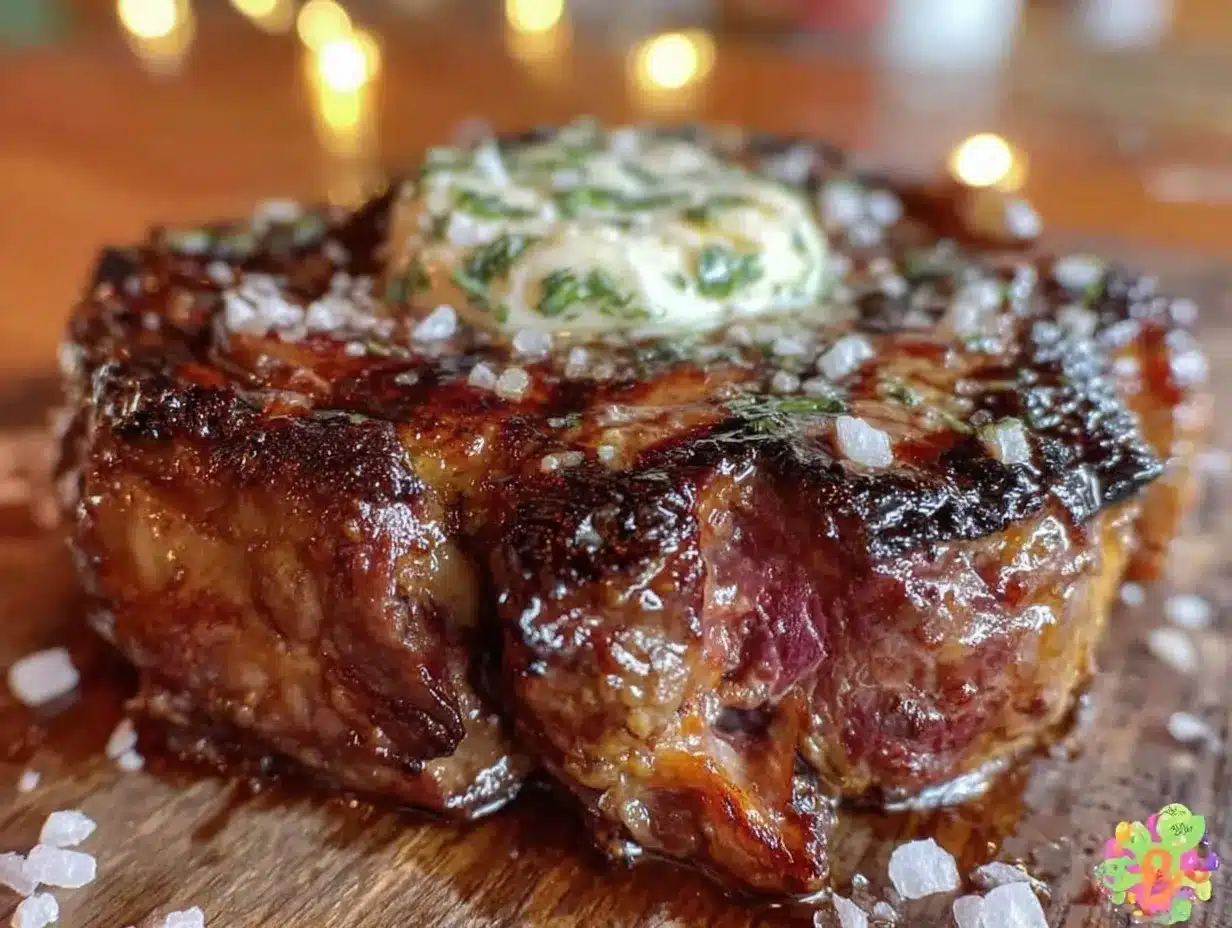
“You’re not going to believe how simple this was,” I told my friend over the phone, still a little stunned myself. I had planned a quick dinner after a hectic day juggling work calls and errands, not exactly the blueprint for a gourmet meal. But there it was—the perfect reverse seared ribeye steak, juicy and tender, practically melting in my mouth, topped with a luscious garlic herb butter that made every bite feel like a little celebration.
Honestly, I wasn’t expecting much at first. I’d tried pan-searing steaks many times before, and while they were decent, they never quite hit that rare-to-medium-rare center with a crispy crust that I craved. This time, I took a different approach: slow and low in the oven before a quick, hot sear. It was a game-changer. The kitchen smelled like garlic and fresh herbs, and I remember thinking, “Why haven’t I done this sooner?”
That night, I’d paired the steak with some simple grilled vegetables, and my partner kept asking for seconds. After making this recipe several times that week (not gonna lie), I knew this was a keeper. It’s one of those dishes that feels fancy without the fuss, and the garlic herb butter? Let’s just say, it’s the kind of finishing touch that turns a great steak into a memorable meal. If you’re wondering whether the reverse sear method lives up to the hype, trust me, it absolutely does.
What stuck with me was how reliably perfect this method is—no more guessing if the steak is overcooked or under-seasoned. It’s a quiet confidence in the kitchen, a little trick I’m happy to share with you.
Why You’ll Love This Recipe
Having tested this reverse seared ribeye steak recipe multiple times, I can say it works beautifully every single time. It’s not just about the result — it’s the process that gives you that juicy, tender steak with a crust that’s literally crave-worthy. Here’s why this recipe stands out:
- Quick & Easy: The entire process takes about 45 minutes from start to finish—perfect for those busy weeknights when you want a restaurant-quality meal without the wait.
- Simple Ingredients: No need for fancy marinades or obscure spices. Just ribeye, salt, pepper, garlic, fresh herbs, and butter—ingredients you likely already have.
- Perfect for Special Occasions or Casual Dinners: Whether you’re impressing guests or just treating yourself, this recipe delivers every time.
- Crowd-Pleaser: Even steak skeptics have come back asking for the recipe—it’s that good.
- Unbelievably Delicious: The garlic herb butter adds an irresistible richness that complements the steak’s natural flavor without overpowering it.
What makes this recipe different? It’s the balance of slow roasting and high-heat searing that creates that tender interior and crispy crust. Plus, blending softened butter with fresh garlic, rosemary, and thyme creates a compound butter that melts perfectly over the steak, adding layers of flavor with every bite.
Honestly, this isn’t just another steak recipe—it’s the one I reach for when I want to impress without stress. If you’ve ever tried grilled T-bone steak with chimichurri, you’ll appreciate how this method brings out the ribeye’s rich, beefy character in a new way. It’s comfort food with a little extra finesse, and you’ll love how reliably delicious it turns out.
What Ingredients You Will Need
This recipe uses simple, wholesome ingredients to deliver bold flavor and satisfying texture without the fuss. Most are pantry staples, with fresh herbs adding a seasonal touch. Here’s what you’ll want to have on hand:
- Ribeye steak (1 thick-cut, about 1.5 to 2 inches thick, 12-16 oz / 340-450 g) – Choose a well-marbled steak for the best flavor and juiciness.
- Salt (kosher or sea salt) – Essential for seasoning and drawing out flavor.
- Freshly ground black pepper – Adds a subtle heat and texture.
For the garlic herb butter:
- Unsalted butter (4 tablespoons / 60 g, softened) – I personally like Plugrá or Kerrygold for their creamy texture.
- Garlic (2 cloves, minced) – Fresh garlic is key for that punch of flavor.
- Fresh rosemary (1 teaspoon, finely chopped) – Adds an earthy, piney note.
- Fresh thyme (1 teaspoon, finely chopped) – Complements the rosemary and beef perfectly.
- Lemon zest (optional, 1/4 teaspoon) – For a subtle brightness that cuts through the richness.
- Salt (a pinch, for the butter) – To balance flavors.
Substitutions:
- You can swap the ribeye for a New York strip or filet mignon, but ribeye’s marbling makes it particularly juicy.
- If you need a dairy-free option, try a vegan butter substitute; just make sure it melts well.
- Frozen herbs can work in a pinch, but fresh really brings the best aroma and flavor.
Equipment Needed
Here’s the gear you’ll need to pull off this recipe smoothly:
- Oven-safe wire rack and baking sheet: The rack allows air to circulate around the steak, helping it cook evenly without sitting in its juices.
- Cast iron skillet or heavy-bottomed pan: For that intense, high-heat sear. I swear by my Lodge cast iron—it holds heat like a champ.
- Instant-read meat thermometer: Crucial for hitting that perfect doneness without cutting into the steak.
- Mixing bowl and spoon: To combine the garlic herb butter.
- Small knife and cutting board: For mincing garlic and chopping herbs.
If you don’t have a wire rack, you can use a cooling rack placed on a baking sheet. For the skillet, a stainless-steel pan can work but won’t hold heat quite as well as cast iron.
Maintenance tip: Season your cast iron regularly to keep it non-stick and rust-free, which makes searing easier and cleaner.
Preparation Method
- Preheat your oven to 275°F (135°C). This low temperature ensures gentle, even cooking inside the steak.
- Season the ribeye generously on both sides with kosher salt and freshly ground black pepper. Let it rest at room temperature for about 30 minutes. This step helps the steak cook evenly and enhances flavor.
- Place the steak on the wire rack set inside a baking sheet. Insert the instant-read thermometer probe into the thickest part of the steak if you have a leave-in probe; otherwise, you’ll check temperature manually later.
- Slow roast the steak in the oven until it reaches an internal temperature of 115°F (46°C) for medium-rare. This usually takes around 30-40 minutes, depending on thickness. Don’t rush this step—patience is key for a tender interior.
- Meanwhile, prepare the garlic herb butter: In a small bowl, mix softened unsalted butter with minced garlic, chopped rosemary, thyme, lemon zest (if using), and a pinch of salt. Set aside.
- Remove the steak from the oven once it hits target temperature. Let it rest for 5 minutes while you heat your cast iron skillet over high heat until it’s smoking hot.
- Sear the steak for about 1 to 2 minutes per side, pressing down lightly to get full contact with the pan. This creates a beautiful crust. Don’t forget to sear the edges as well if your steak is thick.
- Remove the steak from the pan and immediately top with a generous dollop of garlic herb butter. Let it rest for another 5 minutes before slicing.
- Slice against the grain and serve immediately, letting that butter melt into every slice.
Pro tip: Keep an eye on the thermometer during roasting. If you overshoot the temperature, the steak can turn out overdone. Also, don’t skip the resting periods—they lock in juices and keep the steak moist.
Cooking Tips & Techniques
Mastering the reverse sear method takes a bit of patience, but here are some insights I’ve picked up along the way:
- Low and slow is your friend: The initial oven roast cooks the steak gently, preventing the outside from overcooking while the inside reaches your desired doneness.
- Use a reliable thermometer: Guessing steak doneness by feel can be tricky, especially with this method. The instant-read thermometer is a must-have for consistent results.
- Get your pan smoking hot: A screaming hot cast iron skillet is what gives you that perfect Maillard crust. If your pan isn’t hot enough, you’ll end up with a grayish sear instead of a crisp, brown one.
- Don’t overcrowd your pan: If you’re cooking multiple steaks, sear them one at a time or in batches to maintain heat.
- Butter timing: Adding the garlic herb butter right after searing allows it to melt beautifully over the steak, enhancing flavor and juiciness.
I once tried skipping the slow roast and just searing directly, but the steak ended up unevenly cooked and tough. Since switching to reverse searing, I haven’t looked back. It’s also handy to multitask during the slow roast—maybe prep your sides or whip up a quick salad.
Variations & Adaptations
This reverse seared ribeye recipe is versatile and easy to customize:
- Dietary: For a dairy-free version, swap the garlic herb butter for a drizzle of olive oil infused with garlic and herbs.
- Flavor twists: Try adding a pinch of smoked paprika or cayenne pepper to the butter for a smoky, spicy kick.
- Seasonal herbs: Swap rosemary and thyme with fresh oregano or tarragon for a different herbal profile.
- Cooking method: If you don’t have an oven-safe rack, you can finish the steak entirely on the grill using a similar reverse sear technique, starting with indirect heat and finishing over direct flames.
- Personal variation: I’ve also tried topping the steak with blue cheese compound butter—equally delicious but richer and tangier.
Serving & Storage Suggestions
Serve this steak hot, straight off the cutting board, so the garlic herb butter is still melting over the slices. It pairs beautifully with a simple side of grilled vegetables or a fresh salad, like the grilled zucchini and yellow squash skewers that balance the richness with bright, lemony notes.
Leftovers can be stored in an airtight container in the refrigerator for up to 3 days. When reheating, gently warm the steak in a low oven or a skillet over medium-low heat, then add a little fresh butter or garlic oil to keep it moist. Avoid microwaving if you want to preserve texture.
Interestingly, the flavors of the garlic herb butter deepen after a day, making leftovers perfect for a quick steak sandwich or salad topping.
Nutritional Information & Benefits
This ribeye steak recipe provides a hearty serving of protein and essential nutrients. A typical 12-ounce (340 g) ribeye steak contains approximately:
| Calories | 800-900 kcal |
|---|---|
| Protein | 60-70 g |
| Fat | 60-70 g (mostly from marbling and butter) |
| Carbohydrates | 0-1 g |
The fresh herbs in the garlic butter add antioxidants and vitamins, while the steak itself is a great source of iron, zinc, and B vitamins. For those watching carbs, this recipe is naturally low-carb and keto-friendly.
Note: Ribeye is higher in fat compared to leaner cuts, so it’s best enjoyed in moderation as part of a balanced diet. If you have dietary restrictions, consider pairing the steak with nutrient-dense vegetables or swapping for leaner cuts as needed.
Conclusion
This perfect reverse seared ribeye steak with garlic herb butter is a recipe I’ve come back to again and again, especially when I want a meal that feels special but isn’t complicated. It’s the kind of dish that invites slow savoring—not just because it tastes amazing, but because the process itself is rewarding.
Feel free to tweak the herbs or butter mix to suit your taste, or pair it with sides that make you happy. Whether you’re cooking for one or hosting a casual dinner, this recipe reliably delivers steakhouse-quality results.
If you’ve enjoyed recipes like the bacon-wrapped cream cheese mini peppers, you’ll appreciate how this steak balances rich flavors with simple preparation. I’d love to hear how you customize it—drop your thoughts or questions below and let’s keep this delicious conversation going.
Here’s to juicy, tender steaks and buttery, garlicky happiness on your plate!
FAQs About Perfect Reverse Seared Ribeye Steak
What is reverse searing and why is it better than traditional searing?
Reverse searing means cooking the steak slowly at a low temperature first, then searing it at high heat last. This method ensures even cooking and a tender inside with a crispy crust, unlike traditional searing which can overcook the edges before the center is done.
How do I know when the steak is done?
Use an instant-read thermometer to check the internal temperature. For medium-rare, remove from the oven at about 115°F (46°C) before searing—it will rise to about 130-135°F (54-57°C) after resting.
Can I use frozen steak for reverse searing?
It’s best to use fresh or fully thawed steaks for even cooking. Cooking from frozen may result in uneven doneness.
How do I store leftover garlic herb butter?
Wrap the butter tightly in plastic wrap or store in an airtight container in the fridge. Use within a week or freeze for longer storage.
Can I make garlic herb butter ahead of time?
Absolutely! Making the compound butter a day ahead lets the flavors meld beautifully. Just keep it refrigerated until ready to use.
Pin This Recipe!
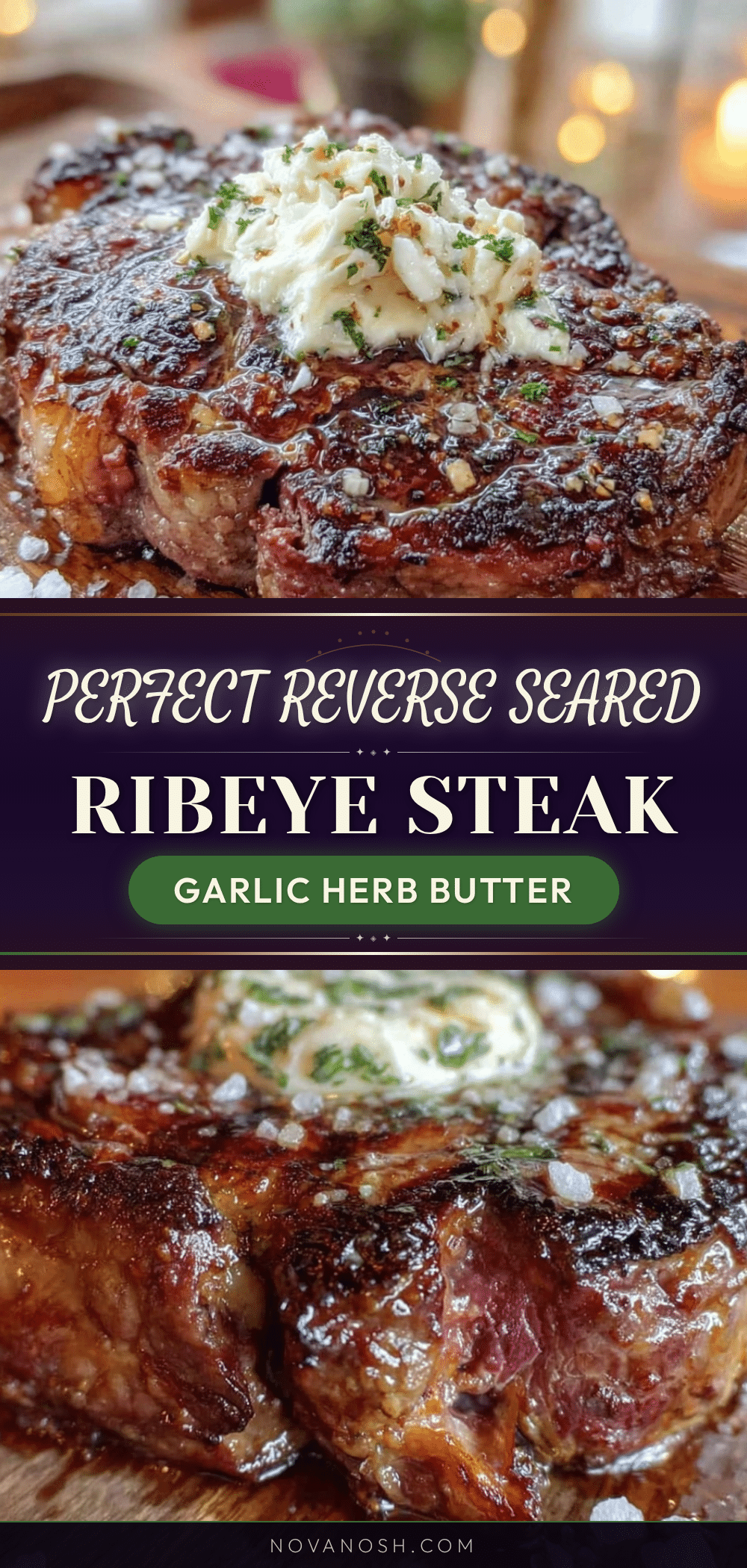
Perfect Reverse Seared Ribeye Steak Recipe with Garlic Herb Butter Easy and Juicy
This recipe delivers a juicy, tender ribeye steak with a crispy crust using the reverse sear method, topped with a luscious garlic herb butter for an irresistible finish.
- Prep Time: 10 minutes
- Cook Time: 35 minutes
- Total Time: 45 minutes
- Yield: 1 steak (serves 1-2) 1x
- Category: Main Course
- Cuisine: American
Ingredients
- 1 thick-cut ribeye steak (1.5 to 2 inches thick, 12–16 oz / 340–450 g)
- Kosher or sea salt
- Freshly ground black pepper
- 4 tablespoons (60 g) unsalted butter, softened
- 2 cloves garlic, minced
- 1 teaspoon fresh rosemary, finely chopped
- 1 teaspoon fresh thyme, finely chopped
- 1/4 teaspoon lemon zest (optional)
- Pinch of salt (for the butter)
Instructions
- Preheat your oven to 275°F (135°C).
- Season the ribeye generously on both sides with kosher salt and freshly ground black pepper. Let it rest at room temperature for about 30 minutes.
- Place the steak on a wire rack set inside a baking sheet. Insert an instant-read thermometer probe into the thickest part of the steak if available.
- Slow roast the steak in the oven until it reaches an internal temperature of 115°F (46°C) for medium-rare, about 30-40 minutes depending on thickness.
- Meanwhile, prepare the garlic herb butter by mixing softened unsalted butter with minced garlic, chopped rosemary, thyme, lemon zest (if using), and a pinch of salt in a small bowl. Set aside.
- Remove the steak from the oven and let it rest for 5 minutes while heating a cast iron skillet over high heat until smoking hot.
- Sear the steak for 1 to 2 minutes per side, pressing lightly to ensure full contact with the pan. Also sear the edges if the steak is thick.
- Remove the steak from the pan and immediately top with a generous dollop of garlic herb butter. Let it rest for another 5 minutes before slicing.
- Slice against the grain and serve immediately.
Notes
Use a reliable instant-read thermometer to avoid overcooking. Let the steak rest after roasting and after searing to lock in juices. If you don’t have a wire rack, use a cooling rack on a baking sheet. Season cast iron skillet regularly for best searing results. For dairy-free, substitute butter with vegan butter or garlic-infused olive oil.
Nutrition
- Serving Size: 1 steak (12-16 oz)
- Calories: 850
- Sodium: 600
- Fat: 65
- Saturated Fat: 30
- Carbohydrates: 1
- Protein: 65
Keywords: reverse sear, ribeye steak, garlic herb butter, steak recipe, juicy steak, easy steak recipe, cast iron skillet, oven roasted steak