Love this? Save it for later!
Share the inspiration with your friends
There used to be this little farm-to-table café tucked behind the old train station in our town called The Granary. They closed three years ago—rent went up, as it always does—and the thing I mourned most wasn’t their famous sourdough or their lavender lemonade. It was their harvest salad. I’m not kidding, I dreamt about it. That perfect combination of tender roasted squash, hearty kale, and that tangy-sweet dressing they drizzled on top—it was the kind of salad that made you forget you were eating something healthy. After maybe six tries—and one particularly sad version where I forgot to peel the squash entirely—I finally cracked it. This is that salad, the one I chased for three years, and honestly, it’s even better than I remember. Maybe you’ve had a dish like that, the one that got away? Well, this one came home.
Why You’ll Love This Recipe
Let me tell you why this salad has become a weekly staple in my house, and why I think it’ll become one in yours too. It’s not just another pretty salad—it’s the one that actually works for real families on real budgets.
- Budget-Friendly & Smart: Delicata squash and kale are some of the most affordable produce items at the market. You’re not spending a fortune on fancy ingredients, and the leftovers reheat beautifully for lunch the next day. I mean, a salad that keeps? That’s a win in my book.
- Picky Eater Approved: I’ve served this to kids who swear they hate kale—and they asked for seconds. The secret is massaging the kale with the dressing until it’s tender and almost sweet. Roasting the squash brings out its natural sugars, so it feels like a treat, not a chore.
- Comes Together in 40 Minutes: From start to finish, you can have this on the table in under an hour. The squash roasts while you prep the kale and dressing, and everything comes together without any last-minute stress. Perfect for those evenings when you’re juggling homework and soccer practice.
- Meal Prep Hero: Make the components ahead of time—roast the squash, wash and chop the kale, whisk the dressing—and assemble when you’re ready to eat. It’s the kind of recipe that makes you feel like you have your life together, even when you absolutely do not.
- Crowd-Pleaser for Every Occasion: I’ve brought this to potlucks, Thanksgiving dinners, and casual weeknight meals. It disappears every single time. The combination of textures—creamy squash, chewy dried cranberries, crunchy pepitas—keeps everyone coming back for more.
This isn’t just a salad you eat because you should. It’s the kind that makes you close your eyes after the first bite, the one where you think, “Okay, I can do this healthy thing and actually enjoy it.” It’s comfort food reimagined—hearty, satisfying, and full of flavor without being complicated.
What Ingredients You Will Need
This recipe uses simple, wholesome ingredients that you can find at any grocery store without breaking the bank. Most of these are pantry staples or easy seasonal finds, and I’ve included notes on substitutions so you can make it work with what you have.
For the Roasted Delicata Squash
- 1 medium delicata squash (about 1½ pounds) — Look for squash that feels heavy for its size and has no soft spots. You don’t need to peel it—the skin is thin and edible, which saves you time and adds texture.
- 2 tablespoons olive oil — I prefer extra-virgin here for flavor, but regular olive oil works fine. (Use avocado oil if you’re cooking for someone with a sensitivity.)
- ½ teaspoon salt — Kosher salt is my go-to, but sea salt works just as well.
- ¼ teaspoon black pepper — Freshly ground if you can, but pre-ground is totally fine.
- ½ teaspoon smoked paprika — This adds a subtle warmth that makes the squash taste almost caramelized. Regular paprika works too, but smoked is worth seeking out.
For the Kale Base
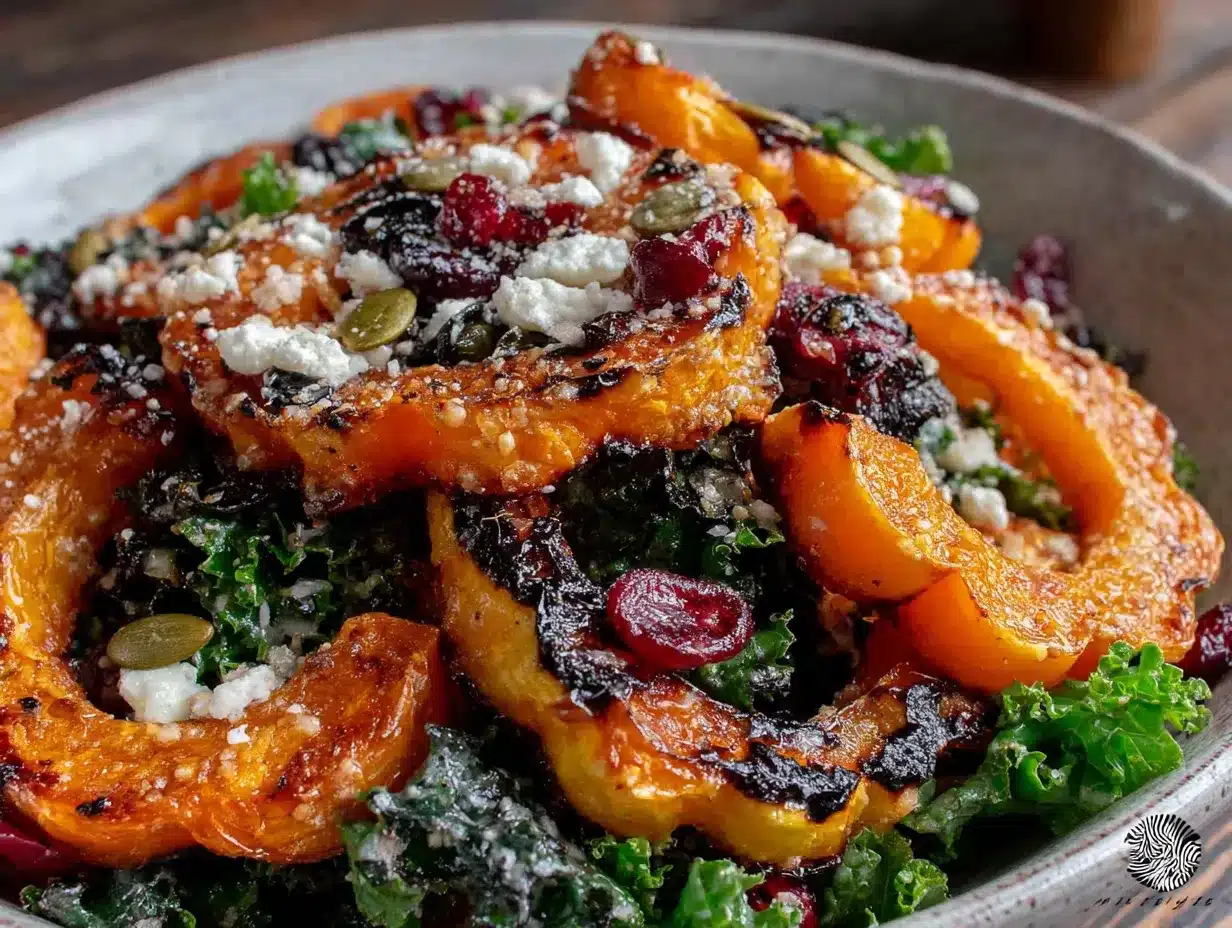
- 1 large bunch curly kale (about 8-10 ounces) — Look for leaves that are deep green and crisp, not wilted or yellowing. I recommend organic kale if your budget allows, since it’s often on the “dirty dozen” list.
- 1 tablespoon olive oil — For massaging the kale. Yes, massaging kale is a real thing, and it makes all the difference.
- ½ teaspoon salt — This helps break down the kale’s tough fibers.
- Juice of ½ lemon — Fresh lemon juice brightens everything up. Bottled works in a pinch, but fresh is noticeably better.
For the Harvest Dressing
- ¼ cup olive oil — A good-quality extra-virgin makes the dressing sing.
- 2 tablespoons apple cider vinegar — I like Bragg’s for its unfiltered, tangy flavor. White wine vinegar works as a substitute.
- 1 tablespoon maple syrup — Pure maple syrup, not pancake syrup. It adds sweetness without being cloying. Honey works too.
- 1 teaspoon Dijon mustard — This emulsifies the dressing and adds a subtle tang. Whole grain mustard is a nice alternative.
- 1 small shallot, finely minced (about 1 tablespoon) — If you don’t have a shallot, use a small clove of garlic instead, or even 1 tablespoon of finely chopped red onion.
- ¼ teaspoon salt
- ⅛ teaspoon black pepper
For the Toppings & Mix-Ins
- ⅓ cup dried cranberries — Look for ones sweetened with apple juice instead of added sugar if you can. Dried cherries or golden raisins are great swaps.
- ⅓ cup pepitas (pumpkin seeds) — Toasted for extra crunch. Sunflower seeds or chopped walnuts work beautifully too.
- ¼ cup crumbled feta cheese (optional) — This adds a salty, creamy element. Omit for a dairy-free/vegan version, or swap with goat cheese or shaved Parmesan.
- Optional: ½ cup cooked quinoa or farro — If you want to turn this into a heartier meal, add some cooked grains. Leftover rice works too.
Equipment Needed
You don’t need a fancy kitchen to pull this off. Here’s what I use, along with some budget-friendly alternatives I’ve tested over the years.
- Baking sheet — A half-sheet pan (about 13×18 inches) is ideal. If you don’t have one, a rimmed baking dish works, but the squash might not get as crispy since it’s more crowded. Line it with parchment paper for easy cleanup.
- Large mixing bowl — You’ll need one for massaging the kale and another for tossing everything together. I use a big stainless steel bowl, but any large bowl will do.
- Chef’s knife and cutting board — A sharp knife makes cutting delicata squash much safer and easier. If your knife is dull, consider sharpening it first—trust me, it’s worth the effort.
- Small whisk or fork — For emulsifying the dressing. A mason jar with a tight lid works even better—just shake it up.
- Measuring spoons and cups — I’ve learned the hard way that eyeballing maple syrup leads to a dressing that’s too sweet. Measure it out.
- Vegetable peeler (optional) — You won’t need it for the delicata squash since the skin is edible, but keep it handy if you’re peeling the shallot or any other veg.
One tip I picked up from my grandmother: if you don’t have a salad spinner, wash your kale in a colander and then pat it dry with a clean kitchen towel. It takes an extra minute, but dry kale means the dressing actually sticks instead of sliding off.
Preparation Method
Let’s walk through this step by step. I’ve included time estimates and sensory cues so you know exactly what to look for at each stage.
Step 1: Preheat and Prep the Squash (5 minutes)
Preheat your oven to 400°F (200°C). While it’s heating, wash the delicata squash well—remember, you’re eating the skin, so give it a good scrub. Cut off the stem and the very bottom, then slice the squash in half lengthwise. Use a spoon to scoop out the seeds and stringy bits. Now slice each half into half-moons about ½-inch thick. They should look like little orange crescents.
Step 2: Roast the Squash (25-30 minutes)
In a medium bowl, toss the squash slices with 2 tablespoons olive oil, ½ teaspoon salt, ¼ teaspoon pepper, and ½ teaspoon smoked paprika. Spread them in a single layer on your baking sheet—don’t overcrowd them, or they’ll steam instead of roast. Pop them in the oven for 15 minutes, then flip each piece with a spatula. Roast for another 10-15 minutes, until the edges are golden brown and the squash is tender when pierced with a fork. You’ll know they’re done when they smell sweet and almost nutty, and the edges have started to caramelize.
Step 3: Prep the Kale (5 minutes)
While the squash roasts, wash the kale and remove the tough stems. I do this by holding the stem with one hand and stripping the leaves off with the other. Stack the leaves, roll them up like a cigar, and slice them into thin ribbons (about ¼-inch wide). This is called a chiffonade, and it makes the kale much easier to eat.
Step 4: Massage the Kale (3 minutes)
This is the magic step. Put the sliced kale in a large bowl. Add 1 tablespoon olive oil, ½ teaspoon salt, and the juice of half a lemon. Now get your hands in there and massage the kale for about 2-3 minutes. Squeeze and rub the leaves like you’re kneading dough. You’ll feel them soften and darken in color—they’ll go from stiff and tough to tender and almost silky. This step is non-negotiable if you want a salad that even kale skeptics will love.
Step 5: Make the Dressing (3 minutes)
In a small bowl or mason jar, combine ¼ cup olive oil, 2 tablespoons apple cider vinegar, 1 tablespoon maple syrup, 1 teaspoon Dijon mustard, the minced shallot, ¼ teaspoon salt, and ⅛ teaspoon pepper. Whisk vigorously or shake the jar until the dressing is emulsified and creamy-looking. Taste it—it should be tangy, slightly sweet, and a little sharp from the shallot. Adjust salt or maple syrup to your liking.
Step 6: Assemble the Salad (3 minutes)
Pour about half the dressing over the massaged kale and toss well. Add the warm roasted squash (yes, warm—this helps the flavors meld), dried cranberries, pepitas, and feta if using. Drizzle the remaining dressing over the top and toss gently. The squash might break apart a little, but that’s a good thing—those caramelized bits get distributed throughout the salad.
Step 7: Rest and Serve (5 minutes)
Let the salad sit for about 5 minutes before serving. This gives the kale time to absorb the dressing and the flavors to come together. Serve at room temperature or slightly warm—both are delicious.
Cooking Tips & Techniques
I’ve made this salad more times than I can count, and I’ve learned a few things the hard way. Here are my best tips for getting it right every time.
Don’t skip massaging the kale. I know it sounds weird, and honestly, the first time I tried it, I felt a little ridiculous squeezing a bowl of leaves. But here’s the thing: raw kale is tough and fibrous. Massaging it with oil and salt breaks down the cell walls, making it tender and almost sweet. If you skip this step, you’ll end up with a salad that’s chewy and bitter. Trust the process.
Keep an eye on the squash. Oven temperatures vary, and delicata squash can go from perfectly caramelized to burnt in a matter of minutes. Start checking at the 20-minute mark. You want the edges to be golden brown, not black. If your oven runs hot, reduce the temperature to 375°F (190°C) and roast a little longer.
Toast your pepitas. This is a small step that makes a big difference. Spread the pepitas in a dry skillet over medium heat and toast for 2-3 minutes, shaking the pan frequently, until they’re fragrant and slightly browned. They’ll add a nutty crunch that elevates the whole salad. I forgot to do this once, and the salad felt flat—lesson learned.
Make extra dressing. This dressing is so good that you’ll want it on everything—roasted vegetables, grain bowls, even as a marinade for chicken. I usually double the recipe and keep it in the fridge for up to a week. Just shake it before using.
Timing is everything. If you’re making this for a weeknight dinner, roast the squash while you prep the kale and make the dressing. Everything comes together in the time it takes the squash to cool slightly. Multitasking is your friend here.
Variations & Adaptations
This recipe is forgiving and flexible. Here are some ways to make it your own, depending on what you have in your pantry or who you’re feeding.
Make It a Meal
Turn this side salad into a main dish by adding protein. Grilled chicken, roasted chickpeas, or flaked salmon all work beautifully. I’ve also added leftover shredded rotisserie chicken when I needed a quick dinner, and it was fantastic. For a vegetarian version, add a cup of cooked quinoa or farro—the grains soak up the dressing and make the salad incredibly satisfying.
Seasonal Swaps
Delicata squash is a fall star, but you can use other winter squashes like butternut or acorn. Just peel them first, since their skin isn’t as tender. In summer, swap the squash for roasted sweet potatoes or even grilled peaches—trust me, it’s a game-changer. The kale stays the same year-round, but you can use baby kale if you want a milder flavor.
Dietary Adaptations
To make this salad vegan, simply omit the feta cheese or use a plant-based alternative. The dressing is already vegan as written. For a nut-free version, skip the pepitas and use sunflower seeds or toasted sesame seeds instead. If you’re gluten-free, this salad is naturally safe—just double-check that your Dijon mustard and dried cranberries are certified gluten-free if that’s a concern.
Flavor Twists
I once added a handful of pomegranate arils instead of dried cranberries, and the burst of tartness was incredible. You can also swap the smoked paprika for curry powder or za’atar for a completely different flavor profile. My kids love it when I add a drizzle of balsamic glaze on top—it makes the salad feel fancy without any extra effort.
Serving & Storage Suggestions
This salad is best served at room temperature or slightly warm, right after the squash comes out of the oven. The warmth softens the kale just enough and makes the flavors meld together beautifully. I like to serve it in a large wooden bowl, with the squash and toppings scattered on top so everyone can see the colors.
For a family dinner, pair this salad with a simple protein like roasted chicken thighs or grilled fish. It also works wonderfully alongside a bowl of hearty tomato soup for a cozy fall meal. If you’re hosting a holiday gathering, serve it as a vibrant side dish—it stands up well on a buffet table and doesn’t wilt like other salads.
Storage: If you have leftovers, store the salad in an airtight container in the refrigerator for up to 2 days. The kale will soften more as it sits, but the flavors actually deepen. I’ve eaten this for lunch the next day and loved it even more. Just know that the squash will lose some of its crispness—that’s normal.
Reheating: I don’t recommend microwaving this salad. Instead, let it come to room temperature on the counter for about 15 minutes, or gently rewarm the squash separately in a 350°F (175°C) oven for 5 minutes before adding it back to the salad. The kale is best eaten cold or at room temperature.
Meal Prep Tip: Roast the squash and make the dressing up to 3 days ahead. Wash and chop the kale, but don’t dress it until you’re ready to serve. Store everything separately in the fridge, then assemble when you need it. This makes weeknight dinners a breeze.
Nutritional Information & Benefits
This salad isn’t just delicious—it’s packed with nutrients that make you feel good about feeding it to your family. Here’s a rough breakdown per serving (based on 4 servings, without optional feta or grains):
| Nutrient | Amount Per Serving |
|---|---|
| Calories | ~280 |
| Total Fat | 18g |
| Saturated Fat | 2.5g |
| Carbohydrates | 30g |
| Fiber | 6g |
| Sugar | 14g (naturally occurring) |
| Protein | 6g |
| Vitamin A | 180% DV |
| Vitamin C | 80% DV |
| Calcium | 15% DV |
| Iron | 10% DV |
Delicata squash is a fantastic source of vitamin A (from beta-carotene) and fiber, which supports healthy digestion and keeps you full longer. Kale is a powerhouse of vitamins C and K, plus antioxidants that support your immune system—especially important during cold and flu season. The pepitas add healthy fats, magnesium, and zinc, while the olive oil provides heart-healthy monounsaturated fats. This salad is naturally gluten-free, vegetarian, and can easily be made vegan. It’s also low in added sugars, with most of the sweetness coming from the maple syrup and the natural sugars in the squash and cranberries.
Conclusion
This Delicata Squash and Kale Harvest Salad is more than just a recipe—it’s the one I’ve been chasing for years, the one that brought back a memory and created new ones with my family. It’s proof that healthy eating doesn’t have to be boring or expensive, and that a simple salad can be the star of the dinner table. I love how forgiving it is, how it adapts to whatever I have in my fridge, and how my kids actually ask for seconds. Honestly, that’s the highest compliment I can give any recipe.
I’d love to hear how this salad turns out for you. Did you add your own twist? Did your picky eater surprise you? Drop a comment below and let me know—I read every single one, and your feedback helps me create better recipes for all of us. If you loved this, don’t forget to share it with a friend who needs a little harvest inspiration. Happy cooking, friends—you’ve got this!
Frequently Asked Questions
Can I use a different type of squash?
Absolutely! Butternut, acorn, or even pumpkin work beautifully. Just note that you’ll need to peel butternut and acorn squash before roasting, since their skins are tougher. Delicata is my favorite because the skin is edible and gets tender when roasted, saving you a step.
How do I make this salad ahead of time for a party?
Roast the squash and make the dressing up to 3 days in advance. Wash, chop, and store the kale in a sealed bag with a paper towel to absorb moisture. When you’re ready to serve, massage the kale, toss with the dressing, and add the toppings. This keeps everything fresh and crisp.
Can I freeze this salad?
I wouldn’t recommend freezing the assembled salad—the kale will turn into a soggy mess. However, you can freeze the roasted squash in an airtight container for up to 3 months. Thaw it in the refrigerator overnight and reheat in the oven before adding to the salad.
My kids won’t eat kale—how can I make this more kid-friendly?
Start by massaging the kale really well—this makes it much softer and less bitter. You can also mix the kale with a handful of baby spinach or romaine to mellow the flavor. My kids love it when I add a sprinkle of extra feta or a few extra cranberries. Sometimes I even let them help massage the kale—they think it’s hilarious and are more likely to eat it.
What can I substitute for the maple syrup in the dressing?
Honey is the easiest swap—use the same amount. For a sugar-free option, try a few drops of liquid stevia or monk fruit sweetener, though the flavor will be slightly different. You can also use a very ripe mashed date or a tablespoon of orange juice concentrate for natural sweetness.
Pin This Recipe!
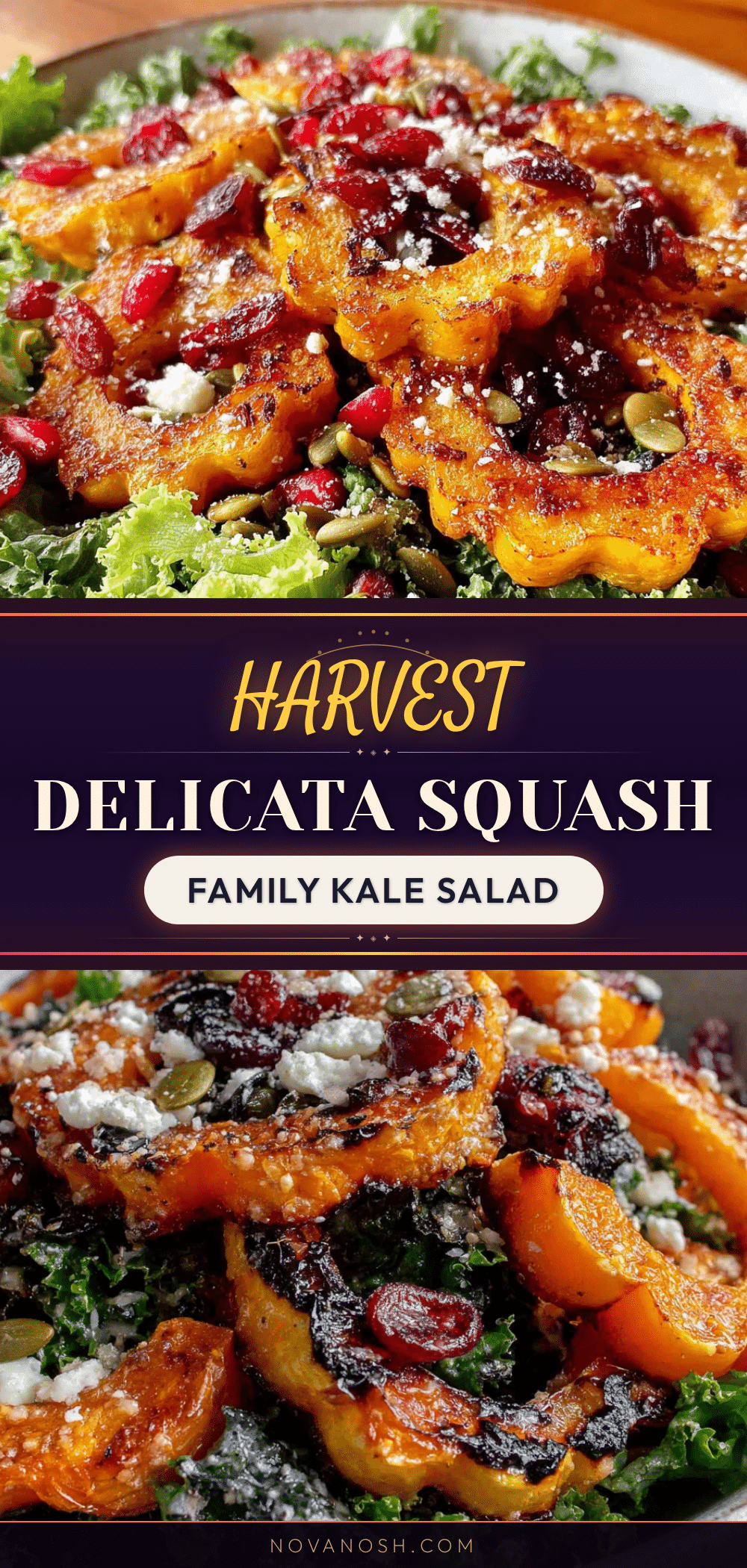
Easy Delicata Squash and Kale Harvest Salad: Best Family Recipe
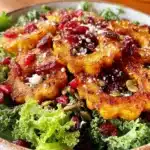
A hearty harvest salad featuring tender roasted delicata squash, massaged kale, dried cranberries, pepitas, and a tangy-sweet maple-Dijon dressing. This budget-friendly, picky eater-approved recipe comes together in 40 minutes and is perfect for weeknight dinners or holiday gatherings.
- Prep Time: 15 minutes
- Cook Time: 25-30 minutes
- Total Time: 40 minutes
- Yield: 4 servings 1x
- Category: Salad
- Cuisine: American
Ingredients
- 1 medium delicata squash (about 1½ pounds)
- 2 tablespoons olive oil
- ½ teaspoon salt
- ¼ teaspoon black pepper
- ½ teaspoon smoked paprika
- 1 large bunch curly kale (about 8–10 ounces)
- 1 tablespoon olive oil (for massaging kale)
- ½ teaspoon salt (for kale)
- Juice of ½ lemon
- ¼ cup olive oil (for dressing)
- 2 tablespoons apple cider vinegar
- 1 tablespoon maple syrup
- 1 teaspoon Dijon mustard
- 1 small shallot, finely minced (about 1 tablespoon)
- ¼ teaspoon salt (for dressing)
- ⅛ teaspoon black pepper (for dressing)
- ⅓ cup dried cranberries
- ⅓ cup pepitas (pumpkin seeds)
- ¼ cup crumbled feta cheese (optional)
Instructions
- Preheat oven to 400°F (200°C). Wash delicata squash, cut off stem and bottom, slice in half lengthwise, scoop out seeds, then slice into ½-inch half-moons.
- In a medium bowl, toss squash slices with 2 tablespoons olive oil, ½ teaspoon salt, ¼ teaspoon pepper, and ½ teaspoon smoked paprika. Spread in a single layer on a baking sheet. Roast for 15 minutes, flip, then roast another 10-15 minutes until golden and tender.
- While squash roasts, wash kale, remove tough stems, stack leaves, roll into a cigar, and slice into thin ribbons (chiffonade).
- Place sliced kale in a large bowl. Add 1 tablespoon olive oil, ½ teaspoon salt, and juice of ½ lemon. Massage kale with your hands for 2-3 minutes until softened and darkened.
- In a small bowl or mason jar, combine ¼ cup olive oil, 2 tablespoons apple cider vinegar, 1 tablespoon maple syrup, 1 teaspoon Dijon mustard, minced shallot, ¼ teaspoon salt, and ⅛ teaspoon pepper. Whisk or shake until emulsified.
- Pour half the dressing over the massaged kale and toss. Add warm roasted squash, dried cranberries, pepitas, and feta (if using). Drizzle remaining dressing and toss gently.
- Let salad rest for 5 minutes before serving. Serve at room temperature or slightly warm.
Notes
Don’t skip massaging the kale—it makes it tender and less bitter. Keep an eye on the squash to prevent burning. Toast pepitas in a dry skillet for extra crunch. Make extra dressing to use on other dishes. For meal prep, roast squash and make dressing up to 3 days ahead; wash and chop kale but don’t dress until serving.
Nutrition
- Serving Size: 1 serving (about 2 c
- Calories: 280
- Sugar: 14
- Sodium: 500
- Fat: 18
- Saturated Fat: 2.5
- Carbohydrates: 30
- Fiber: 6
- Protein: 6
Keywords: delicata squash, kale salad, harvest salad, fall salad, healthy salad, vegetarian, gluten-free, easy salad recipe